
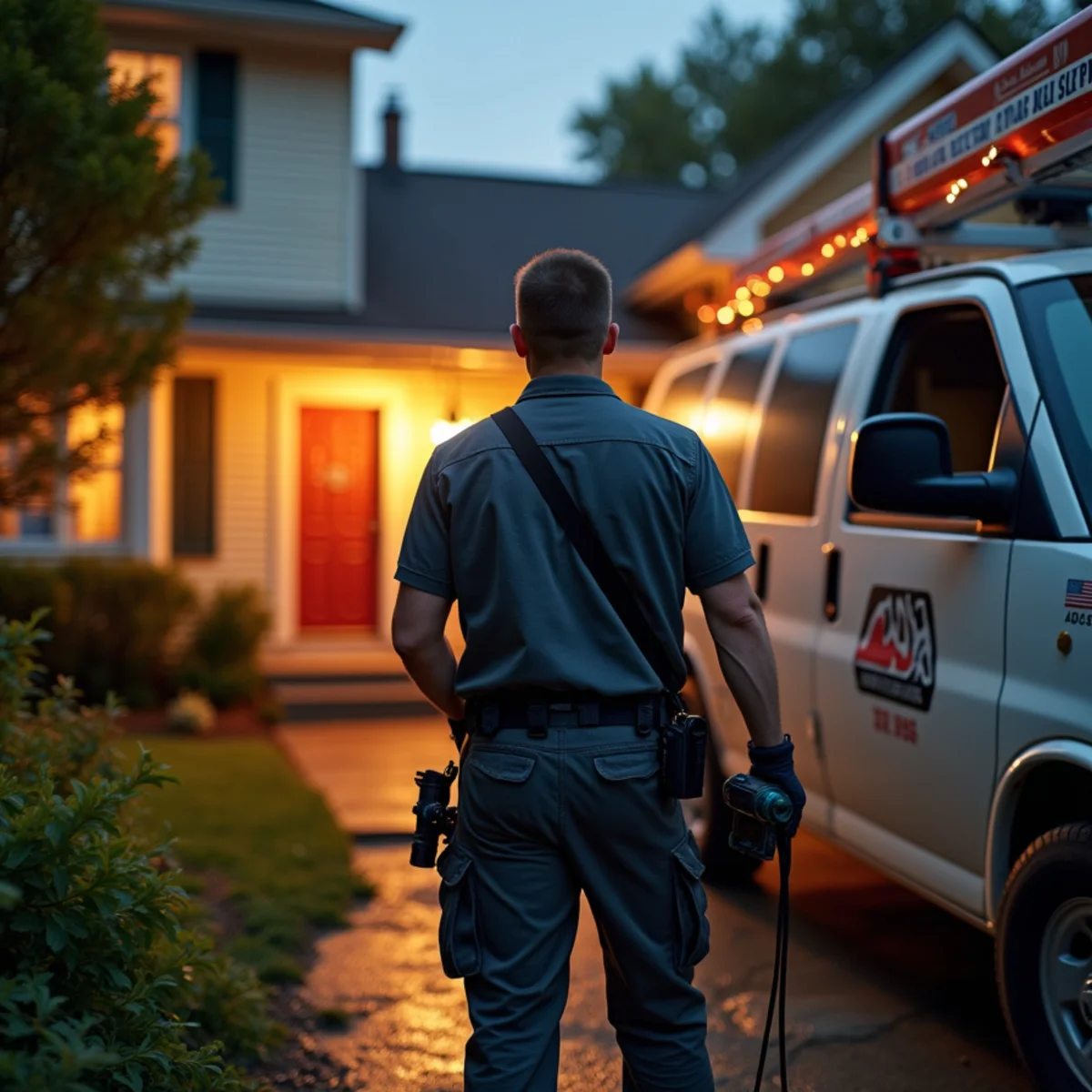
24/7 Emergency Service
24/7 emergency sewer camera inspection in Sterling Heights, MI
An emergency sewer inspection in Sterling Heights is 24/7 on-call service that puts a recorded camera inside an actively backing-up, blocked, or suspected-collapsed line so you know what you're dealing with before you approve any cleanup or repair. Wastewater doesn't wait for business hours, so an active backup gets a live callback and, when it's safe to inspect, a same-visit camera run.
- Recorded HD video
- Same-day report
- Licensed & insured
A backup can come from several places: a private-lateral defect, a blockage built up over months, a collapsed or bellied section, or a wider sanitary sewer surcharge during heavy rain that has nothing to do with your own pipe. Those causes get handled very differently, and treating one like the other wastes money and time you don't have mid-emergency.
We record what we find whenever it's safe to run the camera and give you a plain-English read on whether the issue sits on your side of the property line or points toward the municipal system — evidence that matters both for tonight's decision and for an insurance file next week.
Call for emergency guidance when
Not every slow drain is an emergency, but these situations need a same-visit response, not a scheduled appointment next week:
- Contaminated water is entering the home or continuing to rise
- Multiple fixtures — toilets, tubs, floor drains — are backing up at the same time
- Sewage is near electrical outlets, appliances, or a finished living space
- A backup starts suddenly during or right after heavy rain
- You suspect a collapsed or badly bellied section and need it confirmed before any dig
- A basement floor drain keeps resurfacing despite recent snaking or cleaning
- You need documented evidence tonight for an insurer or property manager
- You're unsure whether the problem is your private lateral or the city's sewer main
What to do in the first 30 minutes
Before we arrive, these steps protect your family, your home, and your claim — most of them take less than a minute:
- 1
Stop water use
Stop using toilets, showers, sinks, dishwashers, and washing machines immediately. If the line is blocked, that water usually comes back up at the lowest fixture.
- 2
Keep people & pets away
Treat standing water as contaminated. Keep children and pets out of the area, and never step into water near electrical outlets, a furnace, or a water heater.
- 3
Document before cleanup
Photograph and video the standing water, affected fixtures, the cleanout, and any damaged flooring or belongings before you move anything. Once cleanup starts, that evidence is gone.
- 4
Note the timing
Write down roughly when it started and whether it followed heavy rain or normal household use — that detail helps us, and the water and sewer division if needed, narrow down the cause faster.
- 5
Notify your insurer or landlord
If you carry sewer/water backup coverage or rent the property, a quick call starts the clock on your claim or maintenance record while it's fresh.
- 6
Call for the right response
We'll walk through what you're seeing by phone and advise whether the next step is an emergency camera inspection, clearing the line, restoration, or contacting the Sterling Heights Water & Sewer Division.
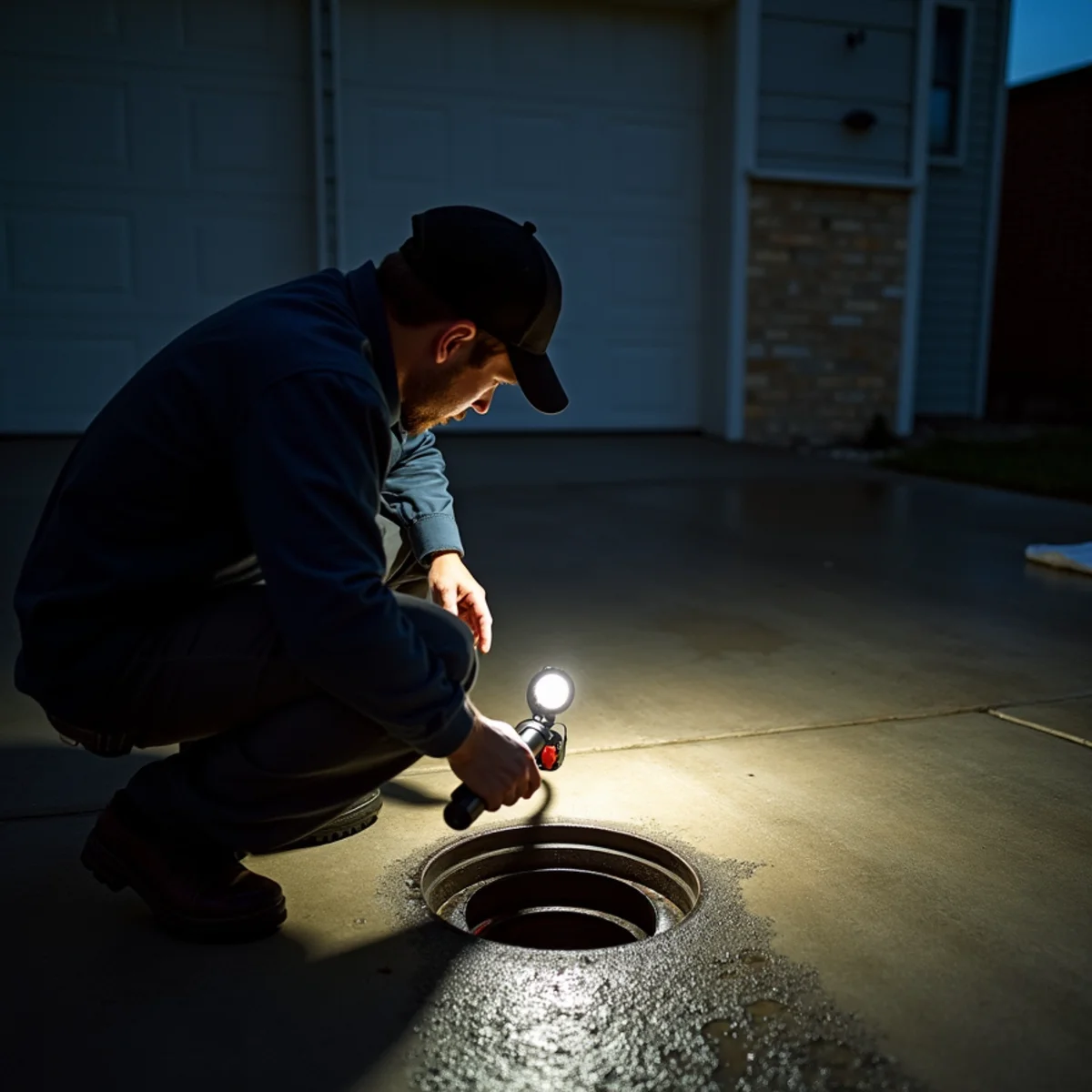
Emergency inspection pricing
Emergency and after-hours response is scheduled differently than a planned appointment. We confirm cost before any work starts — never a fixed price posted online — and it depends on:
- Time of day — after-hours, overnight, and holiday response versus a daytime call
- Whether the line must be cleared before a camera can safely pass
- Line length and access under active-backup conditions (a straightforward local scope commonly runs about $200–$500; Detroit-area research shows a wider $254–$1,722 range, roughly $955 average on complex jobs)
- Whether locating is needed alongside the camera for an urgent repair
- How many access points are usable — a buried or missing cleanout can add time
- Whether documentation needs to be formatted for an insurance claim or property file same-day
What's included in your emergency sewer camera inspection
An emergency call gets the same evidence-first standard as a scheduled inspection, just on an urgent timeline. When conditions allow the camera to safely enter the line, you get:
- A live callback to triage the situation before we're even on the road
- Recorded HD video of the accessible section of the line
- Still images of the specific defect, blockage, or collapse we find
- Approximate inspected distance and the camera's stopping point
- Pipe-material notes (clay, cast iron, PVC, Orangeburg) where visible
- An honest read on private-lateral vs. municipal-system involvement
- A written summary you can hand to an insurer, landlord, or repair contractor
When a backup crosses the line into an emergency
Most sewer problems can wait for a scheduled sewer backup inspection — a slow drain, an occasional gurgle, a backup that clears on its own. What can't wait is contaminated water actively rising, multiple fixtures failing together, or sewage near a finished basement or electrical panel. That's the line between a diagnostic appointment and 24/7 active-backup response.
Water specifically at a basement floor drain? Our basement backup inspection page covers what that usually means. Line only running slow, not actively backing up? A sewer clog and blockage inspection is often the better fit and can typically be scheduled rather than rushed.
First 30 minutes: safety checklist
- Stop all water use — toilets, sinks, tubs, washing machine, dishwasher
- Keep people and pets away from standing water; avoid anything near electrical equipment
- Photograph and video the water, fixtures, cleanout, and damage before touching anything
- Save the original footage and photos in one folder for an insurance or repair file
- Call for emergency guidance rather than guessing at the cause yourself
Private lateral or city sewer? How we sort it out
A common question during an active backup: who owns the problem? Homeowners are generally responsible for the private lateral to the property line, while the system beyond it falls to the city — not always obvious standing in a flooded basement at 11 p.m., and easements or past repairs can complicate it further.
The camera settles it with evidence, documenting the defect's approximate location relative to the property line. Point to your lateral, and it's a repair decision on your timeline. Point beyond it, and that's a conversation for the Sterling Heights Water & Sewer Division rather than your own contractor — residents across our Sterling Heights service area have used that documentation to avoid paying for a repair that was never theirs.
Heavy rain and the Clinton River East subwatershed
A large share of Sterling Heights drains into the Clinton River East subwatershed, and that geography matters during a storm. Heavy rain can push the sanitary sewer past capacity, forcing wastewater to surcharge back through the lowest fixture — usually a basement floor drain — even when your own lateral is fine. That's a different emergency than a root-clogged pipe, and it changes what we recommend.
Not hypothetical for this area: our post on the 2021 Metro Detroit floods and aging sewer systems covers how one severe storm overwhelmed infrastructure region-wide, leaving thousands of basements dealing with backup damage at once. If your backup started during or right after heavy rain, mention that timing when you call — it helps narrow a private-lateral defect from a shared, storm-driven surcharge.
Drying, restoration & documentation timelines
Once the source is identified, the cleanup clock starts running. The EPA recommends drying wet materials within 24–48 hours where safe, since damp drywall and flooring left longer become a mold risk. Professional restoration should follow the ANSI/IICRC S500 standard, governing contaminated-water categories and when materials need removal rather than drying in place. We inspect and document — not restore — but we'll say plainly when a finding calls for a restoration contractor, not just a plumbing repair.
Not sure what to do right now?
Our guide on what to do when a sewer backs up into your basement covers these first steps in more detail. If sewage is actively rising, stop reading and call us.
How we inspect a line that's actively backing up
An active emergency changes the mechanics of the inspection, not the standard. We use the same HD camera equipment, but the sequence adapts to conditions: if water is still standing or actively flowing, we assess whether it's safe to pass the camera at all before we do, since a fully flooded line can hide the camera head's picture entirely. When conditions allow, we run the camera from the most accessible cleanout, documenting the water level, the flow direction, and any visible defect or blockage along the way — details a routine daytime scope doesn't usually need to capture.
When the line needs to be cleared before we can see anything
Sometimes a blockage is dense enough that the camera can't get a usable picture past it no matter how carefully we feed the cable. In that case, we're upfront that clearing has to happen first — by us or a plumber, depending on the situation — before a full diagnostic scope is possible. We won't run up time trying to force a camera through standing sewage when the honest next step is clearing the obstruction first.
Emergency response vs. a scheduled inspection: how to tell which you need
Choose based on what's actually happening right now
- Water actively rising or multiple fixtures backing up together — call now for emergency response
- A slow drain or occasional gurgle with no standing water — a scheduled sewer clog and blockage inspection usually fits fine
- A persistent sewer smell with no visible backup — our sewer gas odor inspection is built for that situation specifically
- A backup that already happened and cleared on its own — a scheduled sewer backup inspection can still find the underlying cause before it repeats
- Any doubt at all with contaminated water involved — treat it as an emergency and call; we'd rather talk you off a false alarm than have you wait out a real one
A worked scenario: three fixtures at once in Warren
It was just after 9 p.m. on a weeknight when a homeowner in Warren called us — the basement floor drain, the laundry tub, and the downstairs toilet had all started backing up within the same twenty minutes, with no storm and no recent heavy water use to explain it. We walked them through stopping all water use and keeping the area clear while we headed over.
The camera reached a collapsed section of clay pipe about 45 feet out — old enough and far enough gone that no amount of clearing would have restored flow. With that documented on video, the homeowner skipped the wasted step of paying a drain company to snake a line that was never going to respond, and went straight to getting repair bids based on the exact defect and distance we'd already confirmed.
Common mistakes during an active sewer emergency
What costs people time, money, or evidence
- Starting cleanup before photographing or recording the damage, losing evidence an insurer may ask for
- Running fixtures again "just to check" if the backup cleared, which can push more contaminated water into the space
- Assuming a sewer backup is automatically covered by a standard homeowners policy without checking for specific backup coverage
- Calling a repair or excavation crew before anyone has confirmed what's actually wrong or where
- Ignoring a backup that happens every time it rains hard, instead of connecting the pattern to a possible subwatershed surcharge
- Standing or wading in sewage-contaminated water near an outlet, furnace, or water heater to inspect the damage yourself
2016, 2021, and the pattern Metro Detroit basements know too well
The 2021 storm wasn't a one-off. Metro Detroit's aging combined and sanitary sewer infrastructure had already shown the same failure pattern in 2016, when heavy rain overwhelmed capacity and pushed backups into basements across the region — including communities along the Clinton River and closer to Lake St. Clair, where naturally higher water tables give storm surcharges even less room to drain away. Two major regional events in five years isn't a coincidence; it's a reflection of infrastructure built for a lighter, older rainfall pattern than what the region sees now. If your basement has backed up more than once during heavy rain, that repetition is itself a piece of evidence worth documenting on camera.
Why Sewer Inspects
Why choose us for emergency sewer camera inspection
24/7 active-backup response
Sewer emergencies don't check the clock, so we don't either. Call any hour for a live callback and, when it's safe, same-visit camera scoping of an active backup, blockage, or suspected collapse.
12+ years across Metro Detroit
We've scoped emergency backups in the same clay, cast-iron, and Orangeburg laterals common under older Sterling Heights and Macomb County homes, so we recognize a storm surcharge versus a private-lateral defect.
Recorded evidence you keep
Every emergency inspection that reaches the defect comes with HD video, still images, and a written summary — the same documentation an insurer or repair contractor will ask you for.
Independent, inspection-only
Licensed and insured, and we diagnose — we don't dig-sell. You get an honest read on what the camera shows and who's likely responsible, not a push toward the most expensive repair.
Answers
Emergency Sewer Camera Inspection — FAQs
Where we offer emergency sewer camera inspection
We run 24/7 emergency sewer camera inspection across Sterling Heights and the surrounding Macomb County communities that share the same aging clay and cast-iron laterals and the same Clinton River East subwatershed flood exposure — including Warren, Roseville, Clinton Township, and Eastpointe.
Because active backups don't wait for a convenient time, we prioritize same-hour phone triage and the fastest safe on-site response we can manage across Metro Detroit, so a homeowner in any of these communities gets the same evidence-first standard whether the call comes in at noon or 2 a.m.
A few of the communities we serve — see all on our service areas page.
Related services
Sewer Backup Inspection
Find why it's backing up — roots, a belly, a break, a blockage, or a city surcharge — with recorded footage you can take to an insurer.
Learn moreBasement Backup Inspection
Water or sewage rising at the basement floor drain means the line failed somewhere below it. We scope it to find where — and whether it's your lateral or a storm surcharge.
Learn moreSewer Clog & Blockage Inspection
Pinpoint what's blocking the line and where — so you stop paying to clear the same clog and fix the reason it forms.
Learn moreHelpful reading
Backing up right now? Call us 24/7.
Same-day sewer camera inspection across Sterling Heights, Macomb County & Metro Detroit. Free quote — call (614) 830-0578 or request a callback.
13+ years experience • Licensed & insured • 24/7 emergency response