
24/7 Emergency Service
Sewer clog and blockage inspection in Sterling Heights, MI
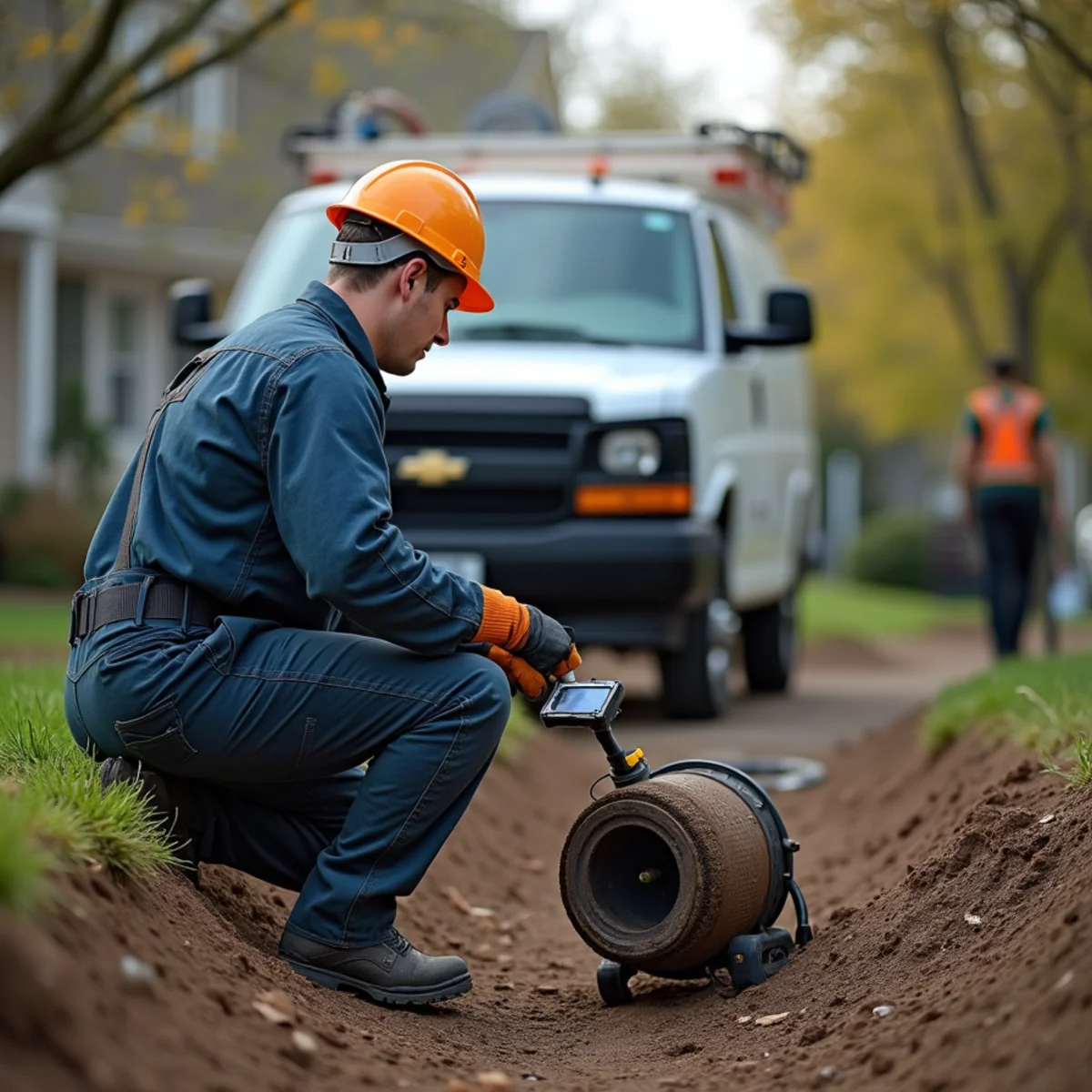
A sewer clog inspection in Sterling Heights uses a video camera to find what's actually blocking the line and roughly where it sits, instead of guessing from a snake that keeps hitting the same spot. Some clogs are a one-time event — a toy, a wipe, a wad of grease flushed on the wrong day — and they clear once and stay cleared. Recurring clogs are different: if the same line backs up every few weeks or every few months, something inside the pipe keeps re-forming the blockage, and clearing alone never fixes that.
- Recorded HD video
- Same-day report
- Licensed & insured
The usual suspects behind a recurring clog are root intrusion at a joint, a grease shelf built up along the pipe wall, a sag (a bellied section that never fully drains and collects solids), or a partial break where displaced pipe narrows the channel. Each looks different on camera and calls for a different fix. Clearing the same clog five times without seeing why it forms is how homeowners end up paying for the same service call over and over.
We also determine whether the clog sits in your main line or a branch line off it — a distinction that changes the cost and the fix. A main-line clog backs up multiple fixtures at once; a branch clog is almost always isolated to that one run of pipe. Getting it right the first time saves you from clearing the wrong section.
Clues you have a recurring blockage
- Clogs that return on a predictable schedule — every few weeks, every heavy-use weekend, every rain event
- A main-line clog affecting multiple fixtures at once (toilet, tub, and floor drain backing up together)
- Toilets that gurgle or bubble when another fixture drains nearby
- Water backing up at the lowest drain in the house first
- Slow drainage that never fully resolves, even right after clearing
- A single fixture clogging repeatedly while others stay fine — pointing to a branch line
- Clearing that restores flow for days or weeks, then fails again in the same spot
How we pinpoint a blockage
- 1
Locate the entry point
We access the line at the cleanout, or the closest approved access point, to get the camera as near to the suspected blockage as possible.
- 2
Camera to the clog
The camera travels the line and records continuous HD video as it approaches and reaches the obstruction.
- 3
Identify what's forming it
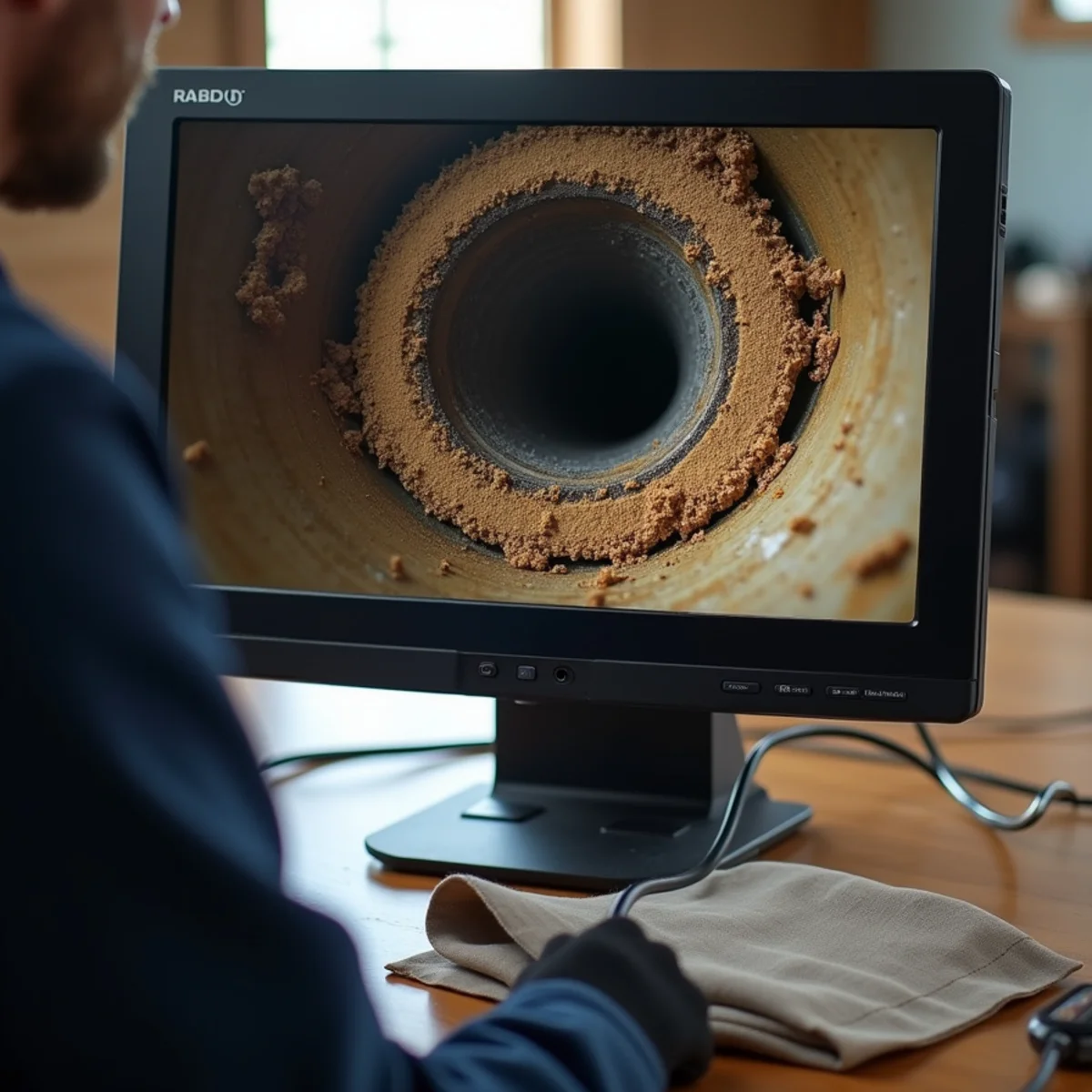
We distinguish roots at a joint, a grease shelf, scale buildup, foreign debris, a sag holding water and solids, or a structural defect narrowing the pipe.
- 4
Confirm main-line vs. branch
We trace which section of the system the clog sits in, so the right run of pipe gets addressed instead of the wrong one.
- 5
Mark the approximate location
Where useful, we correlate the footage with distance markers or locating equipment so a clearing crew or repair contractor knows exactly where to dig or focus.
- 6
Deliver footage and a clear plan
You get the recorded video, still images of the blockage, and a written recommendation — clearing, cleaning, or repair — before anyone commits to a next step.
Clog inspection pricing factors
The quote depends on access and conditions. As general context, a straightforward camera inspection commonly runs about $200–$500, with regional Metro Detroit pricing spanning roughly $254–$1,722 and averaging near $955:
- Whether the line must be partially cleared before the camera can pass the blockage
- Line length and access points (shorter runs trend $225–$500, longer commercial-scale lines can run $975–$1,900+)
- Emergency vs. scheduled appointment timing
- Whether the blockage sits in an easily accessed main line or a tighter branch run
- Whether you also want the full line scoped and any additional defects located
- Whether locating equipment is needed to mark the blockage's surface position for a future dig
What's included in a clog and blockage inspection
Every clog inspection includes
- Camera access at the cleanout or nearest approved entry point
- Continuous recorded HD video from entry to the blockage (and beyond, if the camera can pass)
- Still images of the clog itself and any visible pipe damage nearby
- An assessment of what's causing the blockage — roots, grease, scale, debris, a sag, or a structural defect
- A determination of whether the clog sits in the main line or a branch line
- Approximate location of the blockage, correlated to distance markers where possible
- A written summary you keep, in plain language — no engineering jargon required to understand it
- A clear recommendation for next steps: clearing, cleaning, or a repair referral
Why clearing without a camera keeps failing
A snake or hydro-jet restores flow through almost any blockage, but it can't tell you why the blockage formed. Cutting through roots at a joint buys a few weeks before they regrow. Knocking a channel through a grease shelf leaves the shelf itself in place, still narrowing the line. Pushing water past a sag just moves solids downstream until the next batch settles in the same low spot. None of that shows on a drain-clearing invoice — which is why so many Sterling Heights homeowners tell us they've "had this cleared three times already" before calling for a drain camera inspection.
This is where a sewer backup inspection and a clog inspection overlap. A backup is what you experience — water surfacing somewhere it shouldn't. A clog is one possible cause, but not the only one; a collapsed section, a bellied pipe, or a municipal surcharge can produce the same symptom without a true blockage. Camera footage separates a clog you can clear from a structural problem that needs a different plan.
Roots, grease, and sags: what the camera actually shows
Root intrusion almost always starts at a joint or a crack, where moisture draws roots in from nearby trees — common in older Clinton Township and Macomb County neighborhoods with mature landscaping near clay and cast-iron laterals. On camera, roots look like a fibrous mass growing inward from the pipe wall, sometimes filling most of the diameter. If that's what we find, a tree root intrusion inspection can show how far the roots have spread and whether cutting alone will hold.
A grease shelf builds up over years, typically closer to the house where kitchen drainage runs warmer, forming a hardened ridge that narrows the channel — distinct from roots and slower to return once properly cleaned. A sag, or pipe belly, is a low spot where the line has settled, holding standing water and collecting solids no matter how often it's cleared. A partial break — a shifted joint or crushed section — narrows the channel with displaced pipe rather than debris, so clearing restores flow briefly but the pinch point never goes away.
Main-line vs. branch clogs — why the distinction matters
A main-line clog sits downstream of where your interior branch lines converge, so it backs up multiple fixtures at once — the lowest drains first. A branch clog is isolated to one run, so only fixtures on that branch back up while everything else drains normally. Treating one like the other wastes time and money: clearing the wrong section leaves the real blockage untouched. Our main sewer line clog guide covers how to tell the two apart, and how a drain camera finds hidden clogs goes deeper on what the footage reveals.
What the camera can — and can't — prove
Camera footage reliably shows what's physically inside the pipe: the material forming the blockage, its approximate location, and visible pipe condition around it. It can't diagnose issues outside the line itself — soil conditions, a failing municipal connection point, or intermittent surcharging during heavy rain that isn't happening at the moment of inspection. We tell you plainly when something is outside what the footage can confirm, rather than overstating the findings.
The equipment and how far it can actually travel
We run a self-leveling color camera head so the image stays oriented as it turns through bends, with an onscreen distance counter recording exactly how far into the line the blockage sits — the number a clearing crew or repair contractor needs to find the same spot without re-scoping. A sonde transmitter in the camera head lets us mark that position from the surface when locating is part of the job.
What stops the camera is almost always the blockage itself or the water sitting behind it, not the equipment. A total obstruction — a root mass filling the diameter, a collapsed section, a solid clog of wipes or debris — stops the head cold until enough material is cleared for it to pass. When that happens, we tell you what we saw up to that point and what clearing would be needed before the rest of the run can be scoped.
Clog inspection, drain camera, or line locating — which one do you need
These three overlap enough to confuse people booking their first appointment, so here's the practical difference:
Choose based on what you already know
- A clog or blockage inspection fits when you know something is obstructing flow and want to see what it is and where
- A drain camera inspection fits broader diagnostic questions on any drain line, clogged or not — a good fit before a remodel or when symptoms are vague
- Sewer line locating fits once you already know the defect and need its exact surface position marked before a contractor digs
- A sewer backup inspection fits when water has already surfaced somewhere it shouldn't and you need the cause identified, not just the blockage
A recurring branch-line clog in Fraser
A homeowner in Fraser had one upstairs bathroom clog three times over a summer while every other fixture in the house drained normally — a pattern that pointed at a branch line rather than the main. A plumber had snaked it each time and moved on. When we scoped it, the camera reached a grease-and-hair mat about 22 feet out, right where the branch made a tight turn toward the main stack. The turn itself wasn't a defect, but it was exactly where debris naturally collected and hardened between clearings.
Because the footage confirmed a branch-line issue rather than anything wrong with the main, the fix was a proper hydro-jet cleaning of that one run instead of a bigger main-line job nobody actually needed. Knowing which line to treat — and which to leave alone — saved him from paying for work the problem never called for.
Common mistakes with a recurring clog
- Snaking the same clog repeatedly without ever asking why it keeps forming
- Assuming a single clogged fixture and a whole-house backup call for the same fix
- Pouring chemical drain cleaner down a line that turns out to have a structural defect, which does nothing for roots, a sag, or a break
- Booking a full-line camera inspection when the symptom is isolated to one fixture and a shorter branch scope would answer the question
- Skipping locating equipment before a dig, then excavating in the wrong spot
Roots, tree cover, and older Macomb County landscaping
Recurring root-driven clogs cluster in neighborhoods with mature trees planted close to the house decades before anyone thought about where the lateral ran — common across older sections of Warren and similar Macomb County communities. Our tree roots in Metro Detroit sewer lines post covers which species and planting patterns cause the most trouble, and older home sewer inspection in Macomb County covers what else tends to show up in a lateral that age alongside root intrusion.
What drives the price beyond access and length
Beyond the factors already listed, whether the blockage requires partial clearing before the camera can even reach it is usually the biggest swing factor — that's separate billable work layered on top of the inspection itself. As a length reference: shorter runs under 50 feet commonly land around $225–$500, 50–100 foot runs often run $500–$975, and longer main-line or commercial-scale runs can reach $975–$1,900 or more. We confirm the number before starting so there's no surprise once the camera's on-site.
Why Sewer Inspects
Why choose us for sewer clog & blockage inspection
12+ years pinpointing Metro Detroit clogs
We've camera-inspected recurring clogs across Sterling Heights, Macomb County, and Metro Detroit for over 12 years, in lines old and new, main and branch, straight and bellied.
Licensed, insured, and independent
We're licensed and insured, and we don't clear, dig, or repair — so our read on what's causing your clog isn't shaped by an incentive to sell you a bigger job.
Recorded footage, stills, and a written report you keep
Every clog inspection leaves you with HD video, still images of the blockage, and a plain-language report — evidence you can compare against any clearing or repair quote.
24/7 emergency response for active blockages
A main-line clog backing up multiple fixtures doesn't wait for business hours. We offer 24/7 emergency response, plus same-day or next-day scheduling otherwise.
Answers
Sewer Clog & Blockage Inspection — FAQs
Where we offer sewer clog & blockage inspection
We inspect recurring clogs throughout Sterling Heights and across Macomb County, including Utica, Clinton Township, Fraser, and Warren — areas with a mix of older clay laterals and newer PVC where roots, grease buildup, and settled sags are common causes of a clog that keeps coming back.
We also respond across Metro Detroit more broadly, scheduled or emergency. Wherever the appointment is, the same process applies: camera to the blockage, identify the cause, and a written plan before anyone clears or digs.
A few of the communities we serve — see all on our service areas page.
Related services
Sewer Backup Inspection
Find why it's backing up — roots, a belly, a break, a blockage, or a city surcharge — with recorded footage you can take to an insurer.
Learn moreDrain Camera Inspection
Camera diagnosis for kitchen, laundry, and branch drains — find grease, scale, roots, or a break instead of snaking the same clog forever.
Learn moreTree Root Intrusion Inspection
Mature Metro Detroit trees send roots into clay-joint laterals. We find the intrusion on camera, rate its severity, and locate it for a targeted fix.
Learn moreHelpful reading
Backing up right now? Call us 24/7.
Same-day sewer camera inspection across Sterling Heights, Macomb County & Metro Detroit. Free quote — call (614) 830-0578 or request a callback.
13+ years experience • Licensed & insured • 24/7 emergency response