Local-specific
What the 2021 Metro Detroit Floods Exposed About Aging Sewers
The June 2021 storm flooded thousands of Metro Detroit basements in hours. Here's what it revealed about aging sewer infrastructure and why documenting cause matters after an event like it.
By Sewer Inspects · Updated February 15, 2026 · 14 min read
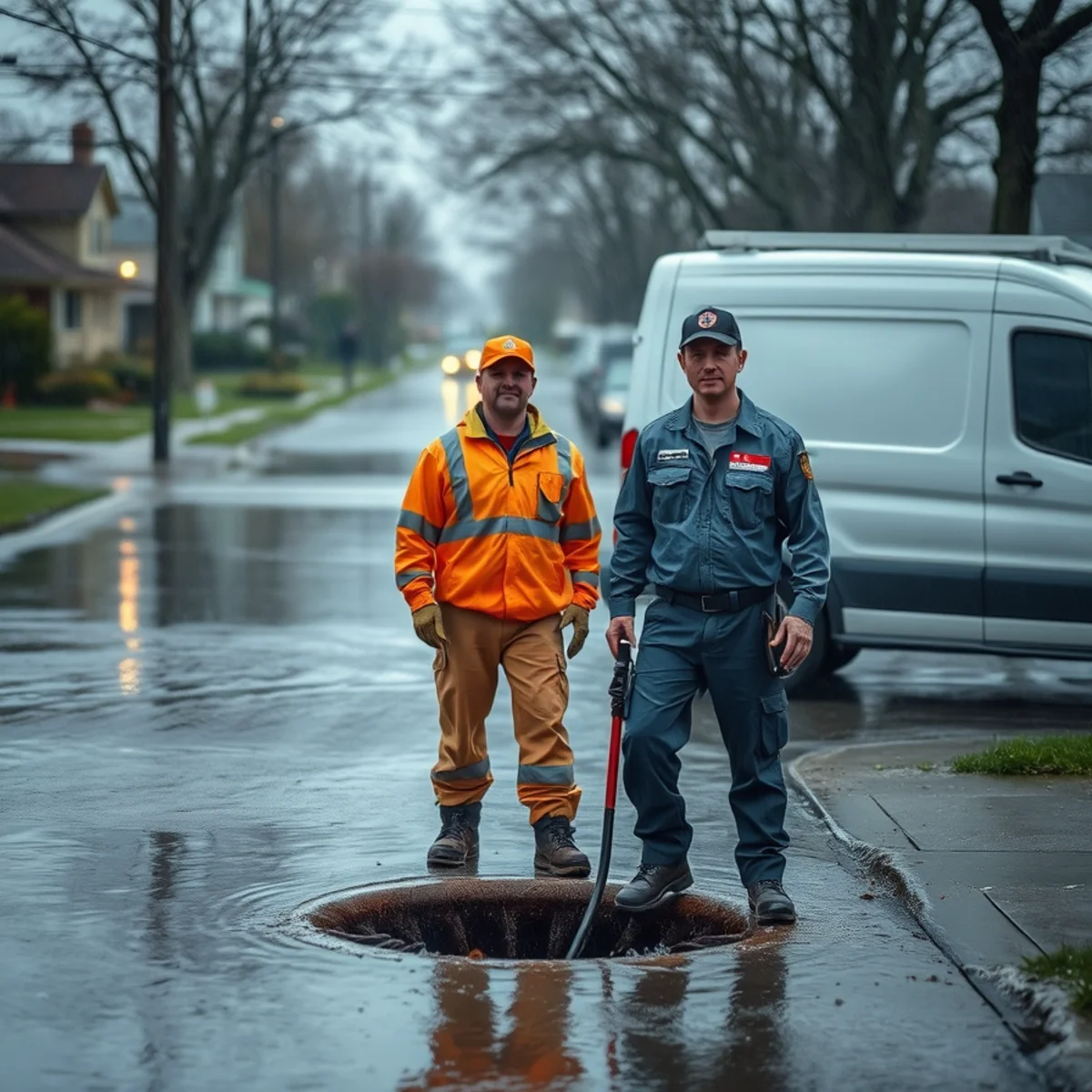
The June 2021 storm dropped historic rainfall across Metro Detroit in a matter of hours, and thousands of basements across Macomb, Wayne, and Oakland counties flooded as a direct result. It wasn't an isolated event — a similar storm in 2016 caused comparable damage across many of the same communities. Both events exposed something homeowners don't usually think about until it happens to them: how much the age of local sewer infrastructure matters when rainfall intensity spikes.
Combined vs. Separated Sewers
Many older Metro Detroit communities were built with combined sewer systems, where stormwater and sanitary sewage share the same pipe. Others have separated systems, but the storm capacity was sized decades ago for rainfall patterns that no longer match what the region actually experiences. During an extreme rain event, either type of system can reach capacity and surcharge — meaning the water has nowhere left to go but back up through the laterals connected to it, with the lowest point in the house, usually the basement, taking the brunt of it.
Private Lateral vs. Municipal Surcharge — Why It Matters
Two very different failure modes can produce the exact same result: sewage or stormwater in the basement. In one, the municipal main surcharges during extreme rainfall and pushes water back up through an otherwise sound private lateral. In the other, the homeowner's own lateral is already cracked, offset, or collapsed, and takes on groundwater independently of what the main is doing — making a bad storm dramatically worse.
During the 2021 event, we saw both. Plenty of homes with structurally sound laterals backed up purely because the municipal system was overwhelmed. Others had a compromised private line that turned a manageable storm event into a much larger loss.
A lateral that's already cracked, offset, or collapsed going into a storm isn't something a homeowner can see from the surface — it takes a camera to confirm. Our collapsed and broken pipe inspection service is what documents that kind of pre-existing structural failure, and after a flood event that documentation often needs to happen quickly, which is where an emergency sewer camera inspection comes in rather than waiting on a standard appointment slot.
The Scale of What Happened in 2021
The June 2021 storm wasn't a typical summer downpour — it delivered rainfall totals in a matter of hours that some of the region's sewer infrastructure simply wasn't built to move that fast, regardless of how well-maintained any individual section was. Reports across the tri-county area described tens of thousands of flooded basements in a single 24-hour window, with entire streets and expressways submerged. Events at that scale expose infrastructure limits that don't show up in an ordinary rainstorm, which is exactly why the term "once in a generation" storm gets used — and why homes that had never backed up before suddenly did.
Four Ways Water Gets Into a Basement During a Major Storm
When a basement floods during an extreme rain event, it's tempting to assume it's all "the sewer backing up." In practice there are several distinct pathways, and telling them apart matters for both the fix and any claim that follows:
Distinguishing the source of the water
- Sanitary sewer backup — the municipal main surcharges and pushes sewage back up through the lateral and into fixtures, usually the lowest drain in the house; a backwater valve is the main defense
- Storm sewer or combined sewer surcharge — in combined systems, stormwater and sewage share a pipe, so a storm surge can produce the same backup even without a sanitary-specific failure
- Sump pump overflow or failure — groundwater collecting around the foundation footing outpaces the pump's capacity, or a power outage during the storm stops the pump entirely
- Surface water and foundation seepage — water pooling against the foundation from poor grading or overwhelmed gutters finds its way in through a crack or window well, independent of anything happening in the sewer system
More than one of these can happen in the same storm, which is exactly why a single event can produce basement damage with more than one contributing cause — and why an inspection afterward often needs to check the lateral, the sump system, and the grading together rather than assuming just one explanation.
What Roseville and Grosse Pointe Woods Homeowners Learned
Roseville and Grosse Pointe Woods both sit close to the Lake St. Clair and Detroit River drainage basins, with older housing stock, higher water tables, and relatively flat grades that slow natural drainage. That combination means these communities feel the effects of an extreme rain event faster and more severely than areas with newer infrastructure and better elevation.
Why Documentation After a Flood Event Matters for Claims
Insurance claims and any municipal claim process both hinge on establishing cause — was this a backup through the sanitary system, surface flooding, or a combination of both, and was the homeowner's own lateral already compromised beforehand? Without objective documentation, this often comes down to dueling opinions.
A basement backup inspection performed after a flood event establishes the actual condition of your lateral with recorded footage — whether it was structurally sound and simply overwhelmed by the main, or whether it had pre-existing damage that contributed. That record is worth having on file regardless of whether a claim follows immediately.
Grading and Site Drainage Play a Role Too
Sewer infrastructure isn't the only factor in how badly a property floods. Lot grading that slopes toward the foundation instead of away from it, downspouts that dump water right next to the house, and window wells without proper drains all add to the volume of water trying to get into a basement during an extreme rain event. When we inspect a lateral after a flood, we're often asked to weigh in on whether the sewer system was the primary cause or whether surface water and grading contributed as well — and in many cases, especially in flatter neighborhoods, it's a combination of both working against the home at the same time.
Common Mistakes Homeowners Make Right After a Flood
- Cleaning up and disposing of damaged materials before anything is documented with photos, video, or a professional inspection
- Assuming a homeowners policy automatically covers sewer backup, when in most Michigan policies that coverage is a separate rider that has to already be in place
- Waiting on the insurance adjuster's visit before calling anyone to inspect the lateral, which can mean days pass before the line's actual condition at the time of the event is documented
- Never testing whether an existing backwater valve actually closed during the event, so a repeat storm produces the exact same result
- Treating a single bad storm as a one-time fluke rather than asking whether the lateral was already compromised going into it
A Common Scenario: The Split-Level in Madison Heights After a Surcharge Event
Say you own a split-level in Madison Heights built in the 1960s. During a heavy summer storm, water comes up through the basement floor drain, and by the time it recedes you've got several inches of standing water and a homeowners policy you're not sure covers any of it.
- Before cleanup starts, photos and video of the standing water and affected areas are taken, along with the time and approximate rainfall during the event
- A basement backup inspection is scheduled quickly — typically in the $200-$500 local range depending on access — to run a camera through the lateral and check whether it was structurally sound going into the storm
- The footage shows a clean, intact lateral with no cracks or offsets, which supports that this was a municipal surcharge event rather than a pre-existing private line failure
- That documentation goes to the insurance carrier alongside the claim, giving the adjuster an objective basis for cause instead of a dispute over what likely happened
Reducing Risk Before the Next Big Storm
Steps to take before the next major rain event
- Install or verify a backwater valve on your main line
- Test your sump pump before storm season, including battery backup if you have one
- Keep catch basins near your property clear of debris
- Get an older lateral scoped so you have a documented baseline condition before an event, not after
- Direct gutters and downspouts away from the foundation to reduce added load on the system
Why Recorded Video Holds Up Better Than a Written Estimate
A written estimate describing a lateral as "in good condition" is still just an opinion. A sewer line video inspection performed after a flood event gives you the footage itself, dated and timestamped, which is a fundamentally stronger piece of documentation if a claim gets disputed months later. It's also useful beyond insurance — if you sell the home down the road, that same footage answers a buyer's question about whether the flood caused any lasting damage to the line itself.
If you're near Lake St. Clair specifically, our article on high water table risk and basement backups covers the added year-round factors that compound flood risk in those communities.
Step by Step: Documenting Flood Damage Before You Call Anyone Else
- Photograph and video the water line height on walls, affected belongings, and any visible entry point — floor drain, wall crack, window well — before anything is moved or cleaned
- Note the approximate start time of the backup and how long water was present, along with rainfall totals if you have access to a nearby weather station reading
- Call for a camera inspection of the lateral as soon as it's safe to access it, ideally before any cleanup disturbs the area around the main cleanout
- Keep receipts for any emergency mitigation, like a restoration company or a rented pump, separate from repair costs — insurers often treat the two differently
- Request the written inspection report and footage in a format you can attach directly to a claim, not just a verbal summary over the phone
A Second Scenario: The Bungalow in Center Line With a Combined Sewer Backup
Say you own a 1950s bungalow in Center Line on one of the city's many blocks still served by a combined sewer, where stormwater and sanitary sewage share the same pipe. During a summer downpour, sewage backs up through the basement floor drain within twenty minutes of the rain starting — much faster than the split-level scenario above, where it was a slower groundwater-driven event.
- A basement backup inspection finds a clean, intact lateral with no cracks or blockage, consistent with the combined system simply reaching capacity faster than a separated storm sewer would
- Because the timeline lines up almost exactly with the start of the storm rather than building gradually, that supports a municipal surcharge as the primary cause rather than a slow-developing private line issue
- The homeowner's existing backwater valve had not been tested in several years and had a small amount of debris preventing it from seating fully, which likely let some backup through that a properly maintained valve would have blocked
- Combining the camera footage with the valve inspection gives a complete picture: sound pipe, an overwhelmed combined system, and one maintenance item — the valve — worth fixing before the next storm
What to Ask Before Hiring Someone to Inspect Storm or Flood Damage
- Will the inspection report distinguish between pre-existing pipe damage and damage consistent with a single storm event?
- How quickly can you get someone out during a major storm event when demand is highest?
- Does the report include a check of my backwater valve, or only the lateral itself?
- Will I get dated, timestamped footage I can attach directly to an insurance claim?
- Can you also assess grading and downspout drainage, or only the sewer side of things?
Myths vs. Facts About Flood-Related Sewer Backups
- Myth: The municipality is automatically responsible for basement flooding during a surcharge event. Fact: Michigan law gives municipalities substantial governmental immunity for sewage backups in many circumstances, which is part of why documenting your own line's condition matters regardless of who you believe is at fault.
- Myth: A home that flooded once will flood the same way in every future storm. Fact: grading changes, a newly installed backwater valve, or a repaired lateral can all change the outcome of the next storm even if nothing else about the property has changed.
- Myth: If the basement stayed dry this time, the lateral must be fine. Fact: a lateral can be structurally compromised and still not back up during a storm that happens to be shorter or less intense than the one that eventually causes a problem.
- Myth: Sump pump water and sewer backup water are the same issue. Fact: they're separate systems with separate causes, and a property can have one problem without the other.
Spring Thaw and the Clinton River Watershed: A Second Flood Season
Summer cloudbursts aren't the only flood risk in this region. Communities along the Clinton Township stretch of the Clinton River watershed see a second seasonal risk window during spring thaw, when melting snow combines with already-saturated ground and a swollen river to push water tables up well before the first heavy summer storm arrives. Sewer systems that handled a wet spring without incident can still be pushed past capacity by a summer storm layered on top of ground that never fully dried out — which is one reason a single dry season isn't the same as a low-risk year.
Next Step: Understanding Who Pays for What
Documentation is only half the picture — the other half is knowing what it's actually for. If the inspection turns up pre-existing lateral damage rather than a pure municipal surcharge, our guide on who pays for sewer line repair walks through how responsibility is typically divided between homeowner and municipality. And if you're still in the middle of an active backup, our what-to-do guide for a flooded basement covers the immediate steps before the longer documentation process even starts.
Want a documented baseline on your lateral before the next big storm hits Roseville or Grosse Pointe Woods? Sewer Inspects offers free quotes on basement backup inspections — call (614) 830-0578 to get on the schedule.
Need a sewer camera inspection?
Same-day appointments across Sterling Heights, Macomb County & Metro Detroit. Free quote, no obligation.