
Sewer Camera Inspection Services
Drain camera inspection in Sterling Heights, MI
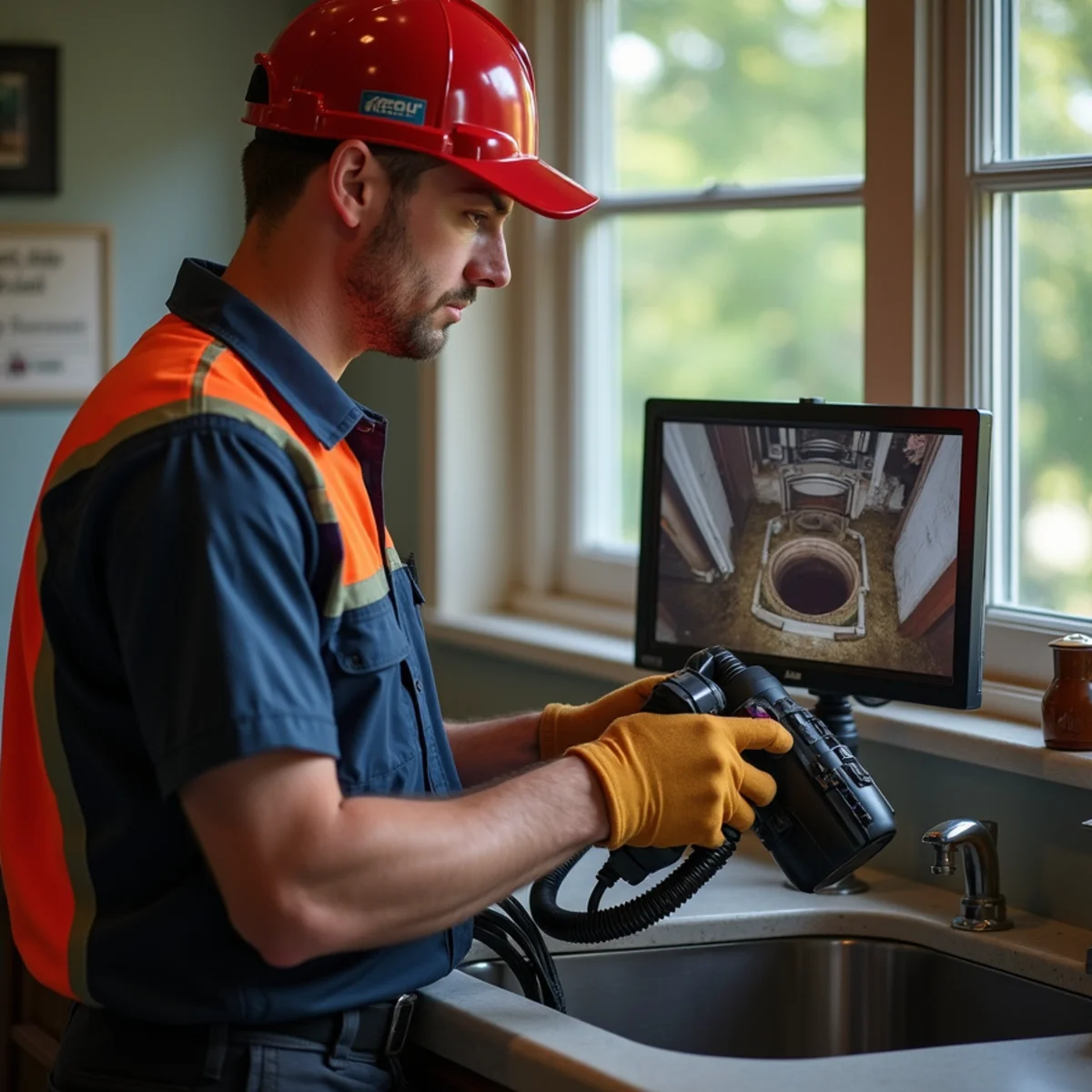
A drain camera inspection in Sterling Heights is a recorded video look inside a smaller branch drain — a kitchen line, a laundry standpipe, a bathroom drain, a floor drain — using a smaller-diameter camera suited to that pipe size, rather than the larger equipment built for a main sewer lateral. It answers what a plunger and a snake can't: what's actually inside that line, and whether it's something to clean or something to repair.
- Recorded HD video
- Same-day report
- Licensed & insured
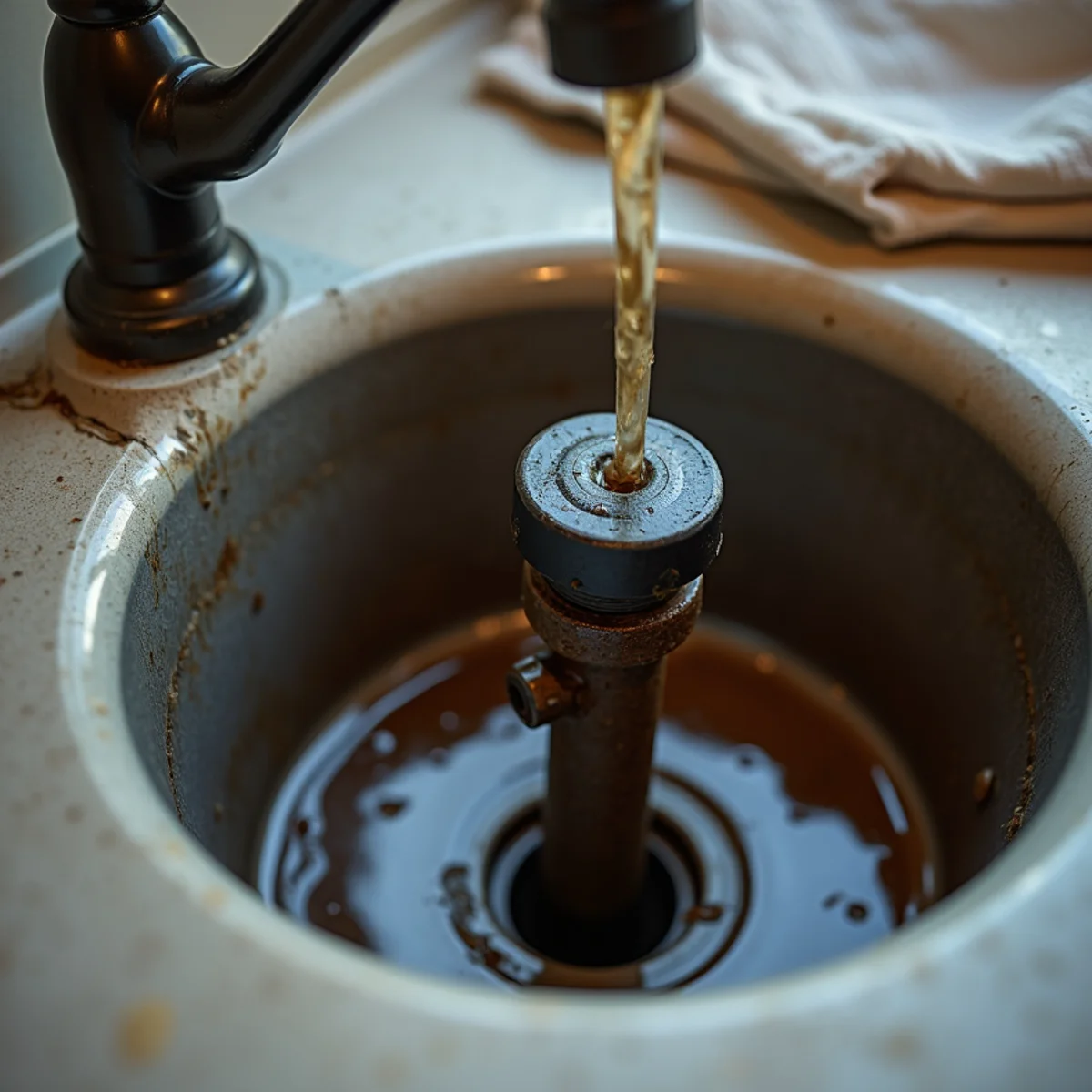
Branch drains fail for different reasons than a main line, and the fix depends on which one you're dealing with. Grease, soap scum, and mineral scale build up in layers and narrow the pipe until water barely moves — a cleaning problem. A sagging belly, a cracked joint, or roots working into a hub fitting is structural, and no amount of cleaning solves it. A camera tells you which one you have before you pay for the wrong service twice.
We run this inspection on kitchen sink lines, laundry standpipes, bathroom drains, and floor drains throughout Sterling Heights and Macomb County, and hand you the recorded footage plus a plain-English read on what we found.
Signs a branch drain needs a camera, not another snake
These are the patterns that mean the problem is inside the pipe, not something a plunger or a bottle of drain cleaner will resolve for good.
- The same kitchen, laundry, or bathroom drain clogs again within weeks of being cleared
- Slow-draining sink, tub, or floor drain despite repeated cleaning or snaking
- Gurgling, bubbling, or a sewer-gas odor coming from one specific fixture
- A backup limited to one branch or one room, while the rest of the house drains fine
- Standing water in a floor drain, laundry tub, or utility sink between uses
- You suspect grease or soap scale but a plumber can't confirm it without seeing inside
- A remodel, kitchen renovation, or new appliance hookup where you want the existing branch verified first
- A snaking service keeps restoring flow but the plumber can't explain why it keeps coming back
How a drain camera inspection works
Branch lines are smaller and tighter than a main sewer lateral, so the approach — and the camera — is scaled to fit.
- 1
Identify the line and access point
We confirm which fixture or branch is failing and find the best entry point — a cleanout, the fixture drain itself, or a nearby access — to reach it without unnecessary demolition.
- 2
Clear the line if needed
A complete blockage or heavy grease buildup can stop a camera before it ever gets a look. If the line needs to be opened up first, we do that, then run the camera.
- 3
Insert the smaller-diameter camera
A camera head sized for branch and interior drains — smaller than what we use on a main sewer lateral — travels the line on a push cable while we watch a live monitor.
- 4
Diagnose the actual cause
We distinguish grease, soap scum, and mineral scale buildup from structural issues — a sagging belly, a cracked or offset joint, or roots intruding at a fitting — and record what we see.
- 5
Check nearby joints and transitions
Branch drains often tie into cast iron, PVC, or older fitting types at odd angles. We note material transitions and connection points, since that's where buildup and root intrusion concentrate.
- 6
Explain and deliver
You get the recorded video, still images of anything notable, and a written recommendation — cleaning versus repair — instead of a guess based on how the water drained afterward.
Drain camera inspection pricing factors
Branch-line camera work is typically at the lower end of the overall camera-inspection range — a straightforward local inspection commonly runs about $200–$500, well under what a longer main-line scope can run. Detroit-area research across all camera inspection types reports a wider $254–$1,722 range with roughly a $955 average on the more involved jobs. The written quote we give you depends on:
- Which fixture and how easy the cleanout or access point is to reach
- Line length and the number of fittings, elbows, and transitions the camera has to pass
- Whether the drain has to be cleared or cleaned before the camera can travel through it
- Whether standing water or a soft blockage limits how far we can see without clearing it first
- Whether you also want the main sewer line scoped while we're already on site
- Urgency — a same-day appointment for an active clog versus a scheduled inspection
What's included in a drain camera inspection
Every branch-line inspection uses the same documentation standard as a full sewer camera inspection, scaled to the line. You keep all of it — and it's the same standard we use on every call across our Sterling Heights service area.
What you get
- Recorded HD video of the branch line, from access point to camera endpoint
- Still images of grease/scale buildup, structural defects, or root intrusion, if present
- Approximate inspected distance and where the camera stopped
- Notes on pipe material and any transitions (cast iron to PVC, for example)
- A plain-English written summary distinguishing a cleaning issue from a structural one
- A clear next-step recommendation — clean it, monitor it, or plan a repair
Grease and scale buildup vs. a structural problem
This is the core distinction a branch-line camera exists to make. Grease, soap film, and hard-water scale coat the pipe wall in layers. On camera, that looks like a narrowed, rough, or partially closed channel along otherwise sound pipe — the fix is mechanical cleaning, sometimes on a repeat schedule for a kitchen line that runs a lot of grease.
A structural problem looks different. A belly, or sag, is a low spot where water and debris pool even in a freshly cleaned line — gravity keeps pulling solids back into the same dip. A cracked or offset joint shows a visible gap or debris catching at one spot every time. Root intrusion typically appears at a hub or joint, where roots find a hairline opening and grow into the flow path — the same mechanics we cover in more depth for main lines in our tree root intrusion inspection service, just at a smaller scale.
Why repeated snaking doesn't fix it
A snake punches a channel through whatever is blocking the line without removing the cause. If it's buildup, some stays behind and rebuilds. If it's a belly or a crack, the snake can't fix the pipe shape — it just clears what collected there until the next batch of debris catches in the same spot. That's why the same drain keeps clogging on a predictable schedule.
Smaller camera, smaller access — why it's a different job than a main-line scope
Branch and interior drains run 1.5 to 4 inches in diameter, against the 4- to 6-inch (or larger) private lateral a main sewer camera is built for. We use a camera and push cable sized to fit the pipe, navigate tighter 90-degree fittings under sinks and behind appliances, and access the line through the fixture, a nearby cleanout, or occasionally a trap arm — whichever gets us in without cutting open a wall. If the trip also raises questions about the main line the branch ties into, we can scope that too; see our full sewer camera inspection for what that covers.
When the clog is actually further downstream
Sometimes a branch camera shows the branch itself is clean, and the obstruction sits where it ties into a larger line or the main sewer. If multiple fixtures back up together, that's usually a sign the problem has moved past the branch — our sewer clog blockage inspection service locates a blockage anywhere along the line, branch or main, and we'll say so plainly.
For a closer look at how the camera tracks down a hidden clog step by step, our blog post on how a drain camera finds hidden clogs walks through what the footage shows and how we read it.
How we get a small camera through tight fittings and traps
Branch drains fight back in ways a main lateral doesn't. A kitchen line can run through two or three 90-degree fittings between the sink and the wall stack, a laundry standpipe often ties in at an angle behind a machine that has to be pulled out, and an S-trap or P-trap can stop a stiffer cable cold. We carry push cables with enough flexibility to work through tight turns without kinking, and we pick the entry point — the fixture itself, a nearby cleanout, or a trap arm — based on which route gets a full look with the least disassembly.
What actually stops the camera
A hard 90-degree double-fitting, a section packed solid with grease, or a trap arm too narrow for the head are the most common stopping points on a branch line. When that happens, we say so in the report rather than guessing at what's past it — the same honesty standard we hold for every sewer camera inspection we run, branch or main.
Camera the branch, camera the main, or both — how to decide
A single stubborn drain doesn't always need the same inspection as a whole-house slowdown. Use this to point yourself at the right service before you book:
Matching the symptom to the inspection
- One fixture clogs repeatedly while everything else drains fine — a branch-line drain camera inspection, which is this service
- Multiple fixtures back up together or the lowest drain in the house backs up first — the problem is likely further downstream; see sewer clog blockage inspection
- You smell sewer gas from one fixture specifically, not the whole house — our sewer gas odor inspection narrows down the source
- You just bought or are about to sell the home and want the whole system checked, branch and main — a full sewer camera inspection covers both in one visit
- The backup is active right now and getting worse — call for an emergency sewer camera inspection instead of waiting on a scheduled visit
A Shelby Township kitchen line: three snakings, one camera
A homeowner in Shelby Township had paid for three separate snaking visits on the same kitchen line over eight months, each one restoring flow for a few weeks before the sink backed up again. We ran a branch camera through the cleanout under the sink and found a low spot — a slight belly — right where the drain transitioned from PVC to an older cast-iron stub near the foundation wall. Grease was resettling in that dip every time, which is exactly why snaking kept working temporarily and never for long.
With the belly's location and the material transition on video, the homeowner had a plumber replace roughly four feet of pipe at that exact spot instead of guessing at a larger section. The camera turned a recurring service call into a single, targeted repair.
Common mistakes homeowners make with a clogged branch drain
What to avoid
- Paying for repeat snaking visits without ever asking why the clog keeps coming back
- Pouring chemical drain cleaner down a line that's actually got a structural belly or crack — it won't fix a shape problem and can damage older pipe
- Assuming a slow kitchen drain is "just grease" without confirming it on camera, when it could be a joint issue at a material transition
- Skipping a camera check before a kitchen remodel that ties new fixtures into an old branch line
- Not mentioning to your plumber that the same drain has clogged multiple times before — that history changes what's worth checking first
Grease, hard water, and Macomb County's older kitchen lines
Kitchens in Sterling Heights and across Macomb County built before the 1980s often still run their branch lines into cast iron before tying into the main lateral, and cast iron's rough interior surface gives grease and hard-water scale far more to grip than smooth PVC does. That combination narrows a branch line faster than newer construction, which is why the same house can need a kitchen-line camera years before its main sewer lateral shows any trouble. Homeowners throughout Warren and Utica with original cast-iron branch plumbing see this pattern often enough that we consider it routine, not unusual.
If a branch problem keeps recurring after cleaning, it's worth reading how root intrusion works at the small scale in our tree root intrusion inspection service, since older cast-iron hub joints on a branch line are just as vulnerable to root entry as a main lateral once a joint opens even slightly. Our sewer line maintenance checklist for older homes covers how often it's worth checking branch lines like these before a clog becomes a habit.
Why Sewer Inspects
Why choose us for drain camera inspection
Right-sized equipment for branch drains
We carry smaller-diameter cameras built for kitchen, laundry, and bathroom lines, not just the larger equipment scaled for a main sewer lateral.
12+ years reading Metro Detroit drain lines
We've inspected branch and interior drains under homes of every era across Sterling Heights and Macomb County, so we read grease buildup, scale, and root intrusion patterns quickly on the monitor.
Recorded footage and a written report you keep
Every inspection comes with HD video, still images, and a plain-English summary separating a cleaning issue from a structural one — yours to keep or hand to a plumber.
Independent diagnosis, no dig-selling
We inspect; we don't bid the repair. That keeps our read on grease versus a break honest, whether the answer is a simple cleaning or a section that needs attention.
Answers
Drain Camera Inspection — FAQs
Where we offer drain camera inspection
We run drain camera inspections on kitchen, laundry, bathroom, and floor drains throughout Sterling Heights and across Macomb County, including Warren, Sterling Heights' neighboring communities of Fraser, Utica, and Clinton Township, and Shelby Township. Same-day and next-day appointments are typically available.
We also cover branch and interior drain inspections further into Metro Detroit, including Troy, Roseville, Eastpointe, and Center Line, for homeowners, landlords, and property managers dealing with a persistent branch-line clog.
A few of the communities we serve — see all on our service areas page.
Related services
Sewer Clog & Blockage Inspection
Pinpoint what's blocking the line and where — so you stop paying to clear the same clog and fix the reason it forms.
Learn moreSewer Camera Inspection
A recorded HD look inside your sewer line — roots, cracks, bellies, and blockages confirmed on video before you spend a dollar on repairs.
Learn moreSewer Line Video Inspection
Full HD video of your sewer line end to end — the recorded proof you keep for repairs, disputes, sales, and insurance files.
Learn moreHelpful reading
Ready to book drain camera inspection?
Same-day sewer camera inspection across Sterling Heights, Macomb County & Metro Detroit. Free quote — call (614) 830-0578 or request a callback.
13+ years experience • Licensed & insured • 24/7 emergency response