
24/7 Emergency Service
Sewer backup inspection in Sterling Heights, MI
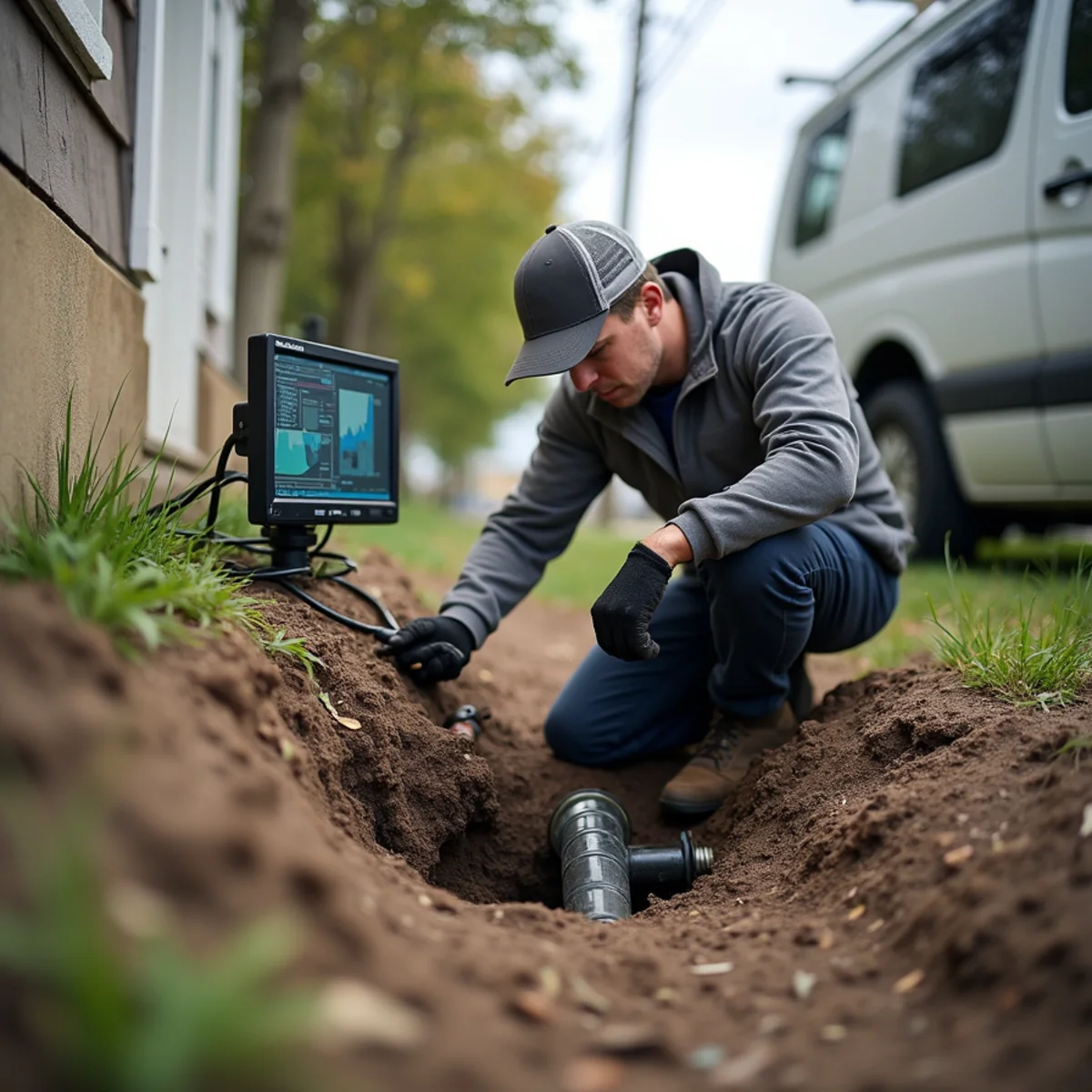
A sewer backup inspection in Sterling Heights is a recorded camera scope of your lateral that identifies the actual cause of a backup — root intrusion, a pipe belly, a crack or break, a blockage, or a municipal system surcharge — instead of just restoring flow and hoping it holds. A backup is only a symptom; until a camera has traveled the line, nobody actually knows why it happened.
- Recorded HD video
- Same-day report
- Licensed & insured
The fix depends entirely on the cause. Roots get cut back or the joint repaired. A belly — a low, sagging section that traps water and debris — may need spot repair or lining. A break or collapse needs excavation. A one-time blockage might just need clearing. And if a sanitary sewer surcharge during heavy rain is the real driver, no work on your private lateral stops it — that's a conversation with the city, not your plumber.
We record the run on HD video, note where the cause sits, and hand you the footage, stills, and a written summary — evidence a repair contractor can quote against and an insurer can evaluate. We inspect only, never sell the dig, so the read you get is independent.
What backups are trying to tell you
A backup rarely happens for no reason. These patterns usually point to a specific, findable cause:
- Backups that return weeks or months after being cleared or snaked
- Multiple fixtures backing up at once, which usually points to the main line rather than one branch
- Backups that spike during or right after heavy rain
- Wastewater surfacing at a floor drain or the lowest fixture in the house
- A history of snaking with no lasting fix — the line clears, then backs up again on a similar schedule
- Gurgling toilets or slow drains in several rooms in the days before a backup
- A sewage smell that shows up with the backup and lingers after cleanup
How we diagnose a backup
The goal is a specific answer, not just a clear line, so the next step is the right one.
- 1
Assess & make safe
We confirm it's safe to inspect, ask about the backup's history and timing, and advise on protecting people and property before anyone touches contaminated water.
- 2
Scope the line
The camera travels the lateral from the cleanout or another approved access point, recording the full run on HD video as it goes.
- 3
Identify the specific cause
We document what's actually causing the backup — root intrusion, a sagging belly, a crack or break, a blockage or debris buildup — rather than a vague 'the line has issues.'
- 4
Isolate the source
We help determine whether the problem sits on your private lateral or points to a broader sanitary sewer surcharge affecting the block during storms.
- 5
Locate & measure
When conditions allow, we estimate the defect's surface position and depth so any future repair targets the right spot.
- 6
Document for next steps
You get the recorded video, still images, and a written summary formatted for a repair quote, a property file, or an insurance claim.
Backup inspection pricing factors
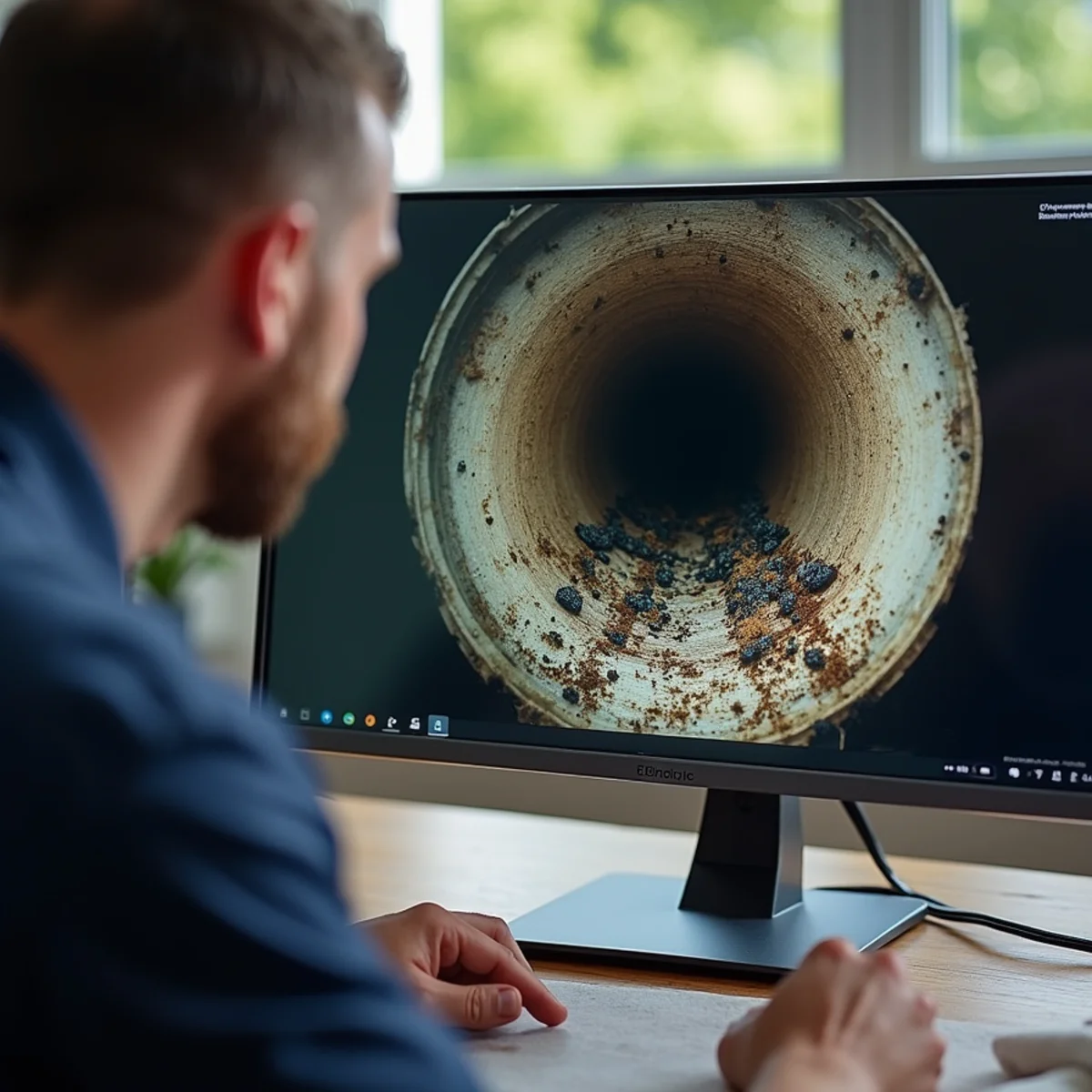
Cost depends on conditions, not a flat rate — we confirm pricing before starting. A straightforward local inspection commonly runs about $200–$500; Detroit-area research shows a wider $254–$1,722 range with roughly a $955 average on complex jobs.
- Whether the line must be cleared before the camera can pass through it
- Emergency vs. scheduled response — an active backup at 2 a.m. costs differently than a booked morning visit
- Line length and access during backup conditions (under 50 ft, 50–100 ft, over 100 ft each carry different typical ranges)
- Whether locating is needed to mark a defect's position and depth ahead of repair
- Whether a written report needs to be formatted specifically for an insurance adjuster
What's included with a backup inspection
Every backup inspection includes
- Recorded HD video of the full inspected run
- Still images of the specific cause we identify
- Approximate inspected distance and camera endpoint
- Pipe-material notes (clay, cast iron, PVC, Orangeburg, etc.)
- Defect location and estimated depth when conditions allow
- A plain-English written summary you keep for repair bids or an insurance file
Why recurring backups need a camera, not another snake
A snake restores flow, not answers. It punches through roots or breaks up a blockage and the water starts moving again, but if the underlying cause is still there, the backup returns on roughly the same schedule and you pay for the same visit over and over. If you're on your second or third snake for the same fixture, that pattern alone is worth a camera scope — see our sewer clog and blockage inspection for recurring-clog diagnosis specifically. The camera doesn't clear anything; it shows why the line keeps failing, whether that's a root mass regrowing at the same joint, a belly trapping debris, or a crack letting soil in over time — so you can choose cleaning, a spot repair, lining, or excavation instead of guessing.
Private lateral defect or municipal surcharge — how to tell
Not every backup is your responsibility to fix. In parts of Sterling Heights and along the Clinton River corridor, the sanitary sewer system can surcharge during heavy rain, and the lowest fixture — usually a basement floor drain — is where it shows up first. If that's the pattern, no repair on your own line stops it; the conversation shifts to the water and sewer division, not a plumber. A camera scope tells the two apart: roots, a belly, a crack, or debris on your lateral is a defect you own, while a clear line with backups that track storms points toward a system-wide surcharge instead.
Homes near St. Clair Shores and other high-water-table areas see the surcharge pattern more often — our post on Lake St. Clair's high water table and backup risk covers why. If water's already in a finished basement, our basement backup inspection covers that scenario specifically.
Common causes we find on camera
- Root intrusion — roots entering at a joint or crack and restricting flow
- Pipe belly (sag) — a low section holding water and debris, causing repeat backups in the same spot
- Cracks, breaks, or a collapsed section — structural failure letting soil or roots in
- Blockage or grease buildup — an obstruction, sometimes paired with another defect that lets debris catch
- Offset joints — often from settlement or freeze-thaw movement in older clay or Orangeburg lines
- Municipal surcharge — no lateral defect found, but backup timing tracks heavy rain
Backup happening right now?
Stop all water use, keep people and pets away from the contaminated water, and photograph the damage before cleanup starts. Then call (614) 830-0578 — we run emergency sewer camera inspection around the clock and can usually get someone out same-day.
Documenting a sewer or water backup insurance claim
Standard homeowners policies typically exclude sewer and water backup damage unless you've added a specific endorsement, and insurers usually want more than your word that something failed. Recorded video, still images, and a dated written report give an adjuster something concrete — far stronger than a claim built on "the plumber said it was roots." Keep the original video, damage photos, receipts, and our findings together in one folder before you file. We can't say whether your specific policy pays out — that depends on your endorsement, the cause, and your insurer's exclusions — but see does homeowners insurance cover sewer backups in Michigan for background, and we'll give you the same-quality documentation regardless of whether the cause is your lateral or a municipal surcharge.
How camera access and line conditions affect what we can actually see
The equipment matters less to you than the read it produces, but it's worth knowing what shapes that read. We run a self-leveling color camera head so the picture stays right-side-up as it travels through bends, with an onscreen distance counter that timestamps footage against how far into the line we are — that's what lets us hand a repair contractor a number, not just a video. A sonde transmitter built into the camera head lets us mark the defect's surface position later if locating is part of the job.
What limits the read is almost always water and access, not the camera. Standing water pooled in a belly can obscure the pipe wall right where you need to see it clearest. A total blockage stops the camera cold until enough material is cleared for it to pass. And a tight 90-degree fitting or a transition between pipe materials can be as far as a rigid camera head will go without a flexible push-rod setup. We tell you plainly when the inspected distance stopped short of the full run and why, rather than presenting a partial scope as a complete one.
Scheduled backup inspection or emergency response — how to choose
Not every backup needs a 2 a.m. call, and not every one can wait until Monday. The distinction usually comes down to whether water is actively rising or the backup has already resolved on its own.
Call now for emergency response if
- Water or sewage is actively rising at a fixture or floor drain right now
- Multiple fixtures are backing up at once and you can't isolate the source
- Contaminated water is spreading toward finished living space, electrical outlets, or a furnace
- A previous snake job held for less than a day before the backup returned
A scheduled visit usually fits if
- The backup has cleared on its own and drains are moving again, even slowly
- You want a preventive read before symptoms turn into an emergency — that's closer to a routine sewer scope inspection than an emergency call
- You're gathering documentation for an insurance claim on damage that's already contained
- You're comparing repair bids and need independent footage before choosing a contractor
A recurring backup case from Shelby Township
A homeowner in Shelby Township called us after her basement bathroom backed up for the third time in four months. Each time, a plumber had snaked the line, flow returned, and she'd paid the bill and moved on — until it happened again on almost the same schedule. We scoped the lateral from the exterior cleanout and found a belly about 38 feet out: a low section where the clay pipe had settled just enough to trap standing water and whatever debris passed through it. Snaking had been clearing the debris every time without ever touching the sag causing it to collect there in the first place.
With recorded footage showing the belly's approximate location and depth, she got two repair bids for a spot excavation rather than a fourth round of clearing. The footage also gave her a clear answer when she asked the obvious question — was this ever going to stop on its own with more snaking. It wasn't. That's the value of a camera scope on a repeat backup: it turns "it keeps coming back" into a specific, fixable defect.
Common mistakes homeowners make with a backing-up sewer line
- Paying for another snake job on the third or fourth repeat instead of asking why it keeps happening
- Assuming a clear line after snaking means the underlying cause is fixed
- Cleaning up contaminated water without photos first, then having nothing to show an adjuster
- Filing an insurance claim without checking whether a sewer/water backup endorsement is even on the policy
- Hiring the repair crew before getting an independent look at what actually needs fixing
- Assuming a backup that tracks heavy rain must be a plumbing problem, when it may be a municipal surcharge
Clay pipe, freeze-thaw, and why older Macomb County laterals fail this way
A large share of the backups we scope in Clinton Township and similar older Macomb County neighborhoods trace back to clay lateral pipe installed decades ago in short, jointed sections. Every joint is a seam, and Michigan's freeze-thaw cycle works on those seams year after year — ground heaves in winter, settles in spring, and the small movement gradually opens gaps that roots exploit and that let sections drift out of alignment into a belly. Our clay sewer line failure in Metro Detroit post goes into how this plays out block by block; the short version is that a clay lateral's age tells you it's at higher risk, but only a camera tells you whether this specific line has already started failing.
If you're watching for early warning signs before a full backup forces the issue, our warning signs of sewer line failure post covers the slow-drain and gurgling symptoms that usually show up first.
What actually drives the cost of a backup inspection
Beyond the factors above, length tiers give a useful frame: shorter residential runs under 50 feet commonly land around $225–$500, mid-length runs in the 50–100 foot range often run $500–$975, and longer or harder-access lines can reach $975–$1,900 or more. An active backup can push toward the higher end of whatever tier applies, mainly because clearing enough of the blockage for the camera to pass is itself billable work layered on top of the inspection. We quote before starting so there's no surprise once the truck is on-site.
Why Sewer Inspects
Why choose us for sewer backup inspection
12+ years reading backup patterns across Metro Detroit
We've scoped enough laterals under Macomb County's clay, cast-iron, and Orangeburg pipe to recognize a root mass, a belly, or a storm surcharge quickly — and say so plainly instead of guessing.
Licensed, insured, and independent
We inspect and diagnose — we don't sell excavation, lining, or repair work, so our read on your backup's cause stays independent of any incentive to recommend the bigger job.
Documentation built for insurance and repair decisions
Every inspection includes recorded HD video, still images of the cause, and a written report you keep — the same file whether you're comparing bids or filing a claim.
24/7 emergency response, same-day when it's active
An active backup gets a fast response, day or night. A recurring issue that isn't actively flooding can usually be scheduled for the next day.
Answers
Sewer Backup Inspection — FAQs
Where we offer sewer backup inspection
We run backup inspections throughout Sterling Heights and across Macomb County, including Warren, Roseville, Eastpointe, Clinton Township, Shelby Township, and Macomb Township. Several share the same aging clay and Orangeburg lateral stock and the same storm-surcharge exposure along the Clinton River corridor.
We also respond in Harrison Township and St. Clair Shores, where high water tables near Lake St. Clair make surcharge-driven backups more common — and make it more important to document whether your lateral is actually at fault before anyone digs.
A few of the communities we serve — see all on our service areas page.
Related services
Basement Backup Inspection
Water or sewage rising at the basement floor drain means the line failed somewhere below it. We scope it to find where — and whether it's your lateral or a storm surcharge.
Learn moreEmergency Sewer Camera Inspection
Active backup right now? We're on call 24/7 to scope the line, confirm the cause, and tell you whether it's your private lateral or a city surcharge before anyone digs.
Learn moreSewer Clog & Blockage Inspection
Pinpoint what's blocking the line and where — so you stop paying to clear the same clog and fix the reason it forms.
Learn moreHelpful reading
Backing up right now? Call us 24/7.
Same-day sewer camera inspection across Sterling Heights, Macomb County & Metro Detroit. Free quote — call (614) 830-0578 or request a callback.
13+ years experience • Licensed & insured • 24/7 emergency response