
24/7 Emergency Service
Basement backup inspection in Sterling Heights, MI
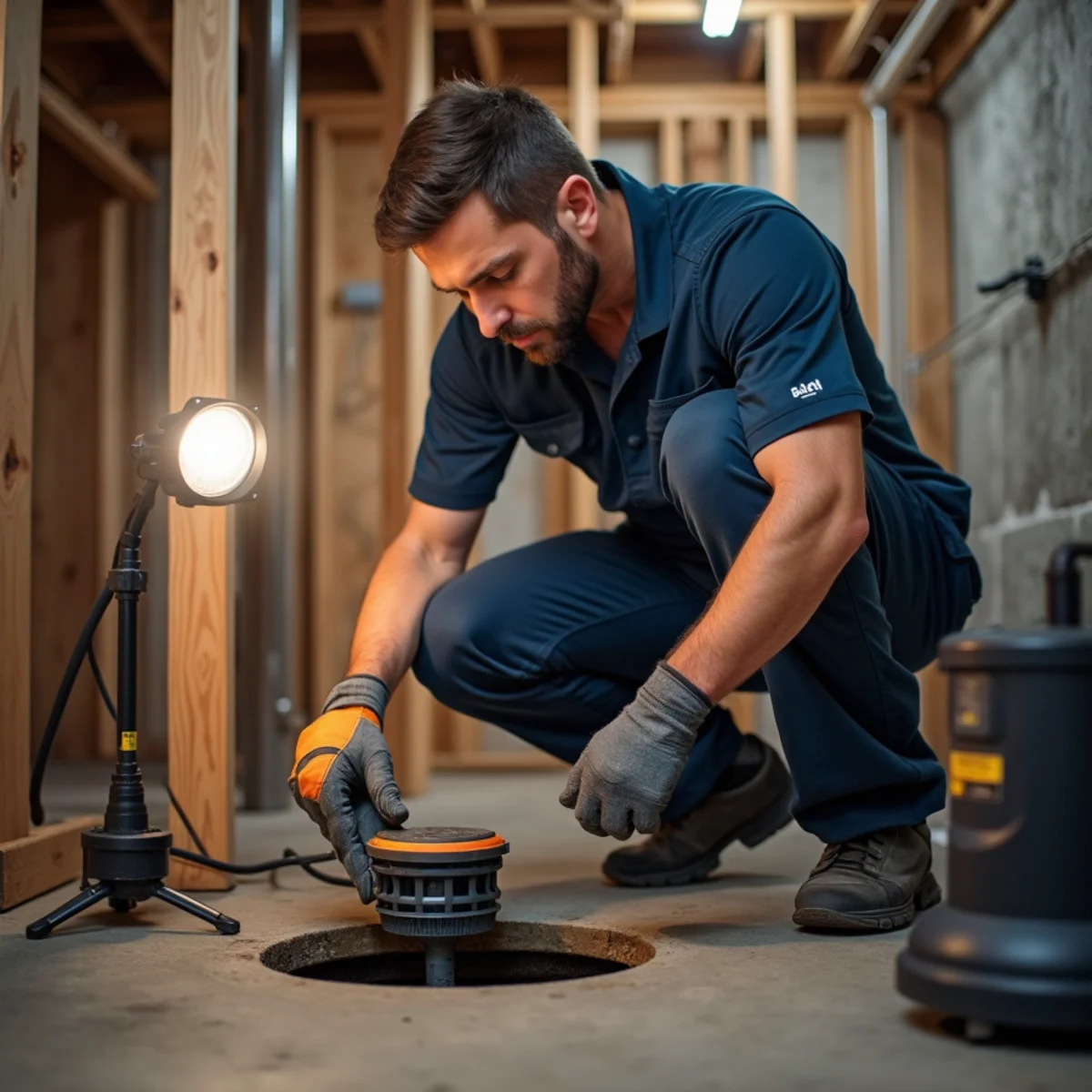
A basement backup inspection in Sterling Heights is a camera-based diagnosis of why water or sewage is rising through the basement floor drain — the lowest, most vulnerable exit point on the whole plumbing system. When a private sewer lateral is blocked, cracked, sagging, or simply overwhelmed, the basement floor drain is usually the first place it shows, long before you'd notice anything upstairs.
- Recorded HD video
- Same-day report
- Licensed & insured
That's especially true in Metro Detroit's older, low-lying neighborhoods, where heavy rain and spring snowmelt can push more flow into the sanitary sewer than it's built to carry. A finished basement is expensive to lose to sewage: drywall, flooring, and carpet are all destroyed fast, and every hour of delay adds to the cleanup bill. A camera inspection tells you whether you're dealing with a private-lateral defect on your own line or a municipal surcharge affecting the whole street.
Because a basement backup is also a safety and insurance event, we treat it that way. You get guidance on handling contaminated water safely, and recorded footage, still images, and a written report formatted for a repair decision and, where applicable, an insurance file. We'll also look at how your sump system and sewer line interact, since the two are often confused when water shows up at the same time.
What a basement floor drain backup points to
- Sewage or graywater surfacing at the basement floor drain
- Backups that start or worsen during heavy rain or spring snowmelt
- Water at the floor drain even when nothing is running upstairs
- A finished basement — drywall, flooring, carpet — at risk of costly water damage
- A sump pump that seems to be working fine, yet water still shows up at the floor drain
- Recurring basement water despite having the line snaked or cleared before
- A slow-draining basement bathroom or a floor drain that gurgles
- Musty odor or moisture staining near the floor drain after a storm
How we diagnose a basement backup
We treat an active backup as a safety issue first and a diagnostic problem second:
- 1
Safety first
We advise on avoiding contact with contaminated water, protecting electrical equipment, and keeping people and pets clear of the affected area before anyone starts working.
- 2
Separate sump from sewer
We confirm whether your sump pump and sanitary sewer are independent systems or whether the floor drain is tied into the line that's actually backing up.
- 3
Scope from the right access
We enter at the cleanout, the basement floor drain, or the nearest approved access point and record the private lateral's condition on video.
- 4
Find the cause and its location
We identify a defect, root intrusion, blockage, or surcharge pattern and its approximate position along the run.
- 5
Distinguish your line from the city's
We help you understand whether the evidence points to a private-lateral problem you own or a wider municipal surcharge during heavy rain.
- 6
Document for the claim and the repair
You receive recorded footage, still images, and a written summary formatted for a contractor's repair plan and an insurance file.
Basement backup inspection pricing
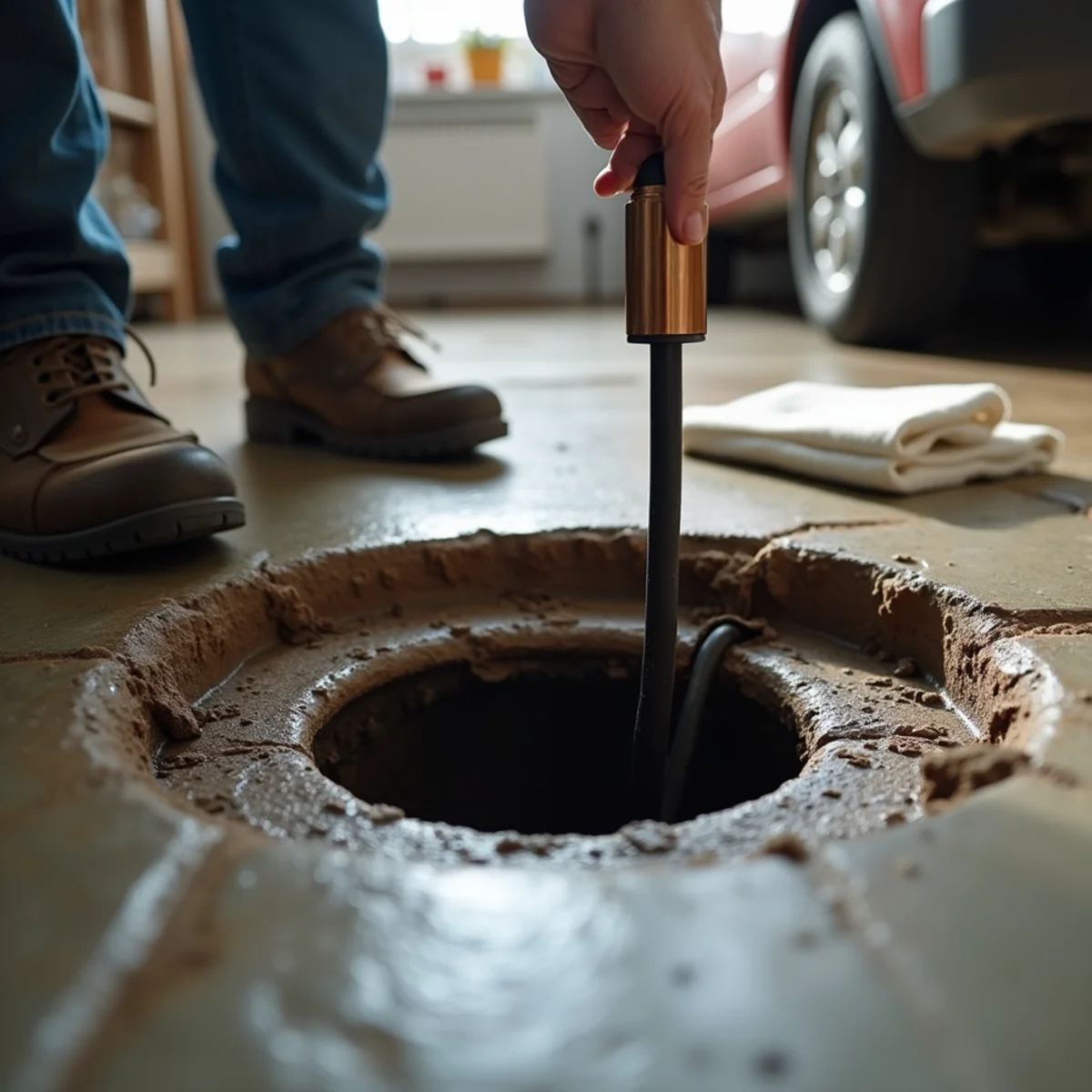
A straightforward local camera inspection commonly runs about $200–$500, but an active basement backup adds variables. What actually moves the number:
- Emergency vs. scheduled response
- Whether the line must be cleared before a camera can pass through it
- Line length and cleanout access under active backup conditions
- Whether locating is needed to mark a defect for an urgent repair
- Whether the sump pump and discharge line need to be checked alongside the sewer
- Access complications in a finished basement — flooring, drywall, or furniture in the way
Why the basement floor drain is usually the first place trouble shows
Every fixture in the house drains downhill toward the sewer lateral, and the basement floor drain sits at the lowest point of that path. When the line ahead of it is blocked, sagging, or can't move water fast enough, wastewater has nowhere else to go but back up through that drain — often before a single upstairs fixture shows a problem. That's why a basement backup can feel sudden even when the underlying defect has been developing for months.
A camera run confirms whether a backwater valve is present and functioning, where the obstruction or defect actually sits, and whether the pattern on video looks like a private-lateral issue or something happening further downstream in the public system.
Heavy rain, snowmelt, and Metro Detroit's older sanitary systems
Older, low-lying pockets of Metro Detroit see a predictable pattern: a heavy rain event or a fast spring thaw pushes more flow into the sanitary sewer than the system can carry, and it surcharges — backing up into the lowest connected fixture in nearby homes, which is almost always the basement floor drain. The 2021 Metro Detroit floods are the clearest recent example of how quickly aging infrastructure and a big storm can overwhelm basements across the region at once.
A camera inspection can't stop a citywide surcharge, but it can show whether your own lateral is also contributing — a crack, a low spot, or root intrusion that turns an occasional citywide event into a backup that hits your basement every time it rains.
Sump pump and sewer line: two systems, one basement
A sump pump manages groundwater; the sanitary sewer manages wastewater. They're supposed to stay separate, but in older homes they sometimes aren't — a floor drain tied into the sanitary line, a sump pit that's picking up sewage, or a discharge line that was never routed correctly. We check the sump and the sewer together so you're not paying to fix one system when the actual source is the other.
If water is up in your basement right now
Stop using water in the house, keep people and pets away from the contaminated area, and avoid anything electrical near standing water. Photograph the damage before cleanup starts. Our sewer backup: what to do guide walks through the first steps, or call (614) 830-0578 for guidance on whether you need inspection, clearing, or restoration first.
What's included in a basement backup inspection
Every basement backup inspection is documented the same way, so you have real evidence — not a verbal opinion — to act on:
- Recorded HD video of the accessible portion of the private lateral
- Still images of the defect, blockage, or surcharge pattern found
- Approximate inspected distance and the defect's estimated position
- Pipe-material notes (clay, cast iron, PVC, Orangeburg) where visible
- Notes on backwater valve presence and sump/sewer separation
- A plain-English written summary formatted for repair bids and insurance
When the cause is bigger than a clog
Not every basement backup is a simple blockage. If the footage shows roots, a sagging section, or a crack, that's a different conversation than a sewer clog & blockage inspection would cover. And if the backup is active and getting worse while you wait, our emergency sewer camera inspection service gets a camera on the problem faster than a scheduled visit. For backups that aren't limited to the basement floor drain alone — multiple fixtures, recurring issues, or a history of snaking with no lasting fix — see our broader sewer backup inspection service.
We serve finished and unfinished basements throughout Sterling Heights and neighboring communities like Warren, where older housing stock and low-lying streets make this exact scenario common after a hard storm.
How we scope a line when the basement is already wet
An active basement backup changes how the inspection has to run, not just what it finds. We run a self-leveling color camera with an onscreen distance counter so we can log exactly how far into the lateral the defect sits, even while working around standing water on the floor itself. A sonde in the camera head lets us mark the defect's approximate surface position afterward, which matters when a repair crew needs to know where to dig without tearing up more of a finished basement than necessary.
Access is often the real constraint in a basement backup, more than the camera's capability. Furniture, finished flooring, or a framed-in mechanical room can block the cleanout or floor-drain access point we'd normally use. When that's the case, we tell you plainly what a full scope would require and what we can confirm with the access available that day.
Basement backup inspection or a broader sewer backup inspection
These two services overlap, and the right one depends on where the symptom is showing up:
Which fits your situation
- A basement backup inspection fits when the floor drain or a basement fixture is the primary or only place water is surfacing
- A broader sewer backup inspection fits when multiple fixtures throughout the house are affected, not just the basement
- An emergency sewer camera inspection fits either scenario when water is actively rising right now
- A sewer clog & blockage inspection fits if you already know it's a blockage and just need it located, without the basement-specific safety and sump-separation checks
A finished-basement case from Roseville
A family in Roseville had sewage surfacing at their finished basement's floor drain twice in one spring — both times during heavy rain, both times cleaned up at real expense to drywall and carpet along that wall. They assumed it was the same municipal surcharge everyone on the street talked about after storms, and were ready to let it go as an unavoidable cost of an old neighborhood.
The camera told a different story. Their own lateral had a root intrusion at a joint about 30 feet out, which was narrowing the line enough that even a normal storm flow backed up before it could clear — not the full-street surcharge they'd assumed. Neighbors with sound laterals weren't seeing the same repeat pattern. Because the footage isolated the cause to their own pipe, they had roots cut back and the joint sealed instead of waiting out a second rainy season for the water to find their basement again.
Common mistakes after a basement backup
- Assuming every basement backup during a storm is a citywide surcharge and skipping a camera check of your own lateral
- Starting cleanup and repairs before photographing the damage for an insurance file
- Running a sump pump and a floor drain into what turns out to be the same line without knowing it
- Treating a one-time storm event and a recurring seasonal pattern as the same problem with the same fix
- Assuming a functioning sump pump rules out a sewer-side cause, when the two systems can still be connected
Why older, low-lying Macomb County basements see this most
Finished basements in older subdivisions across Eastpointe and similar low-lying Macomb County communities sit closer to the water table and closer to aging clay laterals than newer construction farther from the Clinton River and Lake St. Clair corridor. That combination is why the same address can see a floor-drain backup every few years even after a repair, if the surrounding infrastructure and soil conditions haven't changed. Our Lake St. Clair high water table and backup risk post covers the mechanics of why proximity to the water table raises this specific risk.
What actually moves the price beyond emergency vs. scheduled
Beyond the factors listed above, finished-basement access is a real cost driver of its own — working around flooring, drywall, and furniture near the affected fixture takes longer than a clean, open cleanout. As a general length reference, shorter residential runs under 50 feet commonly land around $225–$500, mid-length runs land near $500–$975, and longer or harder-access lines can reach $975–$1,900. We confirm your number before starting, and we'll tell you upfront if access complications are likely to push toward the higher end.
Why Sewer Inspects
Why choose us for basement backup inspection
12+ years reading Metro Detroit's older laterals
We've scoped basement backups across Sterling Heights and Macomb County long enough to recognize the difference between a private-lateral defect and a neighborhood-wide storm surcharge on sight.
Licensed, insured, and independent
We're a licensed and insured inspection company with no repair or excavation crew to feed, so the finding you get is the one the footage actually supports — not an upsell.
Documentation built for insurance, not just a repair quote
You keep the recorded HD footage, still images, and written report — the same package adjusters and contractors ask for when a basement sewage claim needs evidence.
24/7 response when the floor drain won't wait
Active basement backups don't wait for business hours. We offer 24/7 emergency response and same-day or next-day scheduling for anything less urgent.
Answers
Basement Backup Inspection — FAQs
Where we offer basement backup inspection
We respond to basement backups throughout Sterling Heights and across Macomb County's older, low-lying neighborhoods, where finished basements and aging clay laterals make floor-drain backups a recurring seasonal risk. That includes Warren, Roseville, Madison Heights, Eastpointe, and St. Clair Shores, along with the surrounding communities we cover across Metro Detroit.
If you're not sure whether your street is prone to storm surcharge or your lateral has its own separate problem, we can usually tell you which after reviewing the footage — see our full service area for details on response times near you.
A few of the communities we serve — see all on our service areas page.
Related services
Sewer Backup Inspection
Find why it's backing up — roots, a belly, a break, a blockage, or a city surcharge — with recorded footage you can take to an insurer.
Learn moreEmergency Sewer Camera Inspection
Active backup right now? We're on call 24/7 to scope the line, confirm the cause, and tell you whether it's your private lateral or a city surcharge before anyone digs.
Learn moreSewer Clog & Blockage Inspection
Pinpoint what's blocking the line and where — so you stop paying to clear the same clog and fix the reason it forms.
Learn moreHelpful reading
Backing up right now? Call us 24/7.
Same-day sewer camera inspection across Sterling Heights, Macomb County & Metro Detroit. Free quote — call (614) 830-0578 or request a callback.
13+ years experience • Licensed & insured • 24/7 emergency response