Local-specific
High Water Table Risk Near Lake St. Clair: What It Means for Your Basement
Living near Lake St. Clair means groundwater sits close to the surface most of the year. Here's how that affects sewer laterals and basements in canal and lakeside communities.
By Sewer Inspects · Updated February 15, 2026 · 14 min read
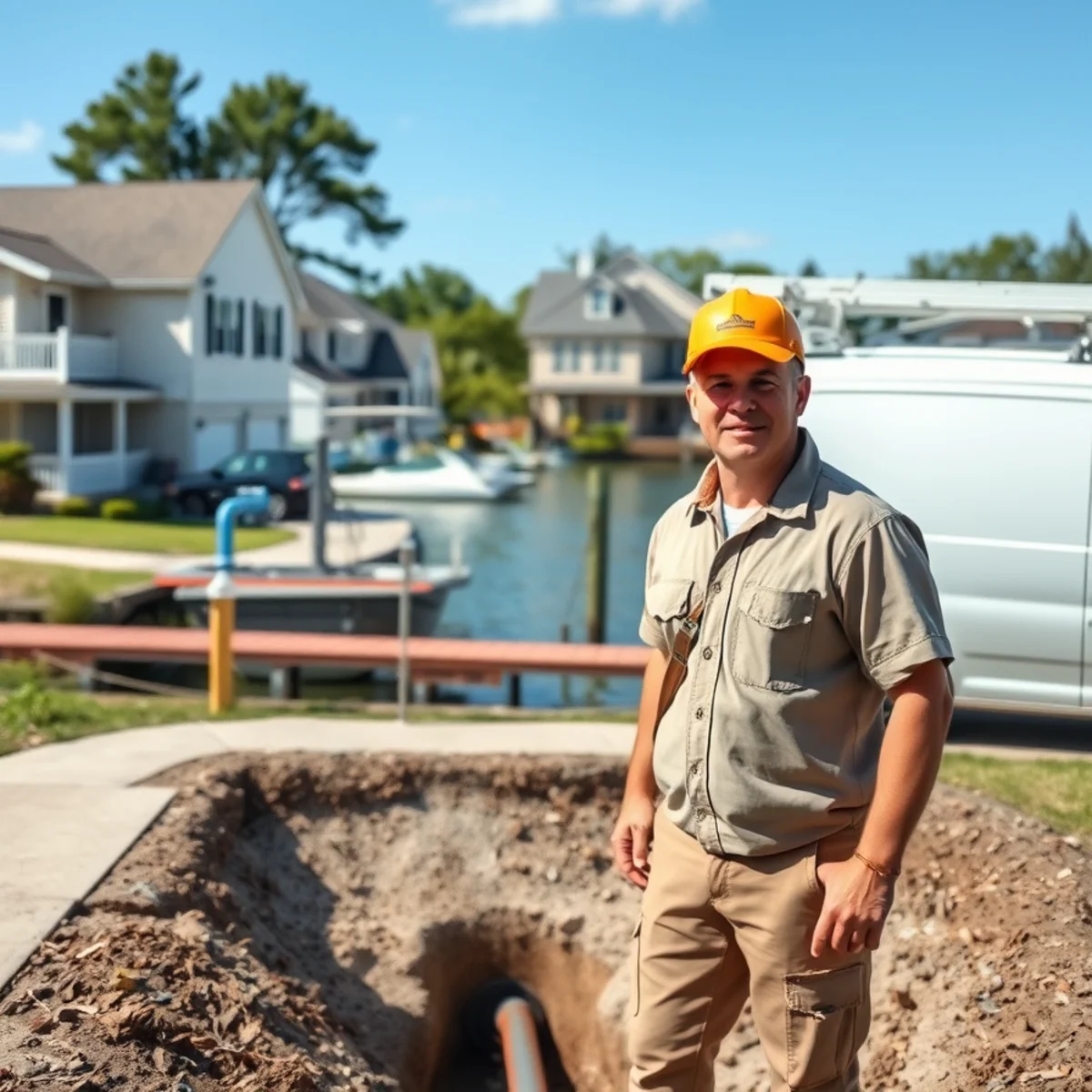
Living close to Lake St. Clair and its canal network is one of the biggest draws of the region — and it comes with a tradeoff most homeowners don't think about until they're dealing with it: groundwater sits close to the surface for a large part of the year. That high water table has a direct, ongoing effect on sewer laterals and basement backup risk, independent of whatever the weather is doing on a given day.
Why the Water Table Runs High Here
The terrain around Lake St. Clair is flat and often sandy, and canal communities in particular have groundwater sitting at or near grade for much of the year. Seasonal swings in lake level feed directly into how high the surrounding groundwater table sits, which means the pressure on underground pipe isn't just a spring or storm-season concern — it's close to a year-round condition in some neighborhoods.
What High Groundwater Does to a Sewer Lateral
Constant hydrostatic pressure from a high water table pushes groundwater into any crack or open clay joint along the lateral, a process known as inflow and infiltration. This adds a steady load to both the private line and the municipal system it feeds into, separate from whatever rainfall is happening. In canal-adjacent homes, it's common for sump pumps to run nearly continuously through wetter months just to keep up.
How Seasonal Lake Levels Factor In
Lake St. Clair's water level isn't static from year to year or even season to season — it fluctuates with regional precipitation patterns and connects directly to the broader Great Lakes system. During higher-water years, the surrounding groundwater table rises along with it, and properties that rarely had sump pump issues in a low-water year can suddenly find themselves running pumps around the clock. That variability is part of why a home's backup history from a few years ago isn't always a reliable predictor of current risk — the underlying water table conditions can shift meaningfully within the time most people own a house.
Canal Homes: A Special Case
Canal-front properties in Harrison Township often have shallow-set laterals running close to water on multiple sides, which means higher exposure to corrosion and infiltration than a comparable home set further back from the water. When lake levels rise seasonally, that exposure and the associated backup risk rise right along with it.
St. Clair Shores and Similar Lakeside Communities
St. Clair Shores shares much of the same profile — similar-age housing stock, heavy reliance on sump pumps, and the combined risk of a high water table stacked on top of aging private laterals. In these communities, it's rarely just one factor causing a backup; it's usually the water table and an already-compromised line working against the homeowner together.
Where a Sump Pump Reaches Its Limit
A sump pump is designed to handle groundwater collecting in the drain tile around the foundation footing — it's a critical piece of protection, but its job stops there. It does nothing for a sewer lateral that's taking on groundwater through a cracked joint somewhere in the yard, and it can't compensate for a backup coming from the municipal side during a surcharge event. Homeowners sometimes assume a well-maintained sump system means the basement is fully protected, when in reality it's only addressing one of two or three separate pathways water can use to get in.
That gap between what a sump pump covers and what it doesn't is exactly why finished basements near the lake still take on water during a wet stretch even with the sump running perfectly. A basement backup inspection looks at the whole picture — sump performance, lateral condition, and any point where groundwater or sewage could be entering — rather than checking just one system in isolation.
Common Mistakes Lakeside Homeowners Make
- Assuming a working sump pump means the basement is fully protected, when it only handles groundwater around the foundation footing, not infiltration into the sewer lateral itself
- Ignoring a persistent musty or sewer-like odor because there's no visible water, when it can be an early sign of infiltration well before a backup shows up
- Skipping a backwater valve because the home has never had a full sewage backup, while still taking on groundwater seepage that a valve wouldn't have prevented anyway
- Waiting for the next high-water year to check the lateral instead of establishing a baseline during an average year for comparison
- Treating every wet-basement season as identical, when lake levels and the surrounding water table genuinely shift from year to year
Warning Signs Specific to High-Water-Table Properties
Signs your basement risk is tied to groundwater, not just rainfall
- Sump pump running constantly even when it hasn't rained recently
- Damp basement floor or walls with no obvious visible leak
- Backup odor that gets worse after lake levels rise or during spring thaw
- Water appearing in a floor drain that's never had water in it before
- New cracking in a poured foundation near grade level
Backup odor without any visible water is also worth taking seriously on its own. A sewer gas and odor inspection can trace whether that smell is coming from a dried trap, a venting issue, or early infiltration at a joint, well before it ever produces a visible backup.
How a Sewer Scope Helps in This Environment
A sewer backup inspection with a camera can distinguish groundwater infiltrating through pipe joints and cracks from a straightforward blockage causing the same symptoms. That distinction matters, because the fix is completely different — sealing or lining specific infiltration points versus clearing an obstruction. The inspection identifies exactly where water is getting in, so the repair can be targeted instead of guessed at.
Signs That Point to Infiltration vs. a Blockage
Because infiltration and a straightforward clog can produce overlapping symptoms — a slow drain, a backup, water somewhere it shouldn't be — it helps to know what tends to separate the two before the camera confirms it either way:
What usually points to which cause
- Backup worsens with lake levels or after a wet stretch, unrelated to what's been flushed or drained recently — points toward infiltration
- Backup follows a specific event, like flushing something that shouldn't have gone down, or several days of heavy household use — points toward a blockage
- Water is clear or only faintly discolored where it enters — more consistent with groundwater infiltration than sewage
- Multiple fixtures gurgle or back up at once with no seasonal pattern — often points to a blockage in the main line rather than infiltration at a single joint
- Sump pump runs constantly regardless of recent household water use — a sign the water table itself is elevated, separate from anything in the sanitary line
A Common Scenario: The Canal-Front Ranch in New Baltimore During a High-Water Year
Say you own a canal-front ranch in New Baltimore that's never had a backup in the ten years you've owned it. This year, after a wetter spring pushed lake levels up, the sump pump is running constantly and a faint sewer odor has started showing up in the basement.
- A camera inspection of the lateral finds a hairline separation at one joint about 20 feet from the house, with visible water intrusion at that point consistent with groundwater infiltration rather than a blockage
- Nothing about the pipe suggests a clog — flow through the rest of the line is clear, which rules out a cleaning-based fix
- Because the issue is a single infiltrating joint rather than widespread deterioration, sealing or a short spot repair addresses it without a full lateral replacement
- The inspection itself falls in the standard local $200-$500 range; catching the issue this year, during a high-water season, means it's addressed while it's still a single joint instead of after several more seasons of infiltration widen it further
Practical Steps for Lakeside Homeowners
- Install and maintain a backwater valve on your main line
- Keep your sump pump on a battery backup system in case of power loss during a storm
- Schedule a camera inspection periodically, particularly before the high-water season each year
- Address any cracked or infiltrating joints found before they widen further
Why a Dated Video Record Is Worth Keeping in This Environment
Because water table conditions genuinely shift from year to year, a one-time inspection tells you where things stand today but not whether an infiltration point is getting worse. A sewer line video inspection gives you a dated recording you can set aside and compare against footage from a future high-water season — the same joint, filmed months or years apart, is a far more reliable way to judge whether a small separation is stable or actively widening than relying on memory or a written note. Regional camera inspection pricing across the Detroit area has run from roughly $254 to $1,722 depending on the job, averaging around $955 — our Metro Detroit cost guide breaks down what drives that range if you're budgeting ahead of the next high-water season.
If you're weighing how this risk compares to broader regional flooding, our article on what the 2021 Metro Detroit floods exposed about aging sewers covers the storm-driven side of the same underlying issue.
Step by Step: How We Confirm Infiltration vs. a Blockage on Camera
- The camera is run first under normal, dry conditions to document baseline flow and note any visible joint separation even without active water intrusion
- If infiltration is suspected, we look for water actively seeping or trickling in at a specific joint on camera, rather than just standing water pooled from a downstream blockage
- The footage counter marks the exact distance to any infiltration point, which is compared against the property's grade and proximity to the canal or lake to see if the location lines up with expected groundwater pressure
- When conditions allow, a second look during a known high-water period — after a wet stretch or during spring lake-level rise — can confirm whether an intrusion point that looked minor in dry conditions is actually more active than it first appeared
A Second Scenario: The Crawlspace Ranch in Chesterfield Township Without a Basement
Not every high-water-table property has a basement to flood. Say you own a 1980s ranch in Chesterfield Township built on a crawlspace instead, and you've started noticing a persistent damp, musty smell under the house along with visibly wet soil near the crawlspace's low point, even without any obvious backup at a fixture.
- A camera run through the lateral's crawlspace-accessible cleanout finds a separated joint about 15 feet from the foundation, with visible groundwater seeping in around the pipe rather than sewage backing up
- Because there's no basement floor drain to back up through, the symptom shows up as ground moisture and odor under the house rather than a visible indoor backup, which is why it took longer to notice than it might have in a home with a finished basement
- The crawlspace's own vapor barrier and any sump discharge nearby are checked alongside the lateral, since groundwater intrusion in a crawlspace home often has more than one contributing source
- Sealing the joint resolves both the odor and the standing moisture, confirming the sewer lateral — not general crawlspace dampness — was the actual source
What to Ask an Inspector About Infiltration Risk
- Will you check for infiltration under normal conditions, or only when there's already an active backup?
- Does the footage clearly show water entering at a joint, or is that inferred from other symptoms?
- If you find an infiltration point, is sealing or lining it something you handle, or does that go to a separate contractor?
- How does my property's distance from the lake or canal affect the risk you're describing?
- Would a second inspection during a high-water season tell you anything a dry-season inspection can't?
Myths vs. Facts About High Water Table Risk
- Myth: You have to live directly on the water to be affected. Fact: groundwater pressure extends well inland depending on soil composition, and homes several blocks from the canal can still see elevated water tables during high-lake years.
- Myth: A finished basement with no history of flooding means the lateral is fine. Fact: infiltration can show up as odor, mustiness, or crawlspace dampness well before it produces a visible backup, especially in homes without a basement floor drain to reveal it.
- Myth: Backwater valves stop groundwater infiltration. Fact: a backwater valve blocks sewage from flowing backward through the lateral — it does nothing for groundwater seeping in through a separate cracked joint upstream of the valve.
- Myth: If the sump pump isn't running constantly, the water table must be low right now. Fact: sump activity reflects groundwater around the foundation footing specifically, which can differ meaningfully from the pressure a lateral several feet deeper is experiencing.
Mount Clemens and the Clinton River: A Different High-Water Pattern
Not every high-water-table risk in the area comes from Lake St. Clair directly. In Mount Clemens, older downtown homes sit close to the Clinton River, which has its own seasonal rise tied to snowmelt and upstream rainfall rather than lake level alone. That means these properties can see elevated groundwater pressure on a different schedule than canal-front homes near the lake — sometimes peaking in early spring while lakeside communities are still tracking a summer high. A camera inspection timed to whichever seasonal pattern applies to your specific location is more useful than one scheduled on a generic calendar.
Next Step: When Infiltration Signals a Bigger Problem
A single sealed joint is usually a straightforward fix, but if an inspection turns up more than one active infiltration point, it's worth reading our guide on warning signs of sewer line failure to understand how multiple failing joints along the same lateral tend to progress. And if you're maintaining an older home in this environment long-term, our sewer line maintenance checklist for older homes covers how often a lateral like this is worth re-checking given the constant hydrostatic load it's under.
Living near the water in Harrison Township or St. Clair Shores and worried about backup risk? Sewer Inspects offers free quotes on sewer backup inspections — call (614) 830-0578 to find out where your line stands.
Need a sewer camera inspection?
Same-day appointments across Sterling Heights, Macomb County & Metro Detroit. Free quote, no obligation.