Cost & insurance
Does Homeowners Insurance Cover Sewer Backups in Michigan?
Sewer backup coverage isn't automatic under most Michigan homeowners policies. Here's what to know about endorsements, documentation, and filing a claim.
By Sewer Inspects · Updated February 15, 2026 · 13 min read

After a sewer backup, the first question most homeowners ask is whether insurance will cover the damage. It's an important question with a frustrating answer: it depends entirely on your specific policy, and standard homeowners insurance in Michigan generally does not cover sewer backups by default.
This isn't legal or financial advice — always confirm the specifics with your insurance agent or a licensed professional — but here's what homeowners in St. Clair Shores and Roseville should understand before, during, and after a claim.
The Short Answer: Coverage Is Not Automatic
A typical homeowners policy covers sudden, accidental water damage from things like a burst pipe inside the home. Damage from water or sewage that backs up through drains, toilets, or sump pumps is usually excluded unless you've specifically added coverage for it. That means a basement full of sewage after a main line backup could be entirely out of pocket under a standard policy.
What Is a Sewer/Water Backup Endorsement?
A sewer or water backup endorsement (sometimes called a rider) is an add-on to a standard homeowners policy that specifically covers damage from water or sewage backing up through a drain or sump pump failure. Coverage limits vary widely, often available in tiers, and it's frequently one of the most affordable endorsements a homeowner can add relative to the risk it covers, especially in areas with older infrastructure or flat terrain prone to backups.
If you're not sure whether you have this endorsement, check your declarations page or call your agent directly and ask specifically about "sewer backup" or "water backup" coverage — it won't necessarily be obvious from the policy name alone.
Why Documentation Matters So Much
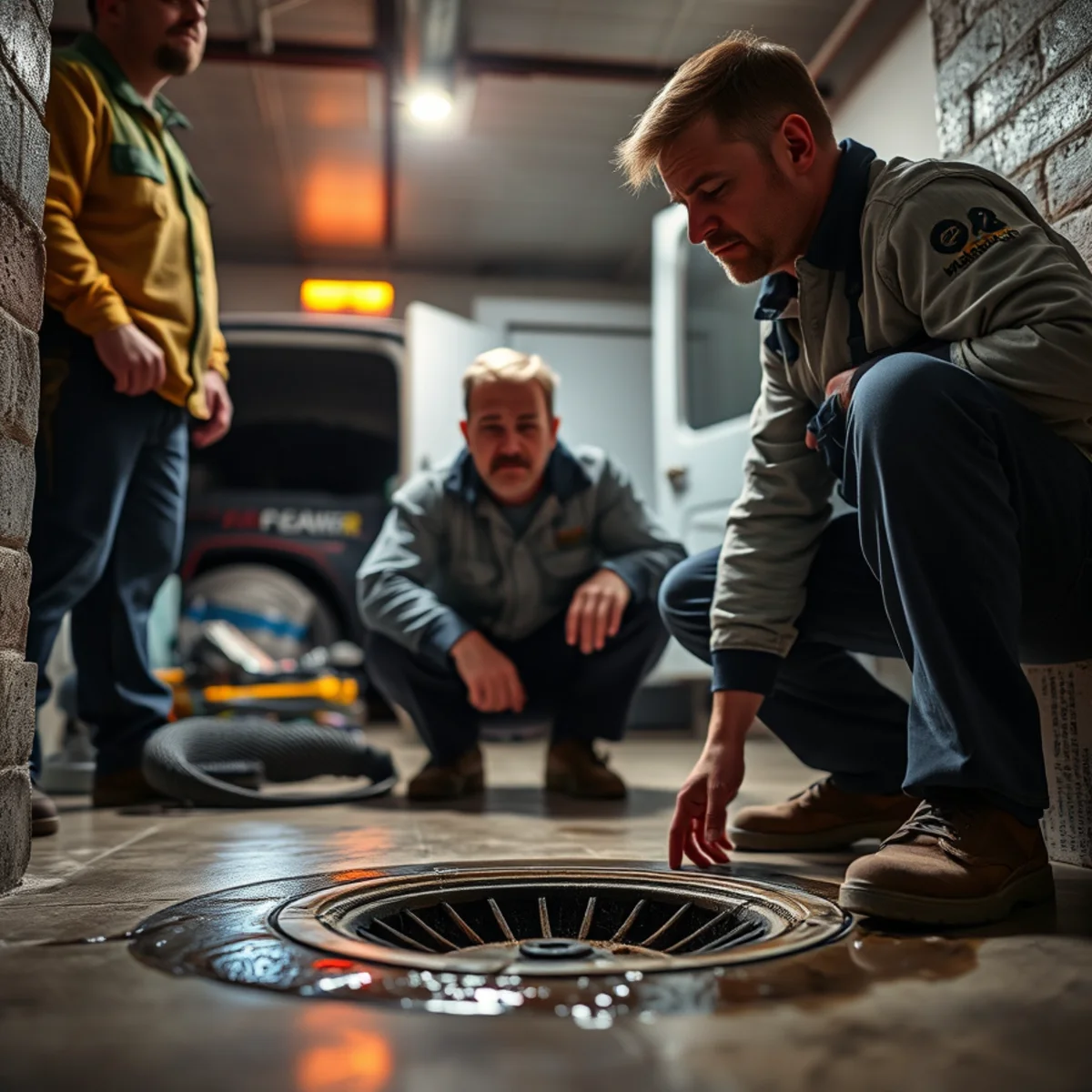
Even with an endorsement, insurers typically want evidence of what happened and why. This is where a sewer backup inspection becomes valuable beyond just fixing the problem — a recorded camera inspection showing the cause (a collapsed pipe, root intrusion, a municipal main issue) gives your claim concrete supporting evidence rather than a verbal description after the fact.
Photos and video taken before cleanup, a written inspection report, and repair invoices all strengthen a claim. Adjusters are far more likely to approve and expedite claims backed by clear documentation than ones relying on memory and after-the-fact estimates.
Filing a Claim: Steps to Take
After a backup, before cleanup
- Notify your insurer as soon as possible — most policies require prompt reporting
- Photograph and video the damage before any cleanup or repairs begin
- Keep receipts for emergency mitigation (water removal, sanitation) if you pay out of pocket initially
- Get a camera inspection to document the specific cause of the backup
- Save all inspection reports, plumber invoices, and correspondence with your insurer
Local Risk Factors in St. Clair Shores and Roseville
Communities near Lake St. Clair, including St. Clair Shores, often deal with a naturally high water table and flat terrain that slows drainage during heavy rain — conditions that increase the odds of municipal system surcharging and backups into low-lying basements. Roseville shares similar flat topography and older sewer infrastructure in parts of the community. Homeowners in both areas are often good candidates for a backup endorsement even if they've never had an incident, simply based on the local risk profile.
If backups have already happened more than once, that pattern is worth investigating on its own. A basement backup inspection can determine whether the repeated water is coming from your own lateral or is a symptom of a neighborhood-wide surcharging issue during heavy storms — a distinction that matters both for your insurance conversation and for deciding what, if anything, needs to be repaired on your property.
How Backup Claims Typically Get Handled
When a claim is filed under a backup endorsement, an adjuster generally wants to understand three things: whether the endorsement was in force at the time of the loss, what caused the water or sewage to back up, and the extent of the resulting damage. This is why the order of operations after a backup matters so much — documenting first, then remediating, then repairing — because each stage produces evidence the adjuster will ask about. A claim submitted with clear photos, a professional inspection report identifying the cause, and itemized repair costs tends to move faster than one built on descriptions alone.
Sewer Backup Coverage vs. Flood Insurance
It's worth noting these are two different types of coverage. Flood insurance, typically through the National Flood Insurance Program or a private flood policy, covers rising surface water entering your home from outside. A sewer or water backup endorsement covers water or sewage that backs up through your own plumbing or drainage system. A single event — like a heavy storm — can sometimes involve both mechanisms, which is another reason clear documentation of exactly how water entered your home matters for a smooth claims process.
Common Reasons Backup Claims Get Denied or Reduced
Understanding what trips up a claim before you file one can save real frustration. Adjusters look closely at whether the cause fits what the policy actually covers, and a few recurring issues come up often enough to be worth knowing in advance.
What commonly reduces or denies a backup claim
- No backup endorsement in force at the time of the loss — the most common reason for an outright denial
- The claimed cause is attributed to lack of maintenance — for example, a line the homeowner knew was slow-draining for months and didn't address
- Coverage limits on the endorsement are lower than the actual damage, leaving a gap the homeowner pays out of pocket
- Insufficient documentation — no photos, video, or inspection report tying the damage to a specific, covered cause
- The water is later determined to be surface flooding rather than a backup through the plumbing system, which falls under separate flood coverage instead
A sewer clog & blockage inspection or a full camera inspection right after an incident directly addresses the documentation gap — it's the clearest way to show an adjuster the specific mechanical cause rather than leaving it open to interpretation.
Sump Pump Failure: A Related but Separate Coverage Question
Many homeowners assume sump pump failure and sewer backup are the same issue, but insurers often treat them differently. A sump pump that fails mechanically (a burned-out motor, for example) may fall under a different coverage question than water that backs up through the sewer line itself and overwhelms a pump that's working fine. Some backup endorsements specifically include sump pump overflow or failure; others require a separate rider. If your basement has a sump system, it's worth asking your agent specifically how sump-related water damage is treated under your policy, separate from the sewer backup question — the two are easy to conflate but aren't always covered the same way.
Worked Example: Documenting a Claim in Eastpointe
Say a homeowner in Eastpointe has a backup endorsement and comes home to sewage in the basement after a heavy rain. Following the order of operations matters here: photos and video are taken before anything is touched, the insurer is notified the same day, and a camera inspection is scheduled to document the cause. The inspection shows a root-choked joint about 30 feet from the house, unrelated to the storm itself — the storm just added enough volume to push an already-narrowed line past capacity. That distinction matters for the claim, because it shows a specific, identifiable defect rather than an act of nature, which is exactly the kind of evidence that moves a claim through faster with fewer follow-up questions from the adjuster.
Why This Matters Even More If You're Buying a Home
If you're purchasing a home rather than dealing with an active claim, this is worth thinking about before you close, not after. Older homes with original clay, cast-iron, or Orangeburg laterals carry a materially higher risk of a future backup than a home with a modern PVC line, which makes the coverage conversation more urgent, not less. A pre-purchase sewer inspection tells you the pipe's actual condition before you own it, which does two useful things at once: it flags a problem you can negotiate on now, and it gives you a documented baseline condition to reference if you ever need to file a backup claim down the road. Buyers of older homes in Macomb County and the surrounding area are often good candidates for both a scope inspection before closing and a backup endorsement from day one of ownership, given how common aging lateral pipe still is in the region.
Step by Step: Adding or Reviewing a Backup Endorsement
If you've read this far and aren't sure what your own policy actually includes, here's a straightforward way to find out rather than guessing based on what a neighbor or friend has.
- Pull up your current declarations page and look specifically for the words "sewer backup," "water backup," or "drain backup" — it's usually listed as a separate endorsement, not folded into the base policy
- If you don't see it listed, call your agent and ask directly whether it's available to add, and at what coverage limits
- Ask what the limit actually covers — some endorsements cap out well below the cost of finishing a basement, which matters if yours is finished
- Ask whether the endorsement covers sump pump failure and overflow, or whether that needs a separate rider
- Once added, keep a copy of the updated declarations page somewhere accessible, not just in an email you might not find during an actual emergency
A Second Scenario: A Denied Claim in Warren
The Eastpointe example above shows how documentation helps a claim move smoothly. It's worth looking at the opposite outcome too. Say a homeowner in Warren has a backup endorsement and experiences sewage in the basement, but starts cleanup immediately — removing carpet and running fans — before taking more than a couple of quick phone photos. When the claim is filed, the adjuster asks for documentation of the cause and extent of damage, and there isn't much to provide beyond a description after the fact. Without a camera inspection report identifying a specific mechanical cause, the insurer has little to evaluate the claim against, and the payout ends up reduced compared to what a fully documented claim would have received. The endorsement existed and should have covered the loss — the gap was entirely about missing evidence, not missing coverage.
What to Ask Your Insurance Agent
Questions worth asking before you need to file a claim
- Do I currently have a sewer or water backup endorsement, and what's the coverage limit?
- Does it cover sump pump failure, or is that a separate add-on?
- What documentation will you require if I ever need to file a claim?
- Is there a waiting period after adding the endorsement before it takes effect?
- Does prior maintenance history (or lack of it) affect whether a future claim gets approved?
Myths vs. Facts About Sewer Backup Coverage
- Myth: homeowners insurance automatically covers sewage damage since it's water damage. Fact: standard policies typically exclude backup-related water damage unless a specific endorsement has been added.
- Myth: renters insurance and homeowners insurance handle backups the same way. Fact: renters policies generally cover personal belongings, not the structure, and backup endorsement availability differs — check with your specific insurer.
- Myth: filing one claim guarantees a lower payout on the next one. Fact: outcomes depend on the specific loss and documentation each time, not an automatic penalty for a prior claim.
- Myth: a verbal description of the damage is enough if the adjuster trusts you. Fact: even a trusted description is weighed against photo, video, and inspection evidence — adjusters are trained to rely on documentation, not memory.
How the 2021 Metro Detroit Floods Changed the Conversation
The historic 2021 storms that flooded basements across Macomb and Wayne counties, including communities like Grosse Pointe Woods near the lake, pushed many homeowners to look at their coverage for the first time after the fact rather than before. We cover what happened and why older sewer infrastructure struggled with that volume in our article on the 2021 Metro Detroit floods and old sewers. The practical takeaway for coverage purposes is the same lesson from that event: a single large storm can overwhelm even a healthy municipal system, and having a backup endorsement in place before the next one matters far more than trying to add one in the days after flooding starts making headlines, since insurers can apply waiting periods to new endorsements.
Next Steps: Related Decisions
If you're dealing with an active backup right now rather than reviewing coverage proactively, our safety-first guide on what to do about a sewer backup in your basement covers the first 30 minutes in detail. If you want a realistic sense of what a diagnostic camera inspection costs before you call, see our Metro Detroit sewer camera inspection cost guide. And if the backup keeps recurring rather than being a one-time event, a sewer clog & blockage inspection can determine whether an unresolved restriction is the real root cause behind repeated claims.
What to Do Now
Whether you're reviewing your coverage proactively or dealing with a recent backup, start with two things: a conversation with your insurance agent about your current endorsements, and a sewer camera inspection to understand your pipe's actual condition. Call (614) 830-0578 for a free quote — documented findings now can save significant hassle if you ever need to file a claim.
Need a sewer camera inspection?
Same-day appointments across Sterling Heights, Macomb County & Metro Detroit. Free quote, no obligation.