Cost & insurance
How Much Does a Sewer Camera Inspection Cost in Metro Detroit?
A straightforward look at what homeowners in Sterling Heights and Troy actually pay for a sewer camera inspection, and the factors that move the price up or down.
By Sewer Inspects · Updated February 15, 2026 · 13 min read
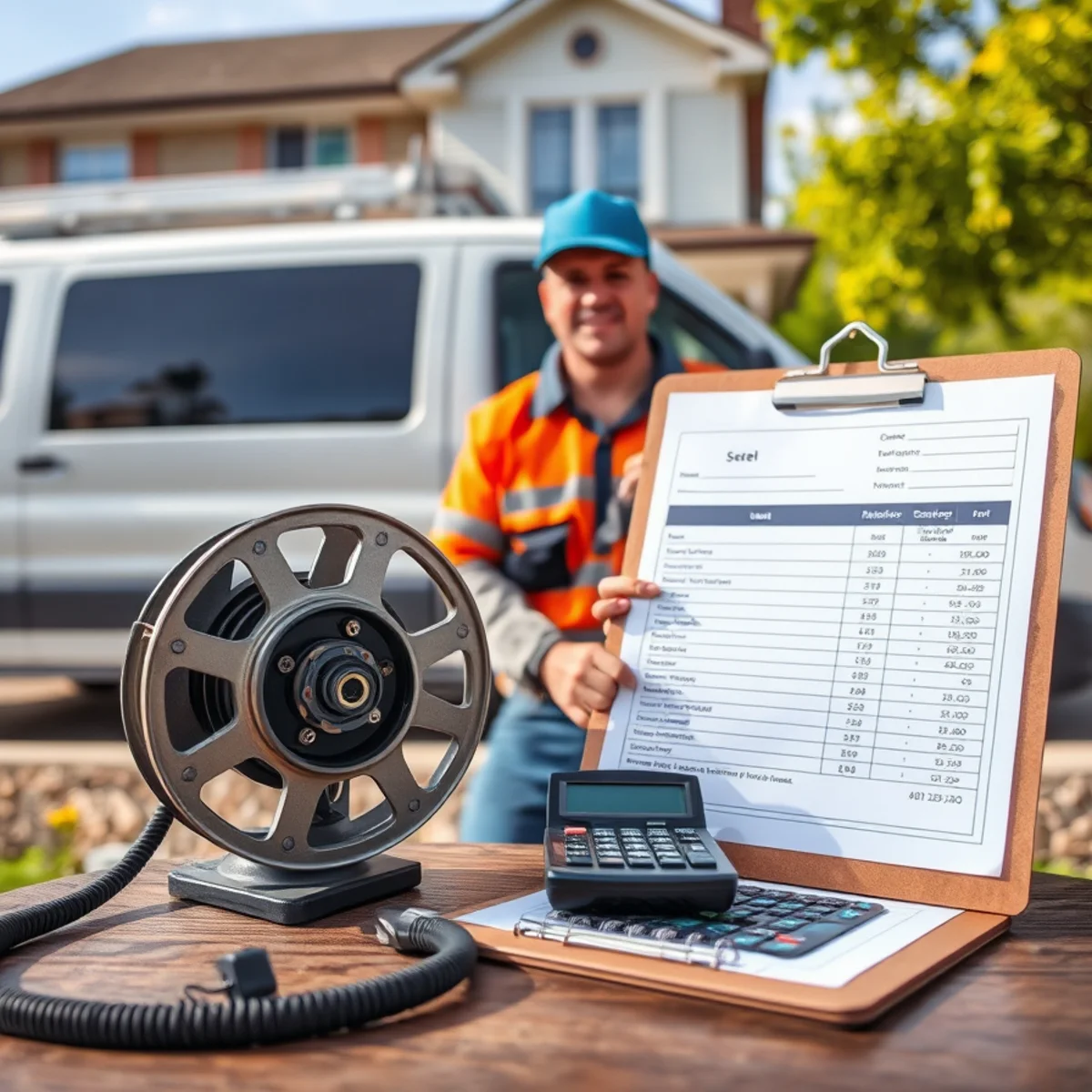
A sewer camera inspection cost in Metro Detroit typically runs $200–$500 for a straightforward job with easy access, and can climb to $975–$1,900 for longer or more complicated lines that need cleaning or locating first. The exact number depends on your pipe's length, access, and condition. This guide breaks down real pricing ranges we see across the area so you can budget with confidence instead of guessing.
There is no single fixed price that applies to every house, and any company that quotes you a flat number sight unseen is guessing too. What follows are the actual ranges homeowners in Sterling Heights and Troy typically pay, along with the factors that push a job toward the low end or the high end.
What Determines the Price of a Sewer Camera Inspection
A sewer camera inspection is priced based on labor, equipment, and time on site, not a one-size-fits-all rate card. The main variables are:
- Access — whether there's an existing cleanout to insert the camera through, or whether one has to be located and opened
- Pipe length — how far the line runs from the house to the street or septic connection
- Pre-cleaning — whether the line needs to be snaked or hydro-jetted before the camera can pass through debris or roots
- Locating equipment — if a transmitter needs to be used to mark the exact depth and path of the pipe for excavation planning
- Timing — same-day or after-hours emergency calls typically cost more than a scheduled daytime appointment
Typical Pricing in Metro Detroit
For a straightforward local job with easy access and a clear line, most homeowners pay in the $200–$500 range. That covers a standard residential inspection with a usable cleanout and no significant obstructions.
Metro Detroit-area research on sewer inspection pricing shows a wider spread once you factor in more complex jobs — anywhere from $254 to $1,722, with an average closer to $955 once cleaning, locating, or difficult access are involved. That higher average reflects jobs where the crew had to do real problem-solving, not just run a camera down an open pipe.
Pricing also scales with how far the camera has to travel:
Sewer camera inspection cost by pipe length
- Under 50 feet: roughly $225–$500
- 50–100 feet: roughly $500–$975
- Over 100 feet: roughly $975–$1,900
Every home is different
These ranges are a starting point, not a quote. The only way to know your exact number is to have a technician look at your specific access points and pipe layout. Call (614) 830-0578 for a free, no-obligation quote based on your address.
Why Cost Varies House to House
In neighborhoods like Sterling Heights with a mix of homes built from the 1950s through the 1980s, older clay lateral pipe is common, and cleanouts aren't always where you'd expect them — sometimes there isn't an accessible one at all, which adds time to locate a way in. In Troy, mature tree-lined streets mean root intrusion is a frequent complication, and a line packed with roots usually needs a cleaning pass before the camera can get a clear picture, which adds to the bill.
Homes on a slab, homes with finished basements built over the lateral, and homes where the cleanout was paved over during a driveway replacement all add complexity that a flat-rate quote can't account for.
Is a Sewer Camera Inspection Worth the Cost?
Compared to the cost of excavating a yard on a guess, or discovering a collapsed pipe mid-repair, a few hundred dollars for a clear diagnosis is inexpensive insurance. It's also standard practice for buyers doing a pre-purchase sewer inspection before closing, since a hidden lateral problem can run into five figures to fix after the sale.
For homeowners dealing with recurring slow drains or an unexplained backup, the camera inspection replaces guesswork with a recorded, timestamped look at exactly what's happening inside the pipe — which is the only way to know whether you're looking at a simple clog, root intrusion, a belly in the line, or a structural failure.
Common Add-On Costs Explained
Beyond the base inspection, a few add-on services show up often enough that it's worth understanding them ahead of time rather than being surprised by a line item. Pre-cleaning is the most common — if the camera can't push through roots or heavy debris, the crew needs to clear a path first, which is billed as a separate step from the inspection itself. Locating is another: if you (or a plumber, or an excavation crew) need to know the precise depth and path of the pipe underground, a transmitter is fed in alongside the camera and traced from the surface as part of a dedicated sewer line locating visit, adding time and specialized equipment to the job.
After-hours or same-day emergency scheduling is the third common add-on. A routine inspection booked a few days out during business hours will almost always cost less than a call placed at 9 p.m. on a Saturday because sewage is backing into a finished basement. Both are valid options — it's simply worth knowing which situation you're in before you call.
How to Prepare for Your Appointment
You can help keep costs on the lower end of the range with a little prep work. If you know where your sewer cleanout is — often a capped pipe near the foundation, in a basement floor, or in the yard along the path toward the street — clear any furniture, storage, or landscaping blocking access before the technician arrives. If you're not sure whether you have one, mention that when you call; a technician can often spot likely locations from a home's age and layout before ever stepping on site, which helps set expectations for the quote.
How Inspection Cost Compares to Other Line-Clearing Services
A camera inspection is priced well below almost every other sewer service you might need, which is exactly why it's usually the right first call rather than an afterthought. Understanding where it sits relative to the other options helps explain why paying a few hundred dollars up front is rarely the expensive part of dealing with a sewer problem.
Cost tier, roughly least to most expensive
- Camera inspection only (roughly $200–$500 for a typical local job) — diagnostic only, tells you exactly what's wrong before you spend on anything else
- Snaking or rodding — clears a blockage but doesn't diagnose why it formed or whether it will come back, and can cost about the same as or more than an inspection depending on access
- Hydro-jetting — clears heavy root intrusion or grease buildup that snaking can't touch, priced above a basic clean-and-inspect combo because it needs specialized high-pressure equipment and more time on site
- Excavation or full lateral replacement — by far the largest expense, often running into five figures depending on length, depth, and surface restoration, which is exactly why a camera inspection comes first: it tells you whether you're actually facing this level of cost before you commit to it
A Local Example: Budgeting for an Older Home in Clinton Township
Say you own a 1968 ranch in Clinton Township with a finished basement, and you've noticed slow drains in the lowest-level bathroom for a couple of weeks. The home has never had its lateral scoped, and like a lot of housing stock from that era in Macomb County, there's a real chance the original clay pipe is still in the ground. Rather than calling a plumber to snake it blind, a camera inspection first tells you whether you're dealing with a simple soap-and-hair clog near the fixture or root intrusion further down the line — the difference between a $200–$500 diagnostic visit and a job that needs pre-cleaning before the camera can even get a clear picture. If the footage shows healthy pipe with just localized buildup, you've spent a few hundred dollars to rule out the expensive scenario entirely. If it shows a cracked joint or a belly, you now have recorded proof to get accurate repair bids instead of taking one plumber's word for it.
Common Mistakes That Drive the Price Up
- Waiting until it's an emergency — a scheduled daytime inspection almost always costs less than an emergency sewer camera inspection booked after hours because sewage is already backing up
- Assuming the cheapest quote is automatically the best value — a rock-bottom price that skips recorded video or a written report can cost you more later if you need documentation for insurance or a home sale
- Not knowing (or not mentioning) where the cleanout is — a technician who has to spend extra time locating access before starting bills that time as part of the job
- Ignoring recurring slow drains for months — a partial blockage that could have been diagnosed early sometimes turns into a full backup requiring cleanup costs on top of the inspection itself
Step by Step: What Actually Happens During the Appointment
Part of understanding what you're paying for is knowing what the visit itself involves. Most inspections follow the same basic sequence, whether the job lands at the low end of the range or the high end.
- The technician confirms the cleanout location with you, or identifies the best available access point if there isn't one
- The camera head is fed into the line and the footage is monitored live on a screen as it travels
- If the camera meets resistance from roots or debris, the crew stops to discuss a pre-cleaning pass before continuing rather than forcing it through
- Once the camera reaches the municipal connection (or stops at an obstruction), the technician marks the distance traveled and notes the pipe material and condition along the way
- You review the footage on site and get a plain-language explanation of what was found, plus a written report and video file for your records
That last step is where cost transparency matters most — a company that walks you through the footage and explains the reasoning behind any add-on charge is giving you something a flat, no-questions quote never can.
A Second Scenario: Pricing a Longer, More Complicated Run in Royal Oak
Contrast the Clinton Township example above with a different kind of job. Say you own a 1928 bungalow in Royal Oak with no visible cleanout anywhere on the property — not unusual for a home built before cleanouts were standard practice. The technician has to enter from an interior fixture instead, and once the camera is in the line, it turns out the run to the street is nearly 110 feet with two sections of root intrusion heavy enough to need a pre-cleaning pass before the camera can get a usable picture. Because there's also no reliable way to know the pipe's exact path without a transmitter, the visit includes a locating add-on so a future repair crew won't have to dig blind. Between the extra length, the cleaning pass, and the locating equipment, this job lands near the top of the $975–$1,900 tier rather than the $200–$500 range a simpler home might pay — a useful illustration of how quickly access and pipe condition, not the camera work itself, drive the final number.
What to Ask Before You Book
Questions worth asking any company before you schedule
- Is the quoted range based on my actual address and symptoms, or a generic estimate?
- Does the price include a recorded video and written report, or is that an extra charge?
- How do you decide whether pre-cleaning is needed, and is that decision made before or after you start billing for it?
- If a cleanout can't be found on site, how is that additional time priced?
- Is locating equipment included if the footage shows I'll need a repair estimate afterward?
- What's the difference in price between a scheduled daytime visit and a same-day appointment?
Pricing Myths vs. Facts
- Myth: the cheapest quoted price is always the best deal. Fact: a quote that excludes recorded video or a written report can end up costing more later if you need documentation for insurance or a home sale.
- Myth: a longer pipe automatically means a higher price. Fact: length matters, but a short run with a hidden or paved-over cleanout can cost more than a long run with easy access.
- Myth: every company charges the same for the same job. Fact: pricing structures vary — some bundle pre-cleaning into a flat rate, others itemize it, so two quotes that look different on paper can reflect the same actual work.
- Myth: you need to already know your pipe material to get an accurate quote. Fact: a technician can often estimate a likely material and price range based on the home's age and neighborhood before ever stepping on site.
How Michigan's Seasons Affect Scheduling and Cost
Cost isn't only about pipe length and access — timing matters too. Late winter and early spring, when frozen ground thaws unevenly across Macomb County, tend to bring a wave of calls as shifting soil stresses aging clay joints that held together fine through the colder months. Homeowners in Shelby Township and similar communities with a mix of older and newer subdivisions often see this pattern clearly — a line that's been fine for years suddenly shows slow drains right as the ground softens. Summer storm season brings a second wave, this time tied to heavy rain overwhelming municipal mains and pushing flow back through weak points in a home's own lateral. Scheduling a routine inspection outside these peak windows, rather than waiting for a symptom to force an emergency call, is one of the simplest ways to land on the lower end of the pricing range.
Next Step: Matching the Right Service to Your Situation
A camera inspection cost only makes sense in context of what you actually need done with the results. If you're buying a home, our sewer scope inspection guide for home buyers walks through what your report should include before you close. If you're weighing whether a recent backup might be covered by your policy, see our breakdown of homeowners insurance and sewer backups in Michigan. And if your home was built before the 1980s, our guide to older home sewer inspections in Macomb County covers the pipe materials most likely to affect your price. For an ongoing slow-drain issue rather than a one-time check, a sewer clog & blockage inspection is priced the same way but framed around diagnosing a specific symptom rather than a general checkup.
Getting an Accurate Quote
The most reliable way to get a number you can actually budget around is a short phone conversation about your home's age, whether you know where your cleanout is, and what symptoms (if any) you're seeing. From there, a technician can give you a realistic range before anyone steps foot on your property.
Get your real number
Skip the guesswork. Call (614) 830-0578 for a free, no-obligation quote based on your home's actual age and access points — most calls take a few minutes and get you a realistic range before we ever schedule a visit.
Need a sewer camera inspection?
Same-day appointments across Sterling Heights, Macomb County & Metro Detroit. Free quote, no obligation.