

Sewer Camera Inspection Services
Real estate and pre-sale sewer inspection in Sterling Heights, MI
A pre-sale sewer inspection in Sterling Heights is a recorded camera scope of a home's sewer lateral done before it hits the market, so a seller or listing agent knows the line's real condition before a buyer's inspector finds it first. On an older Metro Detroit home, the sewer lateral is the single most expensive thing that a standard home inspection never checks — and if a buyer's inspector orders a scope after you've already accepted an offer, you're negotiating from a weaker position, on their timeline, with a deal at stake.
- Recorded HD video
- Same-day report
- Licensed & insured
Flip that sequence. Scope the line while you're still preparing the listing, and any finding becomes information you control instead of a surprise you react to. A clean line becomes a documented selling point. A line with roots, a crack, or a belly becomes something you can repair on your own schedule, get quotes on, price into the listing, or disclose accurately — all before a buyer's deadline is forcing the decision.
For agents, recommending a pre-listing scope on any home with an older clay, cast-iron, or Orangeburg lateral is a low-cost way to remove one of the biggest unknowns that derails transactions on mature Macomb, Oakland, and Wayne County housing stock. It's also protection for you: documented, independent findings shared with a seller reduce the chance a deal collapses — or a disclosure dispute surfaces — months after closing.
Why sellers and agents scope before listing
A pre-sale scope makes sense any time an unknown sewer line could become a problem after you're already under contract:
- Listing an older home where a buyer's inspector is likely to order a scope anyway
- Wanting to avoid a last-minute repair credit, price renegotiation, or a deal falling through near closing
- Preferring to repair or line the pipe on your own schedule instead of a buyer's contingency deadline
- Needing to disclose the sewer line's condition accurately and defensibly
- A vacant, inherited, or estate-sale property with no known sewer history
- Mature trees on or near the lot — a common root-intrusion setup on older laterals
- An agent wanting to reduce transaction risk on a listing before it goes live
- A recent flip or renovation where the sewer line's condition was never actually verified
How a pre-sale inspection fits your listing timeline
We work around your listing date, not the other way around, and every step is built to produce something you can use in pricing, prep, or disclosure.
- 1
Schedule before you list
We book the scope during your pre-listing prep window — often before photos, staging, or a sign goes in the yard — so findings can still shape your pricing and repair decisions.
- 2
Confirm access
We locate the cleanout outside, at the property connection, or in the basement, and confirm any known history on the line before we start.
- 3
Scope the lateral
We record the full run with a waterproof HD camera, documenting roots, cracks, bellies, offsets, debris, and material transitions as we go.
- 4
Document the condition
You receive the recorded footage, still images of any findings, approximate inspected distance, and a plain-English written summary.
- 5
Decide on your own timeline
If there's an issue, you choose whether to repair it, get contractor quotes to share, price it into the listing, or disclose it in writing — without a buyer's clock running.
- 6
Use it in the sale
Clean footage becomes marketing material and a trust signal for buyers; documented findings become the basis for an honest, defensible seller's disclosure.
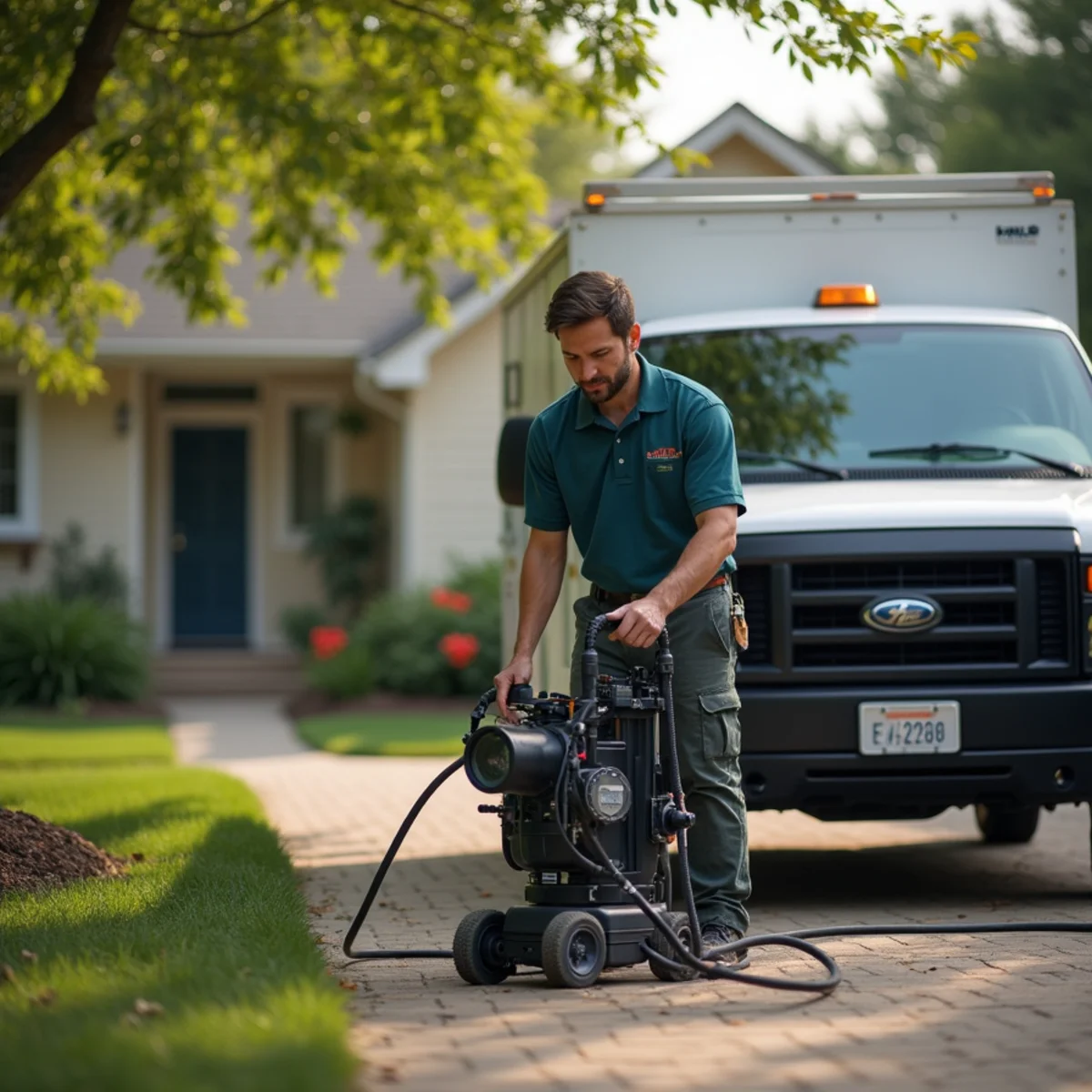
Pre-sale inspection pricing factors
A pre-sale scope is priced the same way any camera inspection is — a straightforward local inspection commonly runs about $200–$500, with Detroit-area research reporting a wider $254–$1,722 range and roughly a $955 average on complex jobs. We confirm your quote in writing before any work begins; the factors below are what actually move the number:
- Line length and cleanout access — under 50 ft ($225–$500), 50–100 ft ($500–$975), or over 100 ft ($975–$1,900)
- Turnaround needed to fit your listing date or photo/staging schedule
- Whether the written report needs to be formatted for a seller's disclosure or for your agent's file
- Whether the line needs to be cleared or cleaned before a full view is possible
- Whether locating and depth are needed in addition to video, if a repair is planned before listing
- Vacant-property access — coordinating entry through an agent, property manager, or estate representative
What's included in a pre-sale sewer inspection
Every pre-sale scope is built to produce something you can actually hand a buyer, an agent, or a title company — not a verbal opinion you can't back up. You get:
Deliverables from your inspection
- Recorded HD video of the full inspected run of the lateral
- Still images of any defects, roots, cracks, or blockages found
- Approximate inspected distance and the camera's endpoint
- Pipe-material notes (clay, cast iron, PVC, Orangeburg, or transitions between them)
- Approximate defect location via sonde locating, when conditions allow
- A plain-English written summary suitable for pricing, repair quotes, or a seller's disclosure
Pre-sale vs. pre-purchase: know which side you're on
It's easy to conflate the two, but the angle differs. A pre-purchase sewer inspection is ordered by the buyer, during their contingency window, to find leverage for a price adjustment or repair credit. A pre-sale inspection is ordered by the seller or agent, before the home is even listed, so that buyer's-side scope doesn't surface a surprise. Both use the same sewer scope inspection technology — the difference is who holds the footage first, and when. A buyer's inspector finding root intrusion two weeks before closing hands them leverage at the worst moment for you; the same finding, caught three months earlier, is just a repair line item you already priced in.
Vacant, inherited, and estate-sale properties
Many pre-sale scopes we run in Metro Detroit involve properties with no living sewer history — an inherited home, an estate sale, or a long-vacant rental where nobody can say when the line was last cleared or whether roots have ever been an issue. This comes up often in mature neighborhoods around Royal Oak, where older housing stock regularly changes hands between family members. A camera answers the history question in one visit, and the report becomes part of the file the estate, executor, or listing agent can point to with confidence.
Turning clean footage into a selling point
On an older home, buyers and their agents increasingly treat the sewer lateral as a real risk, not a formality, and many arrive already planning to order their own scope. A recent, clean inspection report you hand over up front short-circuits that hesitation — it signals you've done the diligence, and it can be referenced in the listing or shared during showings. Documented sewer condition is a differentiator most sellers skip.
Reducing risk for agents
For agents, a pre-listing sewer scope is cheap insurance against a deal falling apart late or a disclosure claim surfacing after closing. Recommending it on any listing with an older clay or cast-iron lateral, mature trees near the line, or no known sewer history costs a few hundred dollars and can prevent a five-figure renegotiation. The same logic applies to commercial sewer camera inspection work ahead of a commercial sale or lease: independent documentation protects everyone at the table, not just the buyer.
Read before you list
If you're weighing whether a pre-sale scope is worth it on a specific property, our guide on commercial pre-sale and lease sewer scoping and our sewer scope inspection home-buyer guide both walk through what buyers and their agents actually look for — useful context for deciding what to fix, price in, or disclose before your listing goes live.
How we scope a home that's already staged or about to be
A pre-listing scope has to work around a home that's ready to show, not a construction site. We use the same waterproof HD sewer camera inspection equipment on every job, but on a staged or occupied listing we're careful about access — using an exterior cleanout whenever one exists so we're never tracking through a staged living room, and working around furniture, flooring, and window coverings when the only access is a basement cleanout or floor drain. Most pre-sale scopes take under an hour on-site, and we can usually work early morning or between showings so the appointment doesn't collide with your open-house schedule.
Repair it now, price it in, or disclose it — deciding what to do with a finding
Not every defect a camera finds is worth fixing before you list. The right call depends on severity, cost, and how much it would actually move a buyer's decision:
Weighing your options before listing
- Minor root intrusion or a small offset with no active backup history — often fine to disclose and monitor, especially if it's cheaper than the cost of a repair credit a buyer might negotiate anyway
- A confirmed crack, belly, or partial blockage with a backup history — usually worth repairing or lining before listing, since a buyer's inspector will almost certainly find it and negotiate harder than you would on your own timeline
- A fully collapsed section or Orangeburg pipe near end-of-life — get repair quotes now even if you don't complete the work, so you can price the home accurately or offer a credit backed by real numbers instead of a guess
- Any finding on a vacant or estate property — document it regardless of severity, since there's no seller present to describe prior history if a buyer's agent asks
- When in doubt, get the camera report first — deciding blind, based on a slow drain or a hunch, is how sellers either overpay for an unnecessary repair or underprice a real one
A Roseville cape cod, listed by an out-of-town heir
An agent called us on behalf of a client who'd inherited her father's cape cod in Roseville and was listing it from out of state, sight unseen, through a property manager handling the cleanout. Nobody in the family knew the sewer line's history — the father had lived there since the 1970s and never mentioned a backup, but that's not the same as proof the line was sound. We scoped the lateral through the exterior cleanout while the property manager let us in, and found a cast-iron-to-clay transition about 40 feet out with moderate root intrusion, not yet blocking flow but clearly headed that direction within a year or two. Because we caught it three weeks before the listing went live, the agent got two repair quotes, priced the home to reflect a known, quantified issue instead of an unknown one, and disclosed it in writing with our report attached. The sale closed without a renegotiation — the buyer's own inspector found the same thing and had nothing new to use as leverage.
Common mistakes sellers and agents make with the sewer line
- Assuming a standard home inspection covers the sewer lateral — most don't go past the visible plumbing inside the house
- Waiting until a buyer's inspection surfaces a problem, then negotiating from behind instead of controlling the timeline
- Treating an old DIY phone-camera snake video, if one exists, as equivalent documentation to a full recorded scope
- Not knowing the lateral's material before pricing a listing — clay, cast iron, and Orangeburg carry very different risk profiles and buyer perception
- Skipping a scope on a flip or recent renovation on the assumption that new interior finishes mean the sewer line was addressed too
- Disclosing a sewer issue verbally instead of in writing with supporting documentation, which offers far less protection if a dispute surfaces after closing
Older housing stock, high water tables, and Michigan disclosure law
Much of the postwar housing stock across Sterling Heights, Warren, and Roseville was built with clay-tile laterals between the 1950s and 1970s, the same era and material driving most of the failures we document across Metro Detroit. Closer to the water, listings in St. Clair Shores and the Grosse Pointes carry an added risk factor — a high water table near Lake St. Clair that can push groundwater into a compromised line and trigger backups independent of anything the seller did wrong; our post on Lake St. Clair's high water table and backup risk walks through why that matters for a listing near the shoreline. Under Michigan's seller disclosure act, sellers are expected to disclose known material defects — a documented camera finding is exactly the kind of concrete, defensible basis that protects you far better than a vague or omitted answer on the disclosure form.
Making the report work for an MLS listing or a disclosure file
The same report serves two different audiences, so we build it to work for both. For your disclosure file or an attorney's review, it needs to stand alone: dated footage, a written summary in plain language, and clear notes on material and location. For marketing, a clean result can be excerpted or referenced in the listing remarks, and we're glad to note in writing that the line was scoped on a specific date if your agent wants to reference it in the MLS. Either way, you get the full video and stills to keep — not just a pass/fail verdict you have to take on faith.
Why Sewer Inspects
Why choose us for real estate & pre-sale sewer inspection
12+ years reading Metro Detroit's older laterals
We've scoped clay, cast-iron, and Orangeburg lines across Macomb, Oakland, and Wayne County long enough to know what's a real defect and what's cosmetic — useful when you're deciding what's worth fixing before a sale and what isn't.
Independent findings, no dig-selling
We inspect; we don't sell excavation or lining. That keeps our pre-sale report credible to buyers and their agents — it's not a sales pitch dressed up as diagnosis.
Recorded footage and a written report you keep
You get the HD video, still images, and a plain-English summary as a permanent file — something you can hand to a buyer, share in a disclosure, or attach to an estate record.
Same-day and next-day scheduling around your listing date
Licensed and insured, and built to fit a pre-listing prep timeline — so a scope doesn't hold up your photos, staging, or go-live date.
Answers
Real Estate & Pre-Sale Sewer Inspection — FAQs
Where we offer real estate & pre-sale sewer inspection
We run pre-sale sewer scopes on listings throughout Sterling Heights and across the wider Metro Detroit market, working closely with sellers, listing agents, and estate representatives on both sides of the county line. That includes higher-turnover markets like Troy, Novi, and Birmingham, where older housing stock and active resale volume make a pre-listing scope especially common, along with Royal Oak and Plymouth, where mature-tree lots and vintage clay laterals raise the same root-intrusion and disclosure questions.
Wherever the property sits, the approach is the same: confirm access, record the line, and hand you a report before the listing goes live — not after a buyer's inspector beats you to it.
A few of the communities we serve — see all on our service areas page.
Related services
Pre-Purchase Sewer Inspection
Scope the lateral before you close. A few hundred dollars of footage can save you from inheriting a five-figure sewer repair.
Learn moreSewer Scope Inspection
The scope buyers, sellers, and agents ask for — full HD video of the lateral with a written report stating access point, direction, distance, endpoint, and findings.
Learn moreCommercial Sewer Camera Inspection
For landlords, property managers, and building owners — documented sewer condition for maintenance, due diligence, and tenant turnover.
Learn moreHelpful reading
Ready to book real estate & pre-sale sewer inspection?
Same-day sewer camera inspection across Sterling Heights, Macomb County & Metro Detroit. Free quote — call (614) 830-0578 or request a callback.
13+ years experience • Licensed & insured • 24/7 emergency response