
Lapeer, Michigan
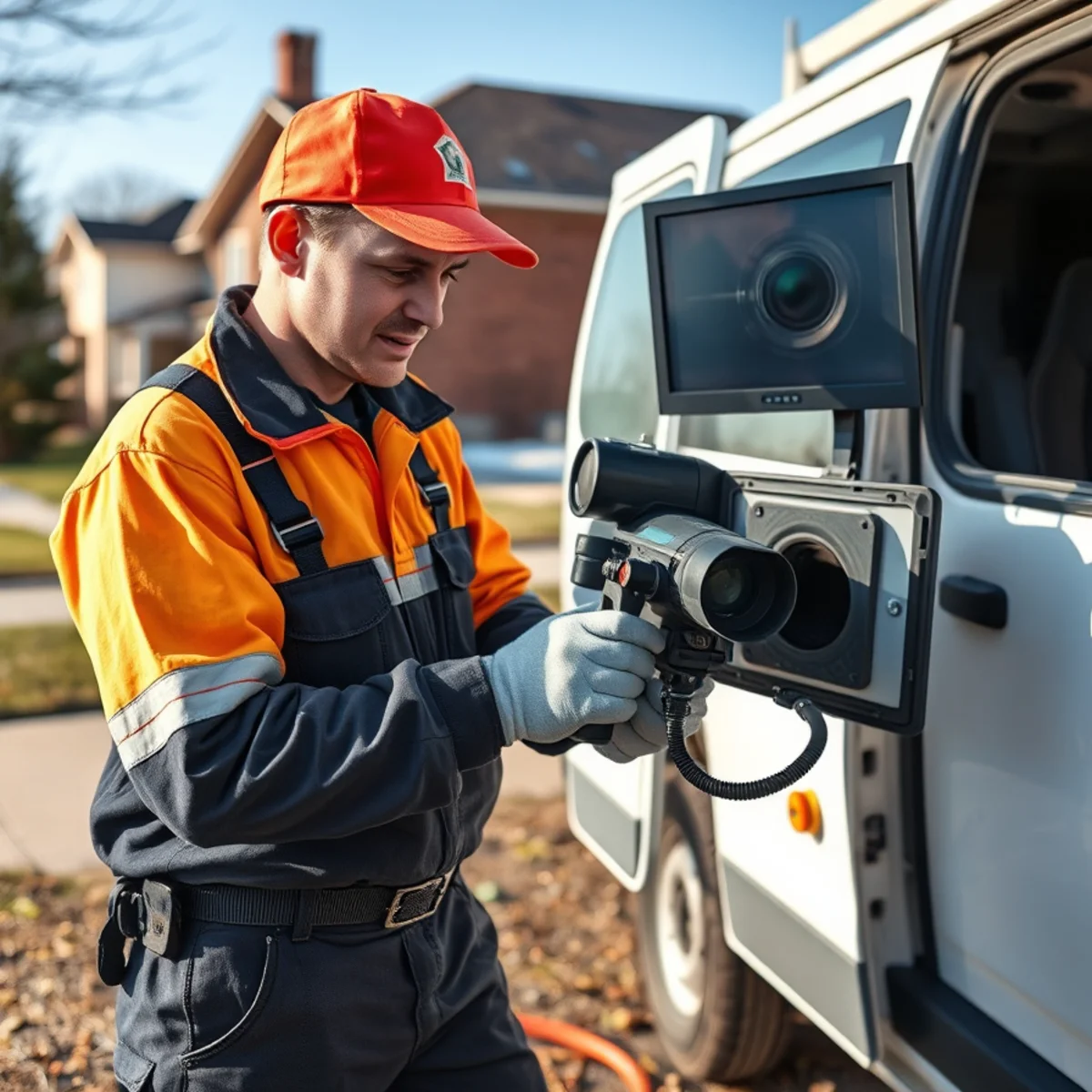
Sewer camera inspection in Lapeer, MI
Lapeer is roughly 50–55 minutes northwest of Sterling Heights via M-53 and I-69; we serve it on scheduled appointments for both in-town and rural properties.
Lapeer is the Lapeer County seat, with a historic downtown along Nepessing Street and a mix of in-town neighborhoods and sprawling rural properties spreading out toward the county's farmland. We travel out from Sterling Heights on scheduled visits to run sewer camera inspections and line locating across both settings. That range, from dense downtown blocks to properties measured in acres rather than square feet, is part of what makes Lapeer different from the suburbs closer to Detroit.
The two halves of Lapeer create two different plumbing problems. In-town homes near downtown and the county courthouse often sit on decades-old municipal sewer connections, while rural properties on the city's edges may run long private lines that were never mapped — and locating those lines accurately is often as important as inspecting them.
Sewer lines & housing in Lapeer
Downtown and the older residential streets around it were largely built out in the early-to-mid 20th century, and many of those homes still connect through original clay laterals. Freeze-thaw cycles and mature street trees along Lapeer's older blocks make root intrusion the most common defect we document on camera in this part of the city.
On the outskirts, where lots are larger and homes are more spread out, private sewer and drain lines can run hundreds of feet from the house to the connection point, often without accurate records of their path or depth. Before any excavation or repair out here, we typically locate the line first so a contractor isn't digging blind across a large yard.
Lapeer's mix of in-town and rural housing also means pipe material varies more than in a typical suburb of similar size — clay under the oldest downtown blocks, cast iron in some mid-century additions, and PVC in newer rural construction. That variation is exactly why we don't assume a pipe's material or condition before putting a camera on it.
Local sewer camera inspection you can trust
We've handled both ends of this in Lapeer — scoping an aging clay lateral for a homeowner near the courthouse whose tub kept backing up, and locating a rural line for a property owner off the edge of town who needed to know exactly where their sewer connection ran before adding a driveway extension. We've also located lines for Lapeer County property owners preparing to sell rural acreage, giving buyers and their agents a documented path and depth rather than a rough guess from an old plat map.
In both cases, the same principle applied: you can't plan a repair around a pipe you can't see.

Lapeer County's mix of municipal sewer and private systems
Not every property in Lapeer connects to the city's sewer system the same way. Homes inside the city limits, especially those built up around Nepessing Street and the blocks near the county courthouse, tie into a municipal main that dates back decades, while properties just past the city line — including many along the M-24 and M-21 corridors — often rely on a private lateral running to a connection point that was never clearly documented. That gap between 'in the city' and 'just outside it' is wider in Lapeer than in most Metro Detroit suburbs, which is why locating a line so often comes before we ever put a camera down it here. Our guide on how sewer line locating works covers the same process we use on Lapeer's harder-to-map rural connections.
Flat grades near Farmers Creek and why bellies form early
Lapeer's terrain is flatter than the farmland surrounding it, and lines running toward Farmers Creek and the low ground near the fairgrounds don't always have much natural fall to work with. A pipe installed with marginal slope decades ago is more likely to develop a belly here than on a steeper lot, and Michigan's freeze-thaw cycle each spring can shift that soil just enough to turn a minor low spot into a recurring clog. We see this most in the older blocks close to downtown, where the original grading predates modern sewer design standards.
- Downtown lots near Nepessing Street tie into older city sewer mains
- M-24 and M-21 corridor properties are often served by unmapped private lines
- Flat grades near Farmers Creek and the fairgrounds limit natural pipe fall
- Spring freeze-thaw shifts marginal-slope sections into bellies over time
Buying rural Lapeer County acreage?
A property outside city limits may not disclose whether it's even on municipal sewer versus a private septic field. Confirming that upfront, then locating and scoping whichever system is actually in the ground, is a cheaper first step than assuming and finding out during a renovation.
A closer look: a Cedar Street clog that kept coming back
A homeowner on Cedar Street called us after a toilet backup that a drain-cleaning service had cleared twice in the same year, with the clog returning both times within a few weeks. The camera found the real problem about 35 feet out: a separated joint where an old cast-iron section transitioned into clay pipe, with a lip catching paper and debris every time. Snaking the line had been clearing the symptom without touching the cause. Once the homeowner could see the offset on video, they opted for a targeted spot repair at that single joint rather than paying to re-clear the same clog every few months.
What a scope typically costs on Lapeer's mix of in-town and rural lots
A standard local sewer scope generally falls in the $200–$500 range, and most in-town Lapeer homes near Nepessing Street or Court Street land in that bracket. Rural properties are a different story: a private line running several hundred feet out to the county road can move into the $500–$975 mid-length tier, and the longest unmapped runs on M-24 or M-21 corridor acreage sometimes reach the $975–$1,900 tier once locating and extra travel along the line are factored in. Across the broader Metro Detroit market, camera inspections average around $955, with a typical range of $254–$1,722 — pipe length and access are the two biggest swing factors on a Lapeer property. Our Metro Detroit sewer camera inspection cost guide breaks down what drives a job to either end of that range.
What to expect scheduling in Lapeer: gravel roads and spring thaw
Plenty of Lapeer County's rural roads are gravel rather than paved, and spring thaw can turn them soft enough that heavy excavation equipment risks rutting a driveway or shoulder that was solid all winter. We generally recommend scoping a rural line either before the thaw sets in or after roads have firmed back up, especially if the findings might lead to a repair that needs equipment access. In town, timing matters less for access but more for symptoms — freeze-thaw cycling through late winter is when marginal joints under Nepessing Street-area homes are most likely to show new infiltration on camera. A sewer scope inspection scheduled with either seasonal window in mind tends to give a cleaner read than one squeezed in during peak mud season.
- Rural gravel-road properties are best scoped before spring thaw softens access, or after roads firm back up
- In-town Nepessing Street-area homes show the most new infiltration during late-winter freeze-thaw
- Longer rural runs on the M-24/M-21 corridors often land in the $500–$1,900 cost range depending on distance
- A documented locate ahead of a repair avoids unnecessary digging along a county road shoulder
Inspection services we provide in Lapeer
Neighborhoods & areas we serve in Lapeer
We provide sewer camera inspection throughout Lapeer, including:
Nearby areas we serve
We also provide sewer camera inspection in communities around Lapeer:
Why Lapeer chooses us
Why Lapeer residents call Sewer Inspects
12+ years covering both downtown Lapeer and the county's rural edges
We've spent more than 12 years inspecting sewer lines across Metro Detroit, and that range extends to Lapeer's split personality — old clay under Nepessing Street blocks and long, unmapped private runs out past the city limits.
Licensed, insured, and set up to locate rural lines
We're licensed and insured, and we carry sonde locating equipment built for Lapeer's larger rural parcels, where a private line can run hundreds of feet with no accurate record of its path or depth.
Recorded HD footage plus a documented locate
Every Lapeer inspection includes recorded video, still images, and — when a line needs it — a documented locate showing path and depth, so a contractor isn't digging blind across a large yard.
Independent findings, no repair or excavation upsell
We inspect and locate; we don't sell the dig. That keeps our Lapeer reports neutral whether we're scoping a courthouse-area home or locating a line for a rural property owner near the edge of town.
Serving Lapeer & Sterling Heights, Macomb County & Metro Detroit
Based in Sterling Heights, we bring recorded HD sewer camera inspection to Lapeer homeowners, buyers, sellers, and property managers — with a written report you keep.
Answers
Sewer inspection FAQs — Lapeer
Book a sewer camera inspection in Lapeer
Same-day sewer camera inspection across Sterling Heights, Macomb County & Metro Detroit. Free quote — call (614) 830-0578 or request a callback.
13+ years experience • Licensed & insured • 24/7 emergency response