Problem-solving
How Sewer Line Locating Works
Before anyone breaks ground, a sonde transmitter and surface receiver can trace your sewer line's exact path and depth. Here's how the technology works and why skipping this step gets expensive fast.
By Sewer Inspects · Updated February 15, 2026 · 14 min read
Every sewer line runs somewhere underground that you can't see, and in a lot of Metro Detroit properties nobody has an accurate record of exactly where. Old plats get lost, additions get built over laterals, and previous owners rarely leave notes about where the pipe bends around a tree that's since been removed. That's the gap sewer line locating fills — it tells you, within inches, where your pipe actually runs and how deep it sits, before anyone puts a shovel in the ground.
We do a lot of this work in Washington Township and Ray Township, where larger lots, longer laterals, and septic-to-sewer transitions make accurate locating especially valuable. Here's how the process actually works.
The Sonde Transmitter: A Radio Beacon Inside the Pipe
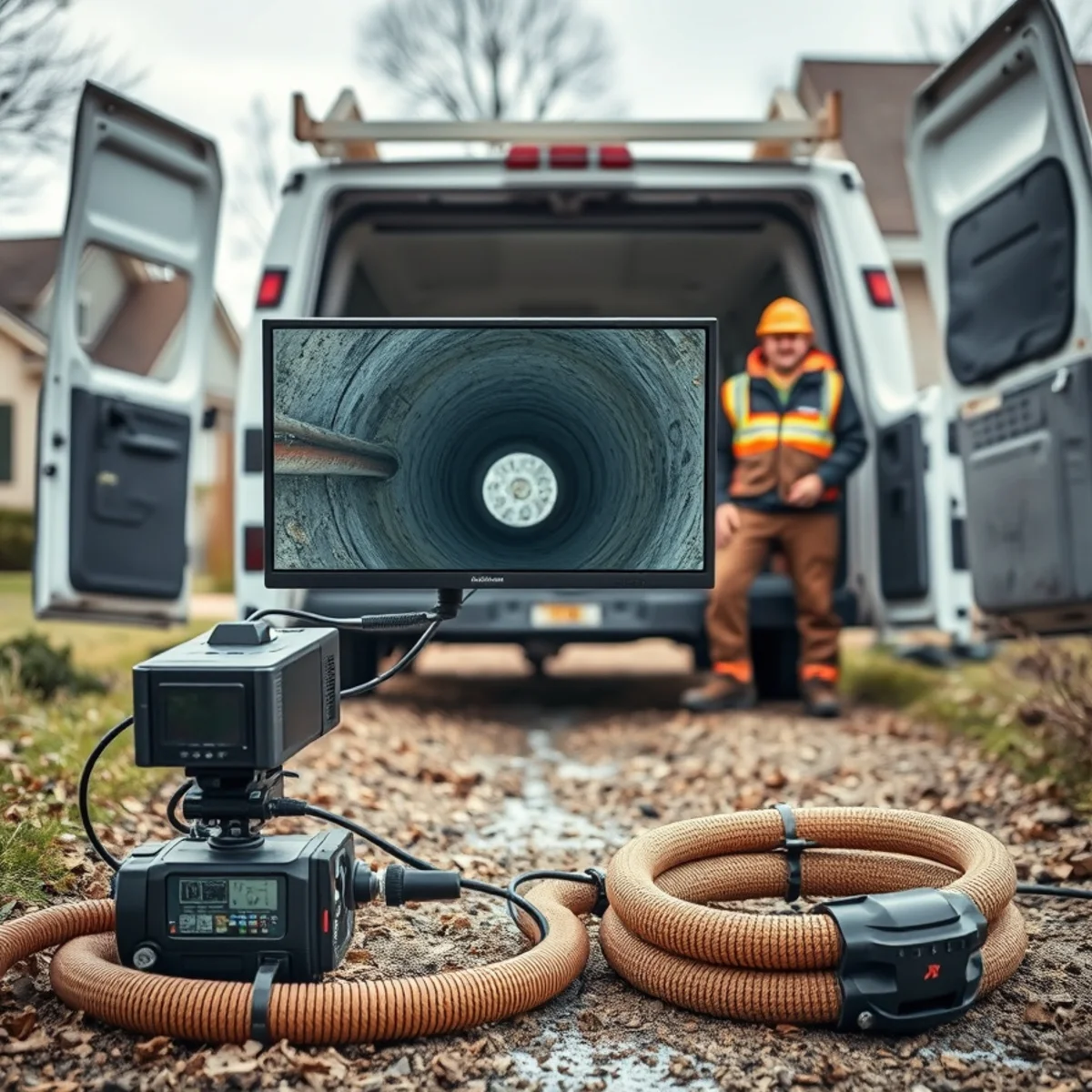
A sonde is a small battery-powered transmitter built into or attached just behind the camera head. As the camera travels through the pipe, the sonde emits a steady electromagnetic signal that passes through soil, concrete, and pavement with no trouble at all. It doesn't care whether the pipe is clay, cast iron, or PVC — the signal comes from inside the line, not from the pipe material itself, which is what makes this method reliable even on older pipe that resists other locating techniques.
The Surface Receiver: Tracing the Signal Above Ground
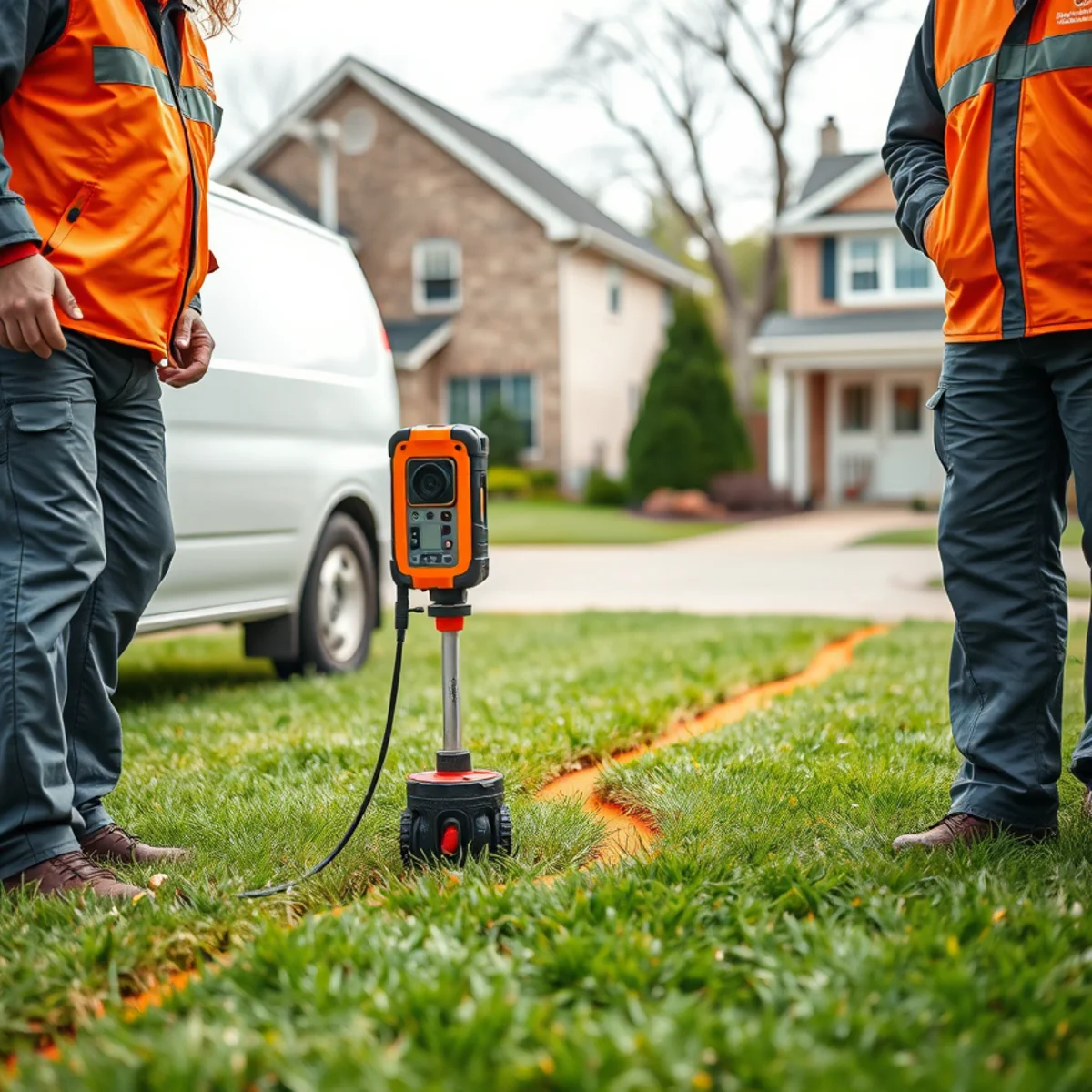
While the sonde transmits from underground, a technician walks the surface above it carrying a receiver tuned to that same frequency. The receiver reads signal strength and gives a directional readout, letting the technician walk directly over the pipe's path and mark it — typically with marking paint or flags — every few feet. Because the receiver also reads signal strength as a function of depth, a second reading lets us estimate how far below grade the pipe actually sits at that point.
Estimating Depth, Not Just Position
Position alone isn't enough for excavation planning. A landscaper or plumber digging a repair pit needs to know roughly how deep to expect the pipe, especially when other utilities — gas, electric, water — might share that same corridor. Depth is estimated using the same receiver, cross-referencing signal strength readings taken directly over the pipe against the transmitter's known output. It's an estimate, not a laser-precise measurement, but it's accurate enough to plan a dig with confidence and avoid the kind of blind excavation that damages other lines.
Call Before You Dig — Then Locate Anyway
Miss Dig 811 marks public utilities, but it does not mark your private sewer lateral. Locating your own line is the only way to know where that specific pipe runs on your property.
Why You Locate Before You Dig
- Avoids blind excavation that can hit gas, electric, or water lines running near the sewer corridor
- Lets a contractor dig a targeted repair pit instead of trenching an entire yard
- Confirms the lateral's actual path when old surveys or plats are missing or wrong
- Identifies unexpected bends, offsets, or previous repair sections before equipment shows up
- Reduces repair cost by narrowing the dig to the exact defect location found during the camera inspection
Skipping this step is one of the more expensive mistakes we see. A contractor who digs based on a rough guess can end up opening two or three test pits before finding the pipe, each one adding labor cost and yard damage. A locate that takes an extra 20 minutes on inspection day routinely saves homeowners hundreds of dollars in unnecessary digging.
Locating on Rural Lots and Long Laterals
Properties in Washington Township and Ray Township often have longer sewer runs than tighter subdivisions closer to the city — sometimes reaching well past 100 feet from the house to the connection point, and occasionally transitioning from an older septic layout to a municipal tap. Longer runs mean more opportunities for the line to bend, dip, or pass near a well, driveway, or drainage feature. Locating on these lots isn't optional extra polish — it's often the only way to confirm the pipe's path with any confidence, since the property may be too large or too old to have reliable records.
Sonde Locating vs. Other Locating Methods
Sonde-in-pipe locating is what we use for the vast majority of residential jobs, but it's not the only way to find a buried line, and it's worth knowing how it compares to the alternatives a contractor or utility company might use in a different situation.
How Locating Methods Compare
- Sonde-in-pipe locating: a battery-powered transmitter rides with the camera through the actual pipe — the most reliable method for a sewer lateral, and since it uses the same equipment as the camera pass, one visit produces both the condition footage and the surface path
- Tracer wire / electromagnetic locating: works when a metallic tracer wire was buried alongside the pipe during installation — common on newer PVC runs installed with a wire, but rare on the clay and cast iron laterals that make up most of Metro Detroit's older housing stock
- Ground-penetrating radar (GPR): scans the soil profile from the surface without needing pipe access — useful for confirming a suspected path across a large open area, but generally less precise on depth than a sonde reading taken from inside the pipe itself
- Physical probing or potholing: digging small test holes along a suspected path until the pipe is found — the least precise and most disruptive method, and the exact scenario a sonde locate exists to prevent
For most residential jobs, sonde locating wins out simply because it doesn't require separate equipment or a second trip to the property — the same camera pass that documents the pipe's condition can carry the transmitter needed to mark its path, which is why locating is often bundled with a sewer scope inspection rather than billed as an entirely separate visit.
Worked Example: A 1960s Ranch in Shelby Township
Say you own a ranch-style home built in the early 1960s in Shelby Township. A slow-draining tub prompted a camera inspection, and the footage showed a root intrusion at roughly 45 feet from the cleanout, with what looks like a separated clay joint just past it. That distance reading tells you where the problem is along the pipe's length, but it doesn't tell a contractor where to dig in the yard — the lateral could run in a straight line to the street or bend around a mature tree that's grown up since the house was built.
This is exactly the situation a locate resolves. The technician runs the sonde back through that same 45-foot mark, walks the surface with the receiver, and marks the spot in the yard directly above the defect — accounting for whatever bends the signal reveals along the way. In older Shelby Township neighborhoods with mature trees and additions built decades after the original construction, that path is rarely a straight shot from house to street, and guessing wrong means a contractor digging a test pit in the wrong spot, backfilling it, and trying again. A 20-minute locate turns a multi-pit guessing game into a single targeted dig.
What Locating Adds to Your Repair Cost — and What It Saves
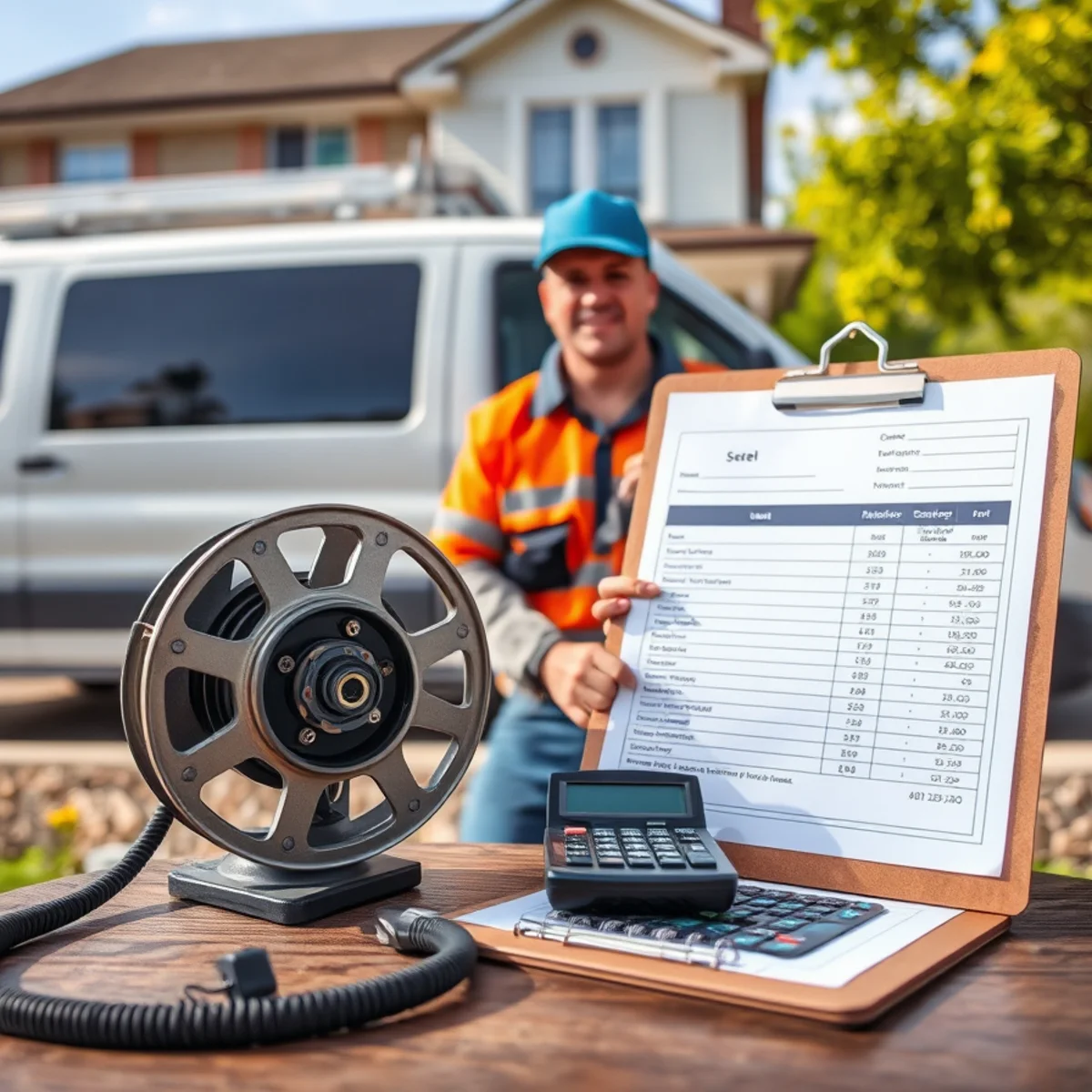
Most local camera inspections in our service area run in the $200–$500 range depending on line length and access, and a locate performed during that same visit is typically a modest add-on rather than a separate full-price service, since the equipment and technician are already on site. Where locating actually pays for itself is on the excavation side: a contractor pricing a repair based on a marked, confirmed dig location can quote a targeted pit rather than padding the estimate to cover the risk of digging blind. On a longer lateral or a property with unclear records, that difference in excavation scope routinely outweighs the cost of the locate itself many times over.
What Most Homeowners Get Wrong About Locating
The biggest misconception we run into is that a locate and a sewer camera inspection are the same service, or that one makes the other unnecessary. They're not interchangeable — a camera shows you what condition the pipe is in, while a locate shows you where that pipe physically sits. Homeowners planning a repair need both: the camera identifies the defect and its distance from the access point, and the locate translates that distance into an actual spot in the yard. Ordering just one usually means paying for the other anyway once digging is close.
A second thing people get wrong is assuming the signal is bulletproof. Certain conditions weaken it — a metal fence, a chain-link gate, or dense rebar in a driveway slab can all distort the reading, and a technician has to recognize that distortion rather than mark a false path with confidence. This is where experience matters more than the equipment itself: a tech who's located hundreds of lines in Metro Detroit's mix of clay, cast iron, and PVC knows what a clean signal looks like versus one that's bouncing off something else nearby, and will re-walk a stretch rather than guess. We've also seen locates called in after a line was already partially exposed by a contractor who dug in the wrong spot on a first attempt — a cost that a 20-minute locate would have avoided entirely.
For homeowners dealing with a suspected clog or blockage rather than a locating question, our guide on what to do about a main sewer line clog covers the diagnostic steps that typically come before a repair is even scheduled. If the camera inspection that led to the locate found a section that's already collapsed or badly offset, our collapsed and broken pipe inspection service documents the extent of that damage before a contractor prices the dig.
Step-by-Step: What Actually Happens During a Locate Visit
Homeowners scheduling their first locate often picture something more disruptive than it is. In practice, the visit follows a predictable sequence, and knowing the steps ahead of time makes it easier to tell whether the crew on your property is doing it right.
- The technician confirms the access point — usually an exterior cleanout — and runs the camera with the sonde attached down the line to the target distance
- A second technician (or the same one, on a smaller job) walks the surface above the suspected path carrying the receiver, sweeping side to side to find peak signal strength
- Once the peak is confirmed, that spot is marked — usually with marking paint or a small flag — and the process repeats every few feet along the pipe's path
- At key points, typically every 10 to 15 feet or at any bend the signal reveals, a depth reading is taken and logged alongside the surface mark
- The crew walks the full marked path a second time to confirm it forms a continuous, logical line rather than a scattered set of points, re-checking any spot where the signal seemed weak or inconsistent
- Marks and depth notes are documented — photographed or recorded — so the information survives even if paint fades or flags get knocked over before a contractor arrives
Second Worked Example: A 1970s Colonial in Rochester Hills
A homeowner in Rochester Hills with a 1970s colonial called us after a landscaper hit resistance digging a new flower bed near the side yard — not the sewer line itself, but close enough that the homeowner wanted to know exactly where the lateral ran before any more digging happened. There was no camera defect prompting the call this time, just a reasonable desire to know the pipe's path before altering the yard around it.
The locate turned up something the homeowner didn't expect: the lateral jogged partway across the property, likely routed around a foundation conflict during original construction, rather than running straight from house to street. Without the locate, future landscaping or a fence post in that stretch of yard would have carried real risk of hitting the pipe. The technician also flagged mild interference near a buried gas line marker, re-walking that section before finalizing the mark — the kind of judgment call that separates a reliable locate from a rushed one.
What to Ask Before You Book a Locate
Not every company documents a locate the same way. A few questions upfront tell you what you're actually getting.
Questions to Ask Your Locator
- Will the locate be done with a sonde run through the pipe, or a surface method like GPR — and why is that the right choice for my line?
- Will you provide depth readings at multiple points along the path, not just position?
- How will the path be marked — paint, flags, or both — and will marks be photographed for a record that outlasts the visit?
- Can the locate be bundled with a camera inspection in the same appointment, or does it require a separate trip and fee?
- What happens if the signal is weak or inconsistent in one section — will that be flagged, or will the mark be a best guess?
- Will the report note any nearby utilities or interference sources the crew observed during the walk?
Locating Myths vs. Facts
- Myth: A locate tells you everything a camera inspection does. Fact: a locate only establishes position and depth — it says nothing about the pipe's condition, which is what the camera pass documents.
- Myth: Miss Dig 811 already covers this. Fact: 811 marks public utilities up to the property line; the private lateral running from your house is entirely your own responsibility to locate.
- Myth: Marking paint means a contractor can start digging immediately with a machine. Fact: hand-digging is still recommended within a foot or two of any mark, since the estimate accounts for typical accuracy but isn't a guarantee to the inch.
- Myth: Any general contractor's locating equipment is as reliable as a specialist's. Fact: reading a weak or distorted signal correctly takes experience with the specific patterns of local pipe materials and utility corridors.
- Myth: A locate performed once is good for the life of the house. Fact: it's accurate for the pipe's current path — if a section is later replaced or rerouted, that portion should be relocated afterward.
Winter Locating: Frozen Ground and Longer Rural Runs
Locating doesn't stop in winter, but Michigan's freeze depth changes what happens after the marks go down. In a typical Metro Detroit winter, frost can penetrate three feet or more into unprotected soil, which affects marking visibility — spray paint doesn't hold as well on frozen or snow-covered ground — and dig planning, since a contractor working through frost needs to account for that extra effort before reaching the depth a locate identified. This matters most on the longer, more rural lots common around Romeo and similar northern Macomb County communities, where laterals often run well past 100 feet and a winter locate needs flags anchored into the ground rather than paint alone, since a hard freeze can make paint markings hard to read by the time a contractor mobilizes.
Next Steps: What to Do With Your Locate Results
What you do with a completed locate depends on why you ordered it. If a defect was already found and the locate marked its repair position, the next call is usually a contractor for a dig quote — our guide on who pays for sewer line repair covers how that cost typically splits between homeowner and municipality. Locating ahead of a purchase instead of a known repair? Pairing it with a pre-purchase sewer inspection gives you both condition and path before closing. And if cost is the open question, our breakdown of sewer camera inspection cost in Metro Detroit covers what drives pricing.
Need to know exactly where your line runs before you dig, landscape, or schedule a repair? Call Sewer Inspects at (614) 830-0578 for a free quote covering Washington Township, Ray Township, and the surrounding area.
Need a sewer camera inspection?
Same-day appointments across Sterling Heights, Macomb County & Metro Detroit. Free quote, no obligation.