
Sewer Camera Inspection Services
Tree root intrusion inspection in Sterling Heights, MI
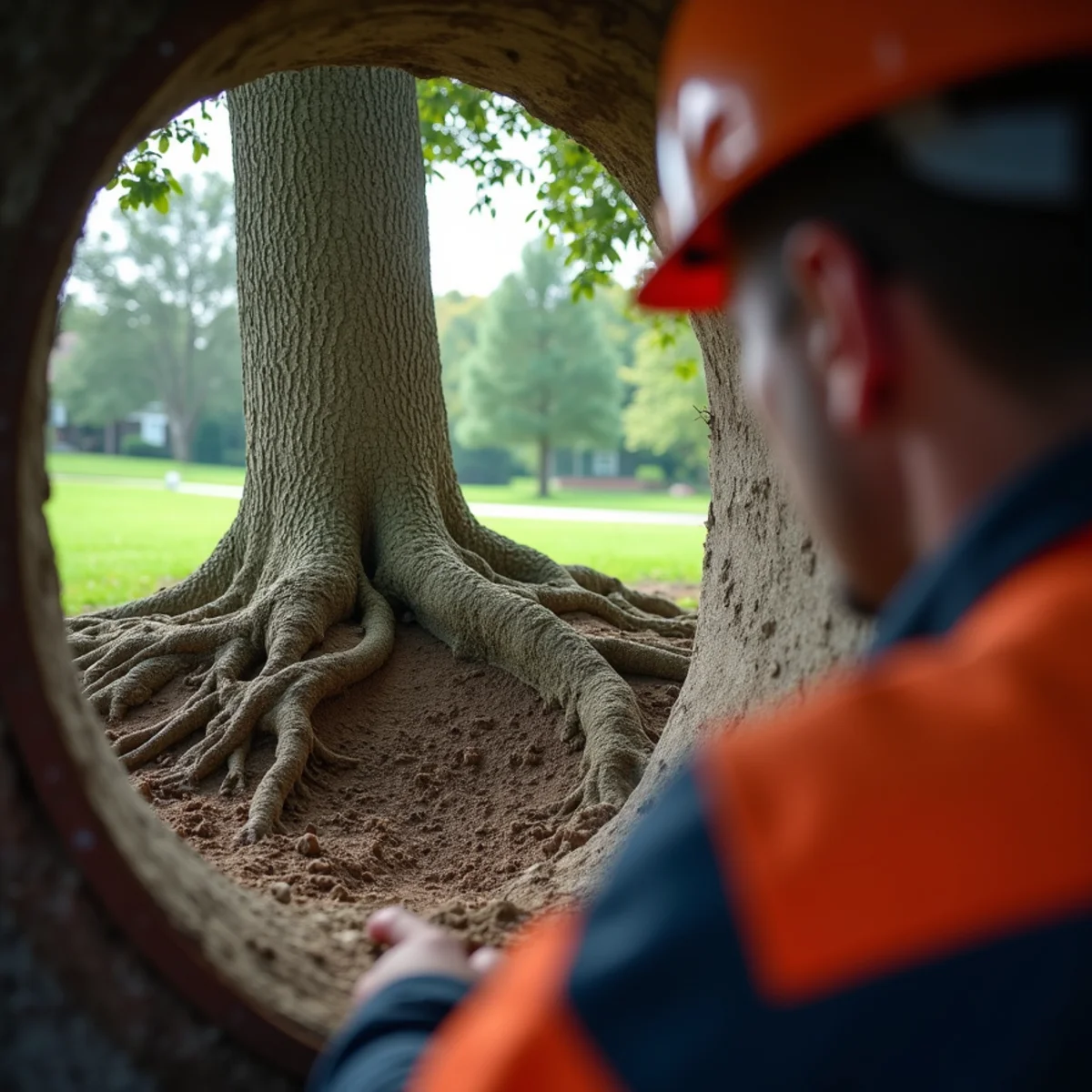
A root intrusion inspection in Sterling Heights, MI runs a video camera through your sewer lateral to confirm whether tree roots have grown into the pipe, document how far the intrusion has spread, and locate the affected joint so any repair targets the actual problem instead of the whole line.
- Recorded HD video
- Same-day report
- Licensed & insured
Metro Detroit's mature tree canopy is one of the reasons homeowners love these older neighborhoods — and one of the reasons sewer laterals here fail the way they do. Maples, willows, and other fast-growing species planted decades ago have root systems that now reach well beyond the property line in search of water, and a slightly open pipe joint is exactly what they find. Homes built before the 1970s typically run clay or vitrified-clay lateral pipe, installed in short sections joined every few feet, which means dozens of potential entry points along a single run.
Once roots find a joint, they don't stop growing. A fine root hair becomes a mass that catches paper and grease, then a slow drain, then a backup that returns a few weeks after a plumber cuts it clear. A root intrusion inspection tells you which stage you're at — a single affected joint you can address directly, or intrusion at multiple points that changes the math on repair versus replacement — and hands you recorded video and a written report to make that call with, not a guess.
Signs you have tree roots in the sewer line
Root intrusion rarely announces itself the first time. It shows up as a pattern:
- Slow drains or gurgling fixtures that return a few weeks or months after a cleaning
- A backup in the lowest fixture in the house — usually a basement floor drain or laundry tub
- Mature trees, especially maples, willows, or other fast-growing species, near the sewer lateral's path
- An older home on clay or vitrified-clay pipe, common in pre-1970s Metro Detroit neighborhoods
- A history of 'root cutting' or hydro-jetting that restores flow for a while and then fails again
- A faint sewage odor near a cleanout or in the yard along the lateral's route
- A previous plumber or drain company that mentioned roots but never showed you where they were
How we inspect for root intrusion
Every root intrusion inspection follows the same sequence, whether it's a first look or a follow-up after root cutting:
- 1
Access and initial scope
We access the lateral through an exterior cleanout, a roof vent, or a fixture, and advance the camera until we reach the first sign of roots.
- 2
Document each intrusion point
Every joint where roots have entered gets recorded on video with its approximate footage from the access point — not just a general note that roots are present.
- 3
Assess severity
We evaluate whether it's a single fine root mass at one joint, or coarse intrusion recurring at multiple joints along the run — a distinction that changes the repair conversation.
- 4
Locate the intrusion at the surface
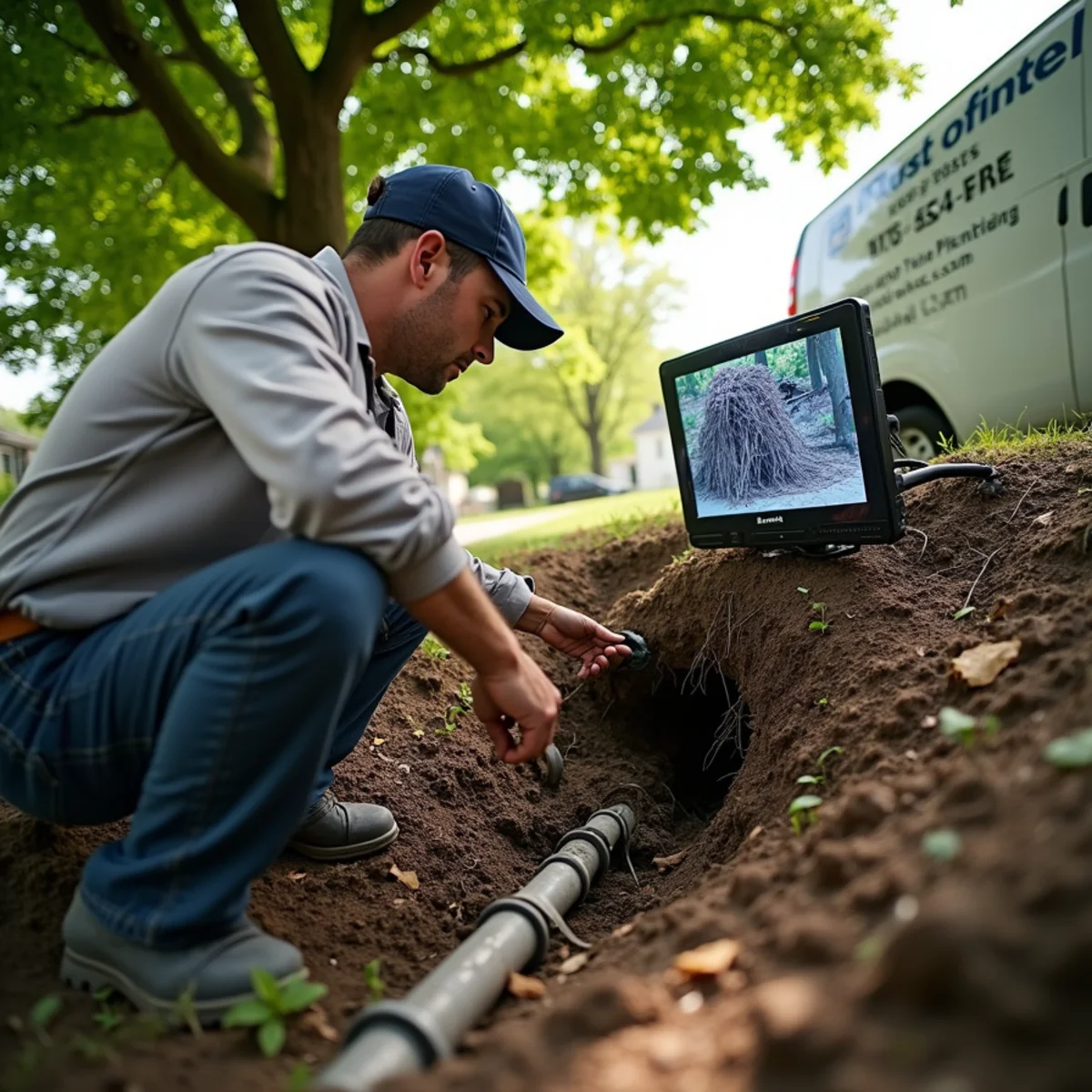
Using a sonde transmitter built into the camera head, we trace the corresponding surface position, so a spot repair digs in exactly the right place instead of guessing along the lateral.
- 5
Review findings and options
You get the footage, still images, and a plain-English walkthrough of what's realistic — continued maintenance, a targeted spot repair, or lining — with the trade-offs of each explained.
What a root intrusion inspection costs
Pricing depends on a handful of honest variables, and we confirm the number before any work starts:
- Whether the line needs partial clearing before the camera can pass through the root mass
- Lateral length — a straightforward local camera inspection commonly runs about $200–$500, while longer or harder-access runs move toward $500–$975
- Whether locating service is added so a spot repair can be marked precisely at the surface
- How many suspected intrusion points there are and how much of the lateral needs to be scoped
- Scheduled appointment versus same-day or emergency response
What's included in a root intrusion inspection
Every root intrusion inspection ends with recorded evidence, not a verbal opinion. Here's exactly what you get:
Your inspection deliverables
- Full HD video of the lateral run, from the access point to the inspection's end point
- Still images marking every joint where roots were found
- Approximate footage/location of each intrusion point measured from the access point
- Sonde-based surface location of the joint(s) needing attention, when ground conditions allow
- Pipe-material identification (clay, vitrified clay, cast iron, PVC, or Orangeburg)
- A written summary rating severity and outlining realistic next steps
Metro Detroit's tree canopy meets aging clay pipe
This is one of the most common causes of sewer trouble we document across Macomb and Oakland County. Neighborhoods with decades-old street trees and clay laterals — the same combination we cover in our tree roots in Metro Detroit sewer lines guide — see recurring root intrusion because clay pipe was joined in short sections with joints that loosen with age and soil movement. Vitrified-clay pipe holds up structurally longer than most people assume, but its joints were never designed to stay watertight forever, and a hairline gap is all a root needs. Our clay sewer line failure in Metro Detroit article covers the broader pattern.
We see this constantly in communities like Rochester Hills, where mature lots and older subdivisions put large trees directly over or beside the lateral path — see our Rochester Hills service area page for the local specifics we watch for there.
One joint or many? Why severity changes the plan
Not every root intrusion is the same problem. A single fine root mass at one joint, caught early, is often something you monitor and clear periodically without urgency. Roots intruding at multiple joints along the same run are a different situation — each entry point is a future clog, and the debris they catch is frequently what's actually behind a backup we're asked to diagnose as a sewer clog or blockage inspection. If root growth has also cracked, offset, or partially collapsed the pipe wall at a joint — which does happen with older clay sections under sustained root pressure — that moves into collapsed or broken pipe inspection territory, where the fix is structural, not just a root clearing.
The camera is what tells the two apart. We don't guess severity from how often you've had the line cleared; we document it joint by joint on video.
Why root cutting doesn't last — and what does
Mechanical root cutting or hydro-jetting clears the immediate blockage, but it doesn't close the joint the roots entered through. The opening stays, so regrowth typically fills the same space within months to a couple of years. That's why homeowners often tell us they've had the line "cut" two or three times and it keeps coming back — the intrusion point was never actually addressed.
The honest sequence
Cutting buys time. Locating the exact joint and repairing or lining it is what actually stops regrowth. A root intrusion inspection is how you know which one you're dealing with before you spend money on either.
Locating the intrusion for a targeted fix
Knowing roots are "in the line somewhere" isn't enough to plan a repair — a contractor needs a surface location to dig accurately, and guessing wrong means unnecessary excavation across your yard or driveway. That's why we pair root intrusion inspections with sewer line locating whenever a targeted spot repair is on the table: a sonde transmitter in the camera head lets us mark the joint's approximate surface position and depth, so whoever does the repair digs once, in the right spot.
Root cutting, spot repair, or full replacement: how severity decides
The right response to root intrusion isn't the same for every home, and it shouldn't be decided before anyone's looked at the pipe. Here's roughly how the options line up once the camera has documented what's actually there:
- Single fine root mass, one joint, otherwise sound pipe — periodic mechanical cutting or jetting on a maintenance schedule is often reasonable, especially if the home isn't changing hands soon
- Root intrusion at one joint that keeps recurring after cutting — a targeted spot repair or a short section of lining closes the actual entry point instead of clearing it again every year or two
- Intrusion at multiple joints along the same run, pipe otherwise intact — full-length lining or replacement usually pencils out better than repeated spot repairs once you add up the cost of doing it three or four times
- Root pressure that's also cracked, offset, or partially collapsed the pipe wall — this shifts into structural collapsed or broken pipe territory, where the fix is a repair or replacement, not a cutting schedule
A Macomb Township scenario: root cutting that kept failing
A homeowner in Macomb Township had the same drain-cleaning company cut roots out of her lateral three times in four years, each time paying for a full jetting visit that restored flow for a while before the backups started again. She called us before agreeing to a fourth round, wanting to know whether cutting would ever actually solve it.
The camera found roots re-entering at the same clay joint about 42 feet from the cleanout every time — the cutting had never closed the opening, just cleared what had grown through it. With the joint's exact location marked using the sonde transmitter, her plumber quoted a single spot repair instead of another jetting contract, and the video made it easy for her to see why a fourth cutting visit wasn't going to be different from the first three.
Common mistakes homeowners make with root problems
- Paying for repeated root cutting for years without ever confirming how many joints are actually affected or whether the pipe wall is still sound
- Assuming the tree closest to the house is the culprit, when a tree on a neighboring lot can have roots that reach further along the lateral's path
- Removing a mature tree hoping it solves the problem, when the existing root mass inside the pipe doesn't go anywhere on its own once the tree is gone
- Agreeing to a full-line replacement quote without a camera confirming whether the intrusion is actually limited to one or two joints
- Ignoring a slow drain that clears with cutting, on the assumption it will keep working indefinitely, instead of tracking whether the interval between visits is getting shorter
Freeze-thaw, clay soil, and why root intrusion accelerates here
Macomb County's clay-heavy soil expands and contracts more than sandier soil through every freeze-thaw cycle, and that seasonal movement is part of why older clay-joint laterals loosen faster here than in some other regions. A joint that was tight when the pipe was installed decades ago works incrementally looser every winter, and a nearby root system only needs a small opening to start. We see the same pattern repeat across Shelby Township and Sterling Heights subdivisions built in the 1960s and '70s, where mature street trees and clay laterals were installed at the same time and have been working against each other ever since.
Why Sewer Inspects
Why choose us for tree root intrusion inspection
12+ years reading Metro Detroit's clay laterals
We've documented root intrusion in laterals from Sterling Heights to Rochester Hills, Fraser, and Berkley — we know which joints in a clay-pipe run fail first and what root intrusion looks like at every stage.
Licensed & insured
A licensed, insured local inspection provider — not an out-of-town crew that disappears if the root problem comes back.
Recorded HD footage, stills, and a written report you keep
You get video of every intrusion point, still images, and a plain-English severity summary for repair decisions, insurance, or a home sale.
Independent — we don't sell root cutting or repairs
We inspect and document — we don't bid the cutting or repair. That keeps our severity assessment honest.
Answers
Tree Root Intrusion Inspection — FAQs
Where we offer tree root intrusion inspection
We run root intrusion inspections across Sterling Heights and the surrounding communities where mature trees and older clay laterals are the norm — including Rochester Hills, Ferndale, Fraser, Berkley, and Clawson, along with the rest of Macomb and Oakland County.
Same-day and next-day appointments are usually available, and we respond 24/7 when root-related intrusion has already caused an active backup.
A few of the communities we serve — see all on our service areas page.
Related services
Sewer Clog & Blockage Inspection
Pinpoint what's blocking the line and where — so you stop paying to clear the same clog and fix the reason it forms.
Learn moreCollapsed & Broken Pipe Inspection
Before you approve a five-figure excavation, confirm the collapse or break on video and locate it — so the dig targets the right spot.
Learn moreSewer Line Locating & Depth
Know exactly where the line runs and how deep before anyone digs — sonde locating that turns a whole-yard excavation into a targeted repair.
Learn moreHelpful reading
Ready to book tree root intrusion inspection?
Same-day sewer camera inspection across Sterling Heights, Macomb County & Metro Detroit. Free quote — call (614) 830-0578 or request a callback.
13+ years experience • Licensed & insured • 24/7 emergency response