Local-specific
Tree Roots and Sewer Lines: Metro Detroit's Ongoing Battle
Metro Detroit's mature tree canopy is one of its best features and one of its sewer laterals' biggest liabilities. Here's why root intrusion keeps coming back after cutting.
By Sewer Inspects · Updated February 15, 2026 · 14 min read
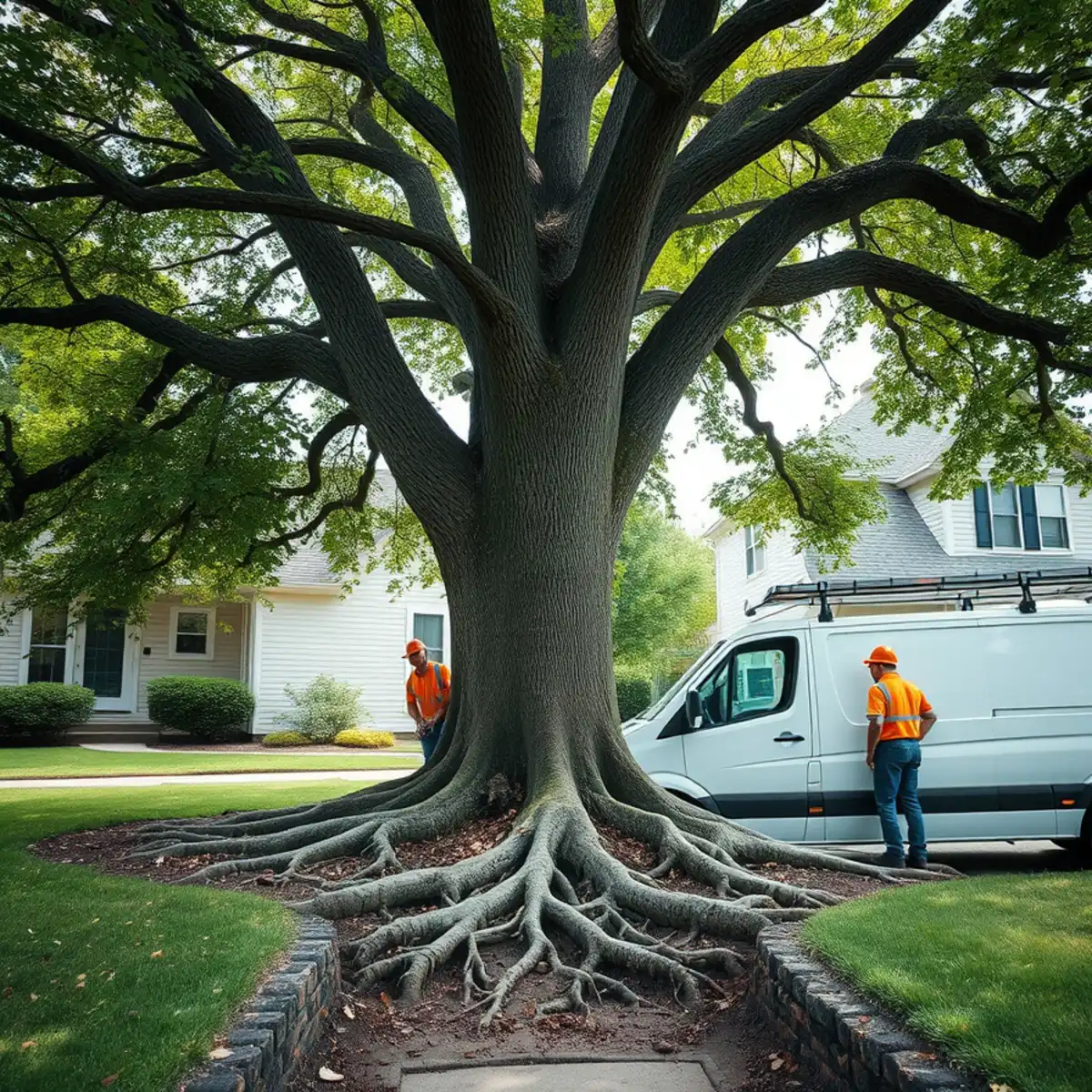
Metro Detroit's mature tree canopy is one of the things people love most about its older neighborhoods. It's also one of the biggest long-term threats to the sewer laterals running underneath those same yards. Trees planted fifty or more years ago have had decades to spread root systems directly toward — and into — aging clay pipe.
Why Roots Target Sewer Pipes
Sewer pipes carry a constant, reliable source of moisture and nutrients. Even a tiny amount of water vapor escaping through a joint gap is enough to draw roots toward it — a process plant biologists call hydrotropism. Once a root finds any opening, no matter how small, it will exploit it.
The Clay-Joint Connection
Older sections of Rochester Hills and Ferndale were built with vitrified clay laterals long before PVC became the standard. Clay pipe comes in short sections joined with oakum, mortar, or tar-based sealant — materials that shrink and degrade over decades. Once a hairline gap forms at one of these joints, it's only a matter of time before nearby roots find it.
How Root Intrusion Progresses
- Fine root hairs work their way into a small joint gap, drawn by the constant moisture inside the pipe
- Over time, the root mass thickens into a fibrous network inside the pipe that acts like a filter, catching paper, wipes, and grease
- The growing root mass physically widens the joint gap it entered through
- Continued growth can eventually crack or offset the pipe section entirely
Once a root mass has thickened enough to catch paper and grease, it behaves like any other blockage — our sewer clog and blockage inspection service covers how we diagnose a recurring clog regardless of what's causing it. And when root growth has progressed far enough to crack or offset the pipe itself, that's no longer a maintenance issue but a structural one, which is what our collapsed and broken pipe inspection is built to document.
Root Intrusion Isn't Limited to Clay Pipe
Clay pipe with mortar or oakum joints is the most vulnerable material, but it's not the only one. Cast iron sections can develop root intrusion at joints where the seal has corroded away, and even PVC lines aren't immune if a joint was improperly glued or has separated slightly over time. Roots are opportunistic — they don't care what the pipe is made of, only whether there's an opening. That said, the sheer number of joints in a clay lateral, combined with how those joints were originally sealed, is exactly why clay pipe accounts for the overwhelming majority of the root intrusion cases we see across Rochester Hills and Ferndale.
Root Risk by Pipe Material
How vulnerability and typical response vary by material
- Vitrified clay with oakum or mortar joints — highest risk; joints degrade steadily over decades, and once a gap opens, root intrusion is close to inevitable given enough time
- Cast iron with corroded joint seals — moderate risk; intrusion is usually localized to specific failed joints rather than spread throughout the run
- PVC with a properly solvent-welded joint — low risk; intrusion here is nearly always tied to a specific installation defect or a joint that separated after ground shifting, not to material aging
- Any material at a point repair or tap connection — elevated risk regardless of the surrounding pipe, since a repair joint is a new potential entry point
Seasonal Patterns Worth Knowing
Root activity isn't constant throughout the year. Growth accelerates in spring and early summer as trees come out of dormancy and actively expand their root systems, which is often when homeowners notice backups appearing for the first time or getting noticeably worse. Root masses that were manageable in fall can grow enough over a single growing season to cause a full blockage by the following summer. That seasonal pattern is one more reason a one-time root cutting isn't a permanent fix — the roots you cleared in April may have regrown enough to matter again by the time next year's growing season ends.
Signs You Have Root Intrusion
Common indicators
- Recurring backups, especially after heavy rain
- Gurgling toilets when another drain is running
- A drain that's slow again within days of being snaked
- Sewer odor noticeable in the yard along the lateral's path
- An unusually lush or dark green strip of grass tracking the line
Common Mistakes Homeowners Make With Root Intrusion
- Relying on foaming root-killer products year after year without ever having the joint itself inspected, treating a chemical routine as a permanent fix
- Waiting for a full backup before calling anyone, instead of acting on early signs like a lush strip of grass or a slow drain that keeps recurring
- Hiring for root cutting alone with no camera documentation, so there's no record of whether the joint is degrading further from one cutting to the next
- Planting new trees or large shrubs near a known lateral path without accounting for how far root systems can eventually reach
- Assuming a recent root cutting means the line is now clear when the joint gap that caused it is still open and drawing new roots
A Common Scenario: The Colonial in Utica With a Root Mass at the Same Joint
Say you own a 1970s colonial in Utica with a mature maple planted near the property line, close to where the clay lateral runs. Over the past two years, you've had the line snaked for roots three times, each time buying about six months of relief before the toilet starts gurgling again.
- A camera inspection locates the intrusion at a single joint roughly 30 feet from the cleanout, with the root mass regrowing at that same spot each time
- The joint itself shows visible separation on camera, not just root growth, meaning the opening is wide enough that cutting alone will keep failing on a shortening cycle
- With that documented on video, the practical choice becomes a targeted spot repair or lining at that one joint instead of another round of cutting that's already trending toward a shorter interval each time
- Because the problem is isolated to one joint rather than the whole run, the fix is narrower in scope than a full lateral replacement would be — the camera footage is what makes that distinction possible instead of guessing
How Fast a Blockage Can Return
One detail that surprises a lot of homeowners is just how quickly a root mass can rebuild itself once it's been cut out. In an actively growing joint gap during peak season, enough fine root growth can return within a matter of weeks to start catching debris again, even if it takes longer for that to translate into a full backup. That timeline is a big part of why some properties end up on a root-cutting schedule every six to twelve months rather than treating it as a one-time fix — and why it's worth knowing, from an inspection, whether that schedule is actually sustainable or whether the joint has degraded to the point that a permanent repair makes more financial sense over a few years.
Why Cutting the Roots Doesn't Solve It
Mechanical root cutting and root-killing chemical treatments clear the immediate mass, which restores flow and buys relief. But neither one closes the joint gap the roots grew through in the first place. Because that opening is still there, roots typically regrow within months to a year, and the cycle repeats. It's maintenance, not a repair — and if the joint itself is deteriorating, cutting roots on a recurring schedule eventually stops being cost-effective compared to fixing the actual joint.
What a Root Intrusion Inspection Costs, and Why the Video Matters
A standard root intrusion camera inspection is priced the same way any local camera inspection is — mainly by pipe length and access. Shorter runs typically land around $225-$500, mid-length runs in the $500-$975 range, and longer or harder-to-access laterals between $975-$1,900. Across the broader Detroit area, camera inspection pricing has run anywhere from $254 to $1,722 depending on the job, with an average closer to $955 — our Metro Detroit cost guide breaks that range down in more detail.
What you get for that price is more valuable than the number alone suggests once roots are a recurring issue. A sewer line video inspection creates a dated record of exactly how far the joint has separated this time, which you can compare against footage from a prior visit to see whether the opening is widening year over year. That comparison is what actually answers the question every homeowner on a cutting schedule eventually asks: is this still worth doing every year, or has it crossed the point where a repair pays for itself?
What an Inspection Tells You
A tree root intrusion inspection puts a camera directly at the affected joints, showing root density, how far the intrusion extends, and the exact distance from the cleanout to each affected section. That information is what actually informs the decision — whether ongoing root cutting on a schedule is a reasonable long-term plan, or whether the joint has degraded enough that lining or a spot repair makes more sense.
Because root intrusion and clay joint deterioration go hand in hand, our related article on clay sewer line failure across Metro Detroit is worth reading alongside this one if your home falls into that age range.
How We Treat Root Intrusion: Cutting, Foaming, and Lining Compared
Once a camera confirms root intrusion, there's more than one way to address it, and they're not interchangeable. Which one makes sense depends on how far the joint has separated and how often the problem is coming back.
- Mechanical root cutting — a rotating blade or cable head fed through the line shreds the root mass and restores flow immediately; it's fast and inexpensive but does nothing to close the joint gap the roots grew through
- Foaming or liquid root treatment — applied after cutting to slow regrowth chemically; it can stretch the interval between cuttings but works unevenly in a bellied or uneven section where the product doesn't coat the pipe walls consistently
- Cured-in-place lining — a resin-saturated liner is pulled through the existing pipe and cured in place, sealing the joint gap itself rather than just clearing what's growing through it; this is usually the point where root intrusion stops being a recurring maintenance item
- Spot excavation and repair — reserved for a joint that's separated badly enough that lining alone won't hold, or where the pipe itself is crushed or offset alongside the root growth
A Second Scenario: The Bungalow in Royal Oak With Roots in the Cast Iron Branch
Say you own a 1940s bungalow in Royal Oak with a cast iron branch line running under the sidewalk to the street connection. Unlike the clay-joint case above, this line has held up structurally for decades — until a large silver maple out front started sending roots into a corroded joint seal near the property line.
- Camera inspection finds a moderate root mass at a single cast iron joint about 22 feet out, with visible corrosion around the seal rather than a cracked pipe wall
- Because cast iron root intrusion is usually localized to one failed joint rather than spread across the run, the rest of the line checks out clean
- A cured-in-place liner at that one joint seals the corroded seal permanently, avoiding a sidewalk excavation that a full point repair would have required
- The camera footage documenting a single, isolated joint — not general pipe deterioration — is what supported lining over replacement as the more cost-effective option
What to Ask Before Choosing a Root Treatment
- Is the recommendation based on camera footage of the actual joint, or a general assumption based on the home's age?
- Is this treatment meant to be permanent, or is it a maintenance step I'll need to repeat on a schedule?
- If lining is recommended, does it require digging, or is it done entirely through the existing pipe?
- Will I get footage from after the treatment confirming the root mass is actually cleared?
- What's the realistic interval before this joint needs attention again if I choose the cheaper option today?
Myths vs. Facts About Root Intrusion
- Myth: If there's no tree in my own yard, I'm not at risk. Fact: roots routinely travel well past a property line — a neighbor's tree thirty or more feet away can still be the source.
- Myth: A single root-cutting appointment removes the whole mass for good. Fact: cutting clears what's visible at the time, but fine root hairs left in the joint gap can rebuild noticeably within weeks during peak growing season.
- Myth: Root intrusion always means the line needs to be replaced. Fact: most cases found early are addressed with a targeted repair or lining at the specific joint, not a full lateral replacement.
- Myth: If the yard looks normal, there's no root activity underground. Fact: an unusually green strip of grass is a helpful clue when it shows up, but plenty of root intrusion never produces a visible surface sign at all.
Freeze-Thaw and Root-Damaged Joints: A Winter Risk Multiplier
Root intrusion doesn't stop mattering once the growing season ends. In Southfield and other communities with a mix of mature trees and clay laterals, a joint that's already been widened by root growth is more vulnerable to Michigan's freeze-thaw cycle over the winter. Water sitting in that gap expands as it freezes, which can widen the opening further before spring growth even resumes — meaning a joint that was borderline in the fall can test noticeably worse by the time the ground thaws. It's part of why we sometimes recommend scoping a known root joint in late fall, before winter, rather than waiting until the following spring.
Next Step: Deciding Between Ongoing Maintenance and a Permanent Fix
If your camera footage shows a joint that's still structurally intact despite the root mass, a tree root intrusion inspection on a maintenance schedule may still be the more economical choice for now. But once a joint has visibly separated, it's worth reading our sewer line maintenance checklist for older homes to see where root treatment fits into a broader maintenance plan, and our guide on warning signs of sewer line failure if you're trying to decide whether what you're seeing has crossed from a maintenance issue into something more urgent.
Dealing with recurring root intrusion in Rochester Hills or Ferndale? Sewer Inspects offers free quotes on camera inspections — call (614) 830-0578 to find out whether it's time for more than another root cutting.
Need a sewer camera inspection?
Same-day appointments across Sterling Heights, Macomb County & Metro Detroit. Free quote, no obligation.