
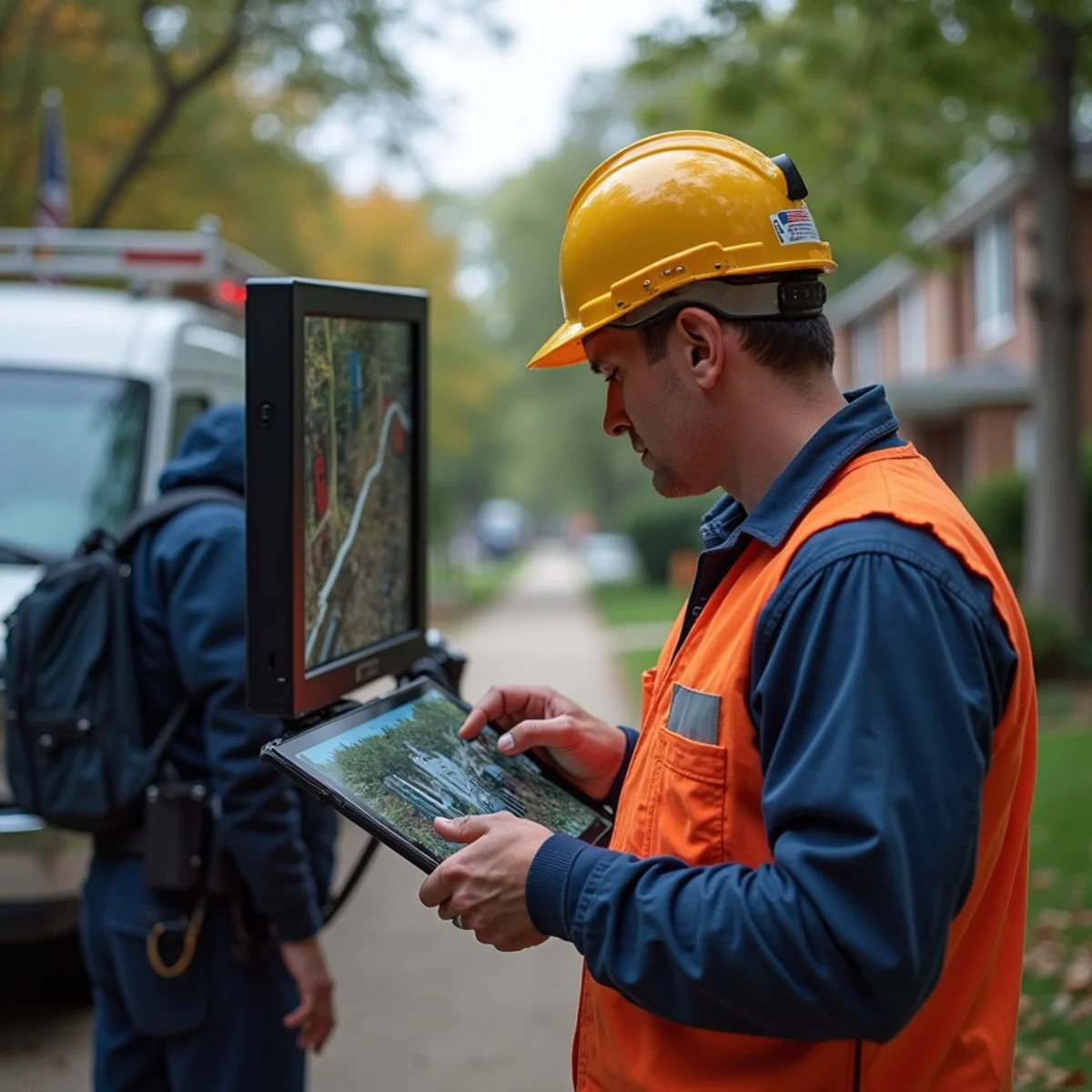
Sewer Camera Inspection Services
Collapsed and broken pipe inspection in Sterling Heights, MI
A broken sewer pipe inspection in Sterling Heights confirms — on recorded video — whether your sewer lateral has a hairline crack, an offset joint, a partial break, or a full structural collapse, before anyone hands you a bid for a five-figure excavation. It's the difference between guessing at a repair and pointing a crew at one confirmed spot.
- Recorded HD video
- Same-day report
- Licensed & insured
Not every backup means a collapse. A stubborn clog and a genuinely broken pipe can look identical above ground — slow drains, gurgling, odor, standing water — but they call for completely different fixes. Running the camera to the actual defect and documenting the damage is what separates a $200–$500 clearing job from a repair costing thousands.
When a repair quote runs into real money, independent video evidence is the cheapest, highest-leverage step in the project. You get the severity classified, the location pinned down for a targeted dig, and footage you can hand to more than one contractor for competing bids.
Signs of a collapse or break
None of these prove a collapse on their own — that's what the camera is for — but they're the patterns that most often lead to one:
- Frequent, worsening backups that snaking or a rental auger no longer clears
- Sudden sinkholes, soft spots, or an unusually lush, green strip in the yard along the line's path
- Sewage odor outdoors that tracks the buried run rather than the house itself
- A camera run that stops abruptly at deformation, packed dirt, or debris that won't clear
- Gurgling drains or slow fixtures in multiple rooms at once, not just one isolated drain
- An older Orangeburg, clay, or cast-iron lateral that's already past its expected service life
- A previous plumber or inspection report flagging a suspected offset, belly, or break
- The same section backing up repeatedly despite repeated clearing
How we confirm and locate the damage
Confirming a collapse takes more than watching the monitor stop moving — we document exactly what kind of damage it is and pin down where it sits, so a repair crew digs once instead of three times.
- 1
Access and initial run
We enter through the cleanout, house trap, or nearest access point and advance the camera toward the section where symptoms point.
- 2
Scope to the defect
The camera advances until it reaches the deformation, break, or collapse, recording the full approach and the condition itself in HD.
- 3
Rule out a simple clog
We check whether what's blocking the view is removable debris, grease, or roots versus a structural failure of the pipe wall — the camera shows the difference clearly.
- 4
Assess severity
We document and classify whether it's a hairline crack, an offset joint, a partial break, severe deformation, or a full collapse.
- 5
Locate it
Using a sonde locator in the camera head, we estimate the surface position and depth so a repair crew digs one targeted spot.
- 6
Give you leverage
You get the footage, stills, and written findings to compare repair or replacement bids from more than one contractor on the same evidence.
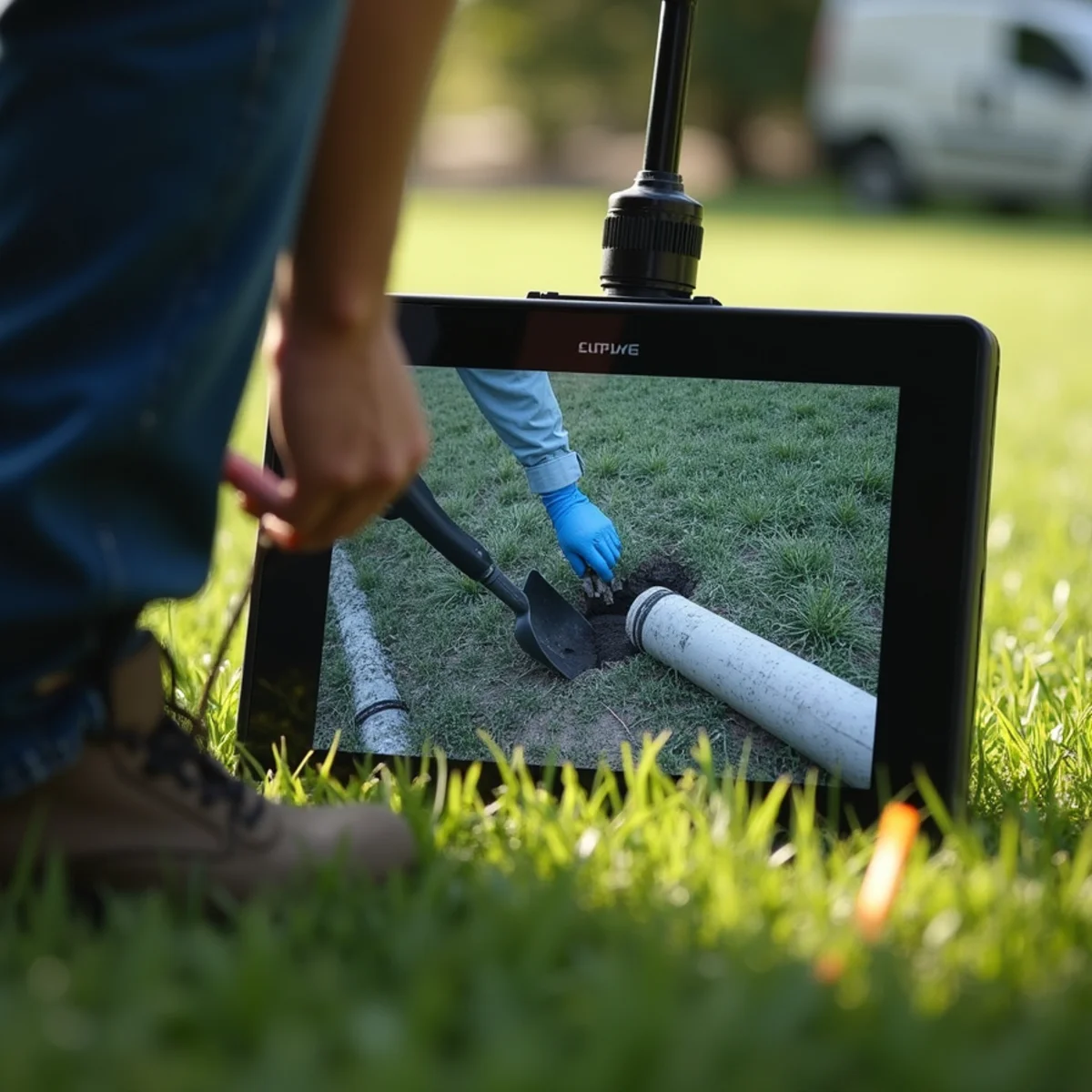
Broken pipe inspection pricing
A straightforward local camera inspection commonly runs about $200–$500. Cost moves from there based on what's needed to actually reach and document the defect — never a fixed number quoted sight unseen:
- Whether debris, roots, or standing water need clearing before the camera reaches the damage
- Line length and access — short runs often land near $225–$500, longer lines $500–$975, complex jobs $975–$1,900
- Whether sonde locating and depth are bundled in, or booked separately
- Emergency same-day response versus a scheduled appointment
- Whether the cleanout is easily accessible, buried, or missing entirely
- Whether a second look is needed after partial clearing to confirm severity
What's included in a collapsed & broken pipe inspection
Every inspection gives you evidence you can act on — not a verbal opinion from a company hoping to bid the repair. You keep all of it, regardless of what we find.
What you get, in writing
- Recorded HD video of the full run up to the damaged section
- Still images marking the exact point and appearance of the defect
- A severity classification: crack, offset joint, partial break, or full collapse
- Approximate surface location and depth of the defect where conditions allow (via sewer line locating)
- Pipe-material identification — clay, cast iron, Orangeburg, or PVC
- Inspected distance and the endpoint reached
- A plain-English written summary you can hand to any contractor
- Guidance on urgency: act now, or safe to get a second bid first
Collapse vs. clog: how we tell the difference on camera
From the house, a genuine collapse and a stubborn clog can look identical — slow drains, gurgling, a backup after every heavy use. On the monitor they're not close. A removable blockage has visible texture and a clear edge; the pipe wall behind it is intact. A collapsed or severely deformed section looks structural — the pipe itself is crushed or out of round, and the camera can't pass through no matter how it's angled. If your symptoms could be either, a sewer line video inspection that runs the full length settles it before anyone recommends excavation.
Severity levels: crack, offset joint, partial break, full collapse
- Crack — a fracture in the pipe wall that hasn't deformed the shape; often watched or scheduled for a targeted repair rather than treated as an emergency
- Offset joint — two sections have shifted out of alignment, commonly from settlement or root pressure, creating a ledge that catches debris and roots
- Partial break — a section of pipe wall has failed but the line hasn't fully caved in; flow is restricted and getting worse
- Full collapse — the pipe has caved in and no longer functions as a channel; this is the finding that typically can't wait
Older Orangeburg, clay & cast-iron lines: past their service life
Sterling Heights and the surrounding older neighborhoods still have plenty of laterals in materials never built to last a lifetime. Orangeburg — a tar-impregnated wood-fiber pipe used through the 1970s — deforms and delaminates on its own. Clay is durable but brittle at the joints, exactly where roots find their way in. Cast iron corrodes and scales from the inside until the wall thins and fails. All three are commonly past their expected service life in the homes we scope, and especially vulnerable once a mature tree's roots reach a joint — see our tree root intrusion inspection for how that damage develops. We cover this pattern further in clay sewer line failure in Metro Detroit.
Locating the break before you dig
Confirming the damage is half the job — knowing exactly where it sits is the other half. Once the camera reaches the defect, we use a sonde locator to estimate its surface position and approximate depth, so a repair crew can plan one targeted excavation instead of opening the whole yard by trial and error. That matters everywhere we work, from older homes near Warren to the tighter lots common in Center Line, Hazel Park, and Eastpointe, where an untargeted dig causes far more collateral damage than a marked one.
What the camera can — and can't — prove
The camera gives you a direct, recorded look at the pipe's interior condition — that's hard evidence, not an opinion. What it can't always do is see through opaque standing water or guarantee depth accuracy in every case; those are physical limits of the tool, not a reason to skip the inspection. Because we only inspect and don't bid the repair, there's no incentive to overstate what we found — if the footage shows a crack that can be monitored rather than a collapse that can't wait, that's what the report says.
Findings that typically need immediate action
A full collapse, active overflow, a large immovable obstruction, exposed contamination, or a defect already causing repeated backups usually can't wait for a second opinion. A crack, an isolated offset, or a removable blockage still needs the footage on file, but there's more room to plan the repair on your own timeline.
Excavation vs. trenchless repair: what a confirmed defect tells your contractor
Which repair method makes sense depends entirely on what the camera actually shows — not on which method a given contractor happens to sell. A short, well-defined defect in an otherwise sound pipe is often a candidate for a targeted dig or a spot liner. Damage spread across multiple sections, a badly offset or bellied run, or a pipe material already failing along its whole length usually points toward full-length trenchless replacement or open excavation instead. Our warning signs of sewer line failure guide covers the broader pattern of how damage tends to progress from isolated to systemic, which is part of why we document length and location, not just "there's a break."
A Warren scenario: a collapse that looked like a stubborn clog
A homeowner in Warren had called two different drain-cleaning companies over three months for the same recurring backup in his basement laundry tub. Each visit cleared the line enough to run for a few weeks before it backed up again, and the second company suggested he was probably looking at a full replacement — without ever putting a camera in the pipe to confirm it.
We ran the camera from the exterior cleanout and reached a section about 35 feet out where the pipe had visibly lost its round shape — not a blockage the camera could push past, but a genuine partial collapse in an old Orangeburg section. The video and sonde-marked location gave him a specific, bounded scope to take to contractors: one identified section needing repair, not a vague "probably the whole line" estimate. Two of the three bids he collected using the footage came in well under what the drain-cleaning company had floated for a full replacement.
Common mistakes when a pipe might be collapsed
- Accepting a full-line replacement bid based on symptoms alone, before any camera has confirmed how much of the line is actually damaged
- Assuming repeated clearing that works "for a while" means the pipe itself is fine, when a partial break can mimic a clog for months before it fully fails
- Skipping a second opinion on a five-figure excavation quote because the first contractor already put a camera in the line — footage should go with you, not stay proprietary to one bidder
- Digging before locating the defect precisely, which turns a targeted repair into an oversized trench across the yard or driveway
- Ignoring a sinkhole or unusually lush strip of lawn along the lateral's path because there's no active backup yet
Freeze-thaw, clay soil, and why older Macomb County laterals fail this way
Clay-heavy soil across Macomb County moves more with every freeze-thaw cycle than sandier ground does, and that seasonal expansion and contraction is part of why older Orangeburg, clay, and cast-iron laterals here develop offsets and partial breaks well before their replacement is otherwise due. The heavy rain events of 2016 and 2021 added another layer: saturated soil settles unevenly once it dries out, and a lateral that was merely stressed before a flood can end up genuinely offset or cracked afterward. We see this pattern regularly in Sterling Heights and Eastpointe homes built in the 1950s through '70s, where the original pipe material was never expected to still be in the ground this long.
Why Sewer Inspects
Why choose us for collapsed & broken pipe inspection
12+ years reading Metro Detroit pipe failures
We've scoped Orangeburg, clay, and cast-iron laterals across Macomb County — we know what a genuine collapse looks like on the monitor versus a clog that mimics one.
Recorded HD footage, stills, and a written report — yours to keep
Every crack, offset, or collapse we document comes with video, still images, and a plain-English summary you can put in front of more than one repair contractor.
Independent — we don't bid the dig
We inspect and locate; we don't sell excavation. That keeps the severity call honest, whether it's a $250 clearing job or a repair that needs to happen this week.
Licensed, insured, and available 24/7
Licensed and insured, with same-day and next-day scheduling and 24/7 response when a suspected collapse is actively backing up your home.
Answers
Collapsed & Broken Pipe Inspection — FAQs
Where we offer collapsed & broken pipe inspection
We run collapsed and broken pipe inspections across Sterling Heights and the older Macomb County communities where Orangeburg, clay, and cast-iron laterals are most common, including Warren, Center Line, Eastpointe, and Hazel Park.
We also reach into Detroit and the surrounding Metro Detroit area for homeowners, buyers, and property managers who need a confirmed, located defect before committing to excavation — same-day and next-day appointments are usually available, with 24/7 response for an active backup.
A few of the communities we serve — see all on our service areas page.
Related services
Sewer Line Locating & Depth
Know exactly where the line runs and how deep before anyone digs — sonde locating that turns a whole-yard excavation into a targeted repair.
Learn moreSewer Line Video Inspection
Full HD video of your sewer line end to end — the recorded proof you keep for repairs, disputes, sales, and insurance files.
Learn moreTree Root Intrusion Inspection
Mature Metro Detroit trees send roots into clay-joint laterals. We find the intrusion on camera, rate its severity, and locate it for a targeted fix.
Learn moreHelpful reading
Ready to book collapsed & broken pipe inspection?
Same-day sewer camera inspection across Sterling Heights, Macomb County & Metro Detroit. Free quote — call (614) 830-0578 or request a callback.
13+ years experience • Licensed & insured • 24/7 emergency response