Problem-solving
How a Drain Camera Finds Clogs That Snaking Can't Fix
If the same drain keeps clogging every few months, snaking is treating a symptom, not the cause. A drain camera shows what's actually going on inside the pipe.
By Sewer Inspects · Updated February 15, 2026 · 14 min read
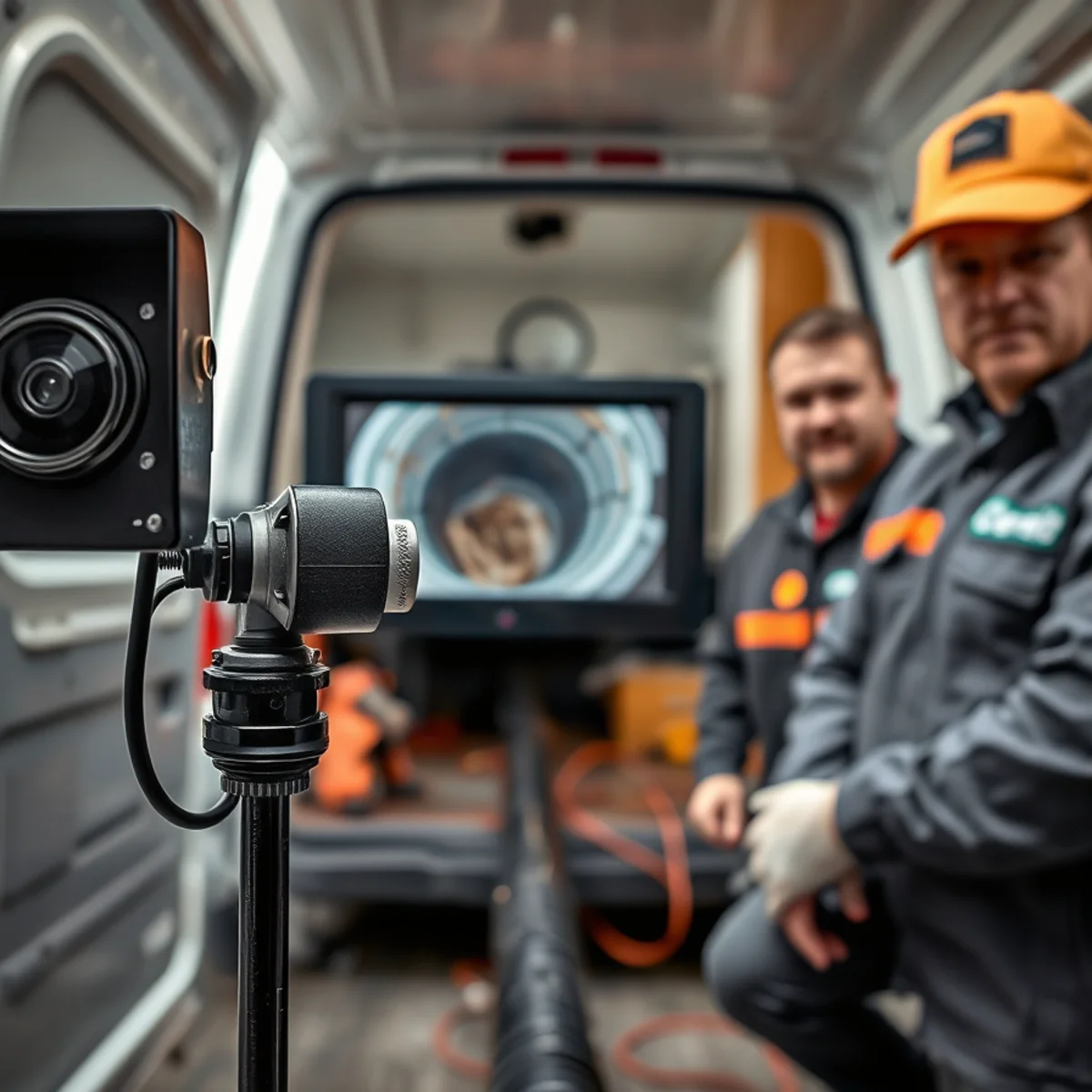
If you've had the same drain snaked two or three times this year and it keeps slowing back down, you're not imagining a pattern — snaking is clearing a symptom without addressing whatever's actually causing it. A drain camera is the only way to see what's really going on inside the pipe instead of guessing.
What a Snake Actually Does (and Doesn't Do)
A cable auger punches or grinds a path through whatever's blocking the pipe. That's useful for immediate relief, but it doesn't remove the full obstruction, and it tells you nothing about why the blockage formed in the first place. If the underlying cause is still there, the drain is going to clog again — it's just a matter of time.
What a Drain Camera Shows That a Snake Can't
- Grease and scale buildup coating the pipe walls, gradually narrowing the usable diameter
- A bellied or sagging section of pipe holding standing water and collecting debris
- A cracked, offset, or crushed section letting soil or roots into the line
- Roots growing through a joint and forming a mass that catches paper and debris
- Foreign objects — wipes, toys, construction debris — lodged in the line
Some of what shows up on camera needs more than another snaking to fix. A cracked or offset section is a structural problem — our guide to collapsed and broken pipe inspection covers what that diagnosis actually means for repair options. A recurring blockage from grease or debris buildup, on the other hand, is better addressed with a targeted sewer clog and blockage inspection that pinpoints exactly where the material is collecting so it can be cleared and monitored going forward.
Symptom, Likely Cause, and Next Step
Not every slow drain points to the same problem, and the right next step depends entirely on what's actually happening in the pipe. Here's a quick way to match what you're seeing at the fixture to what's usually going on below it:
Matching the symptom to the likely cause
- Kitchen drain slows within days of snaking, every time — grease coating narrowing the pipe walls; camera inspection to measure how far it extends before deciding on jetting
- Multiple fixtures gurgle when one drain runs — partial blockage or a venting problem further down the main line; a full-length camera run of the lateral rather than just the branch
- Backups appear or worsen after heavy rain — root intrusion at a joint or a bellied section collecting debris; camera inspection to pinpoint the exact joint or low spot
- Sewer odor with no visible clog or slow drain — a dried trap, a venting issue, or an early crack letting gas escape; a sewer gas and odor inspection traces the source before it becomes a bigger problem
- Slow drain in a specific fixture only, others unaffected — localized blockage in that branch line; a targeted camera run through the nearest cleanout usually resolves it quickly
If snaking keeps "fixing" the same drain every few months, the structural or grade problem behind it isn't going anywhere. A belly in the pipe will keep collecting debris after every snaking. A root mass at a joint will regrow within months. A section coated in grease will narrow right back down as soon as more grease and waste pass through it. The snake clears the immediate blockage; it doesn't touch the cause.
How the Inspection Works
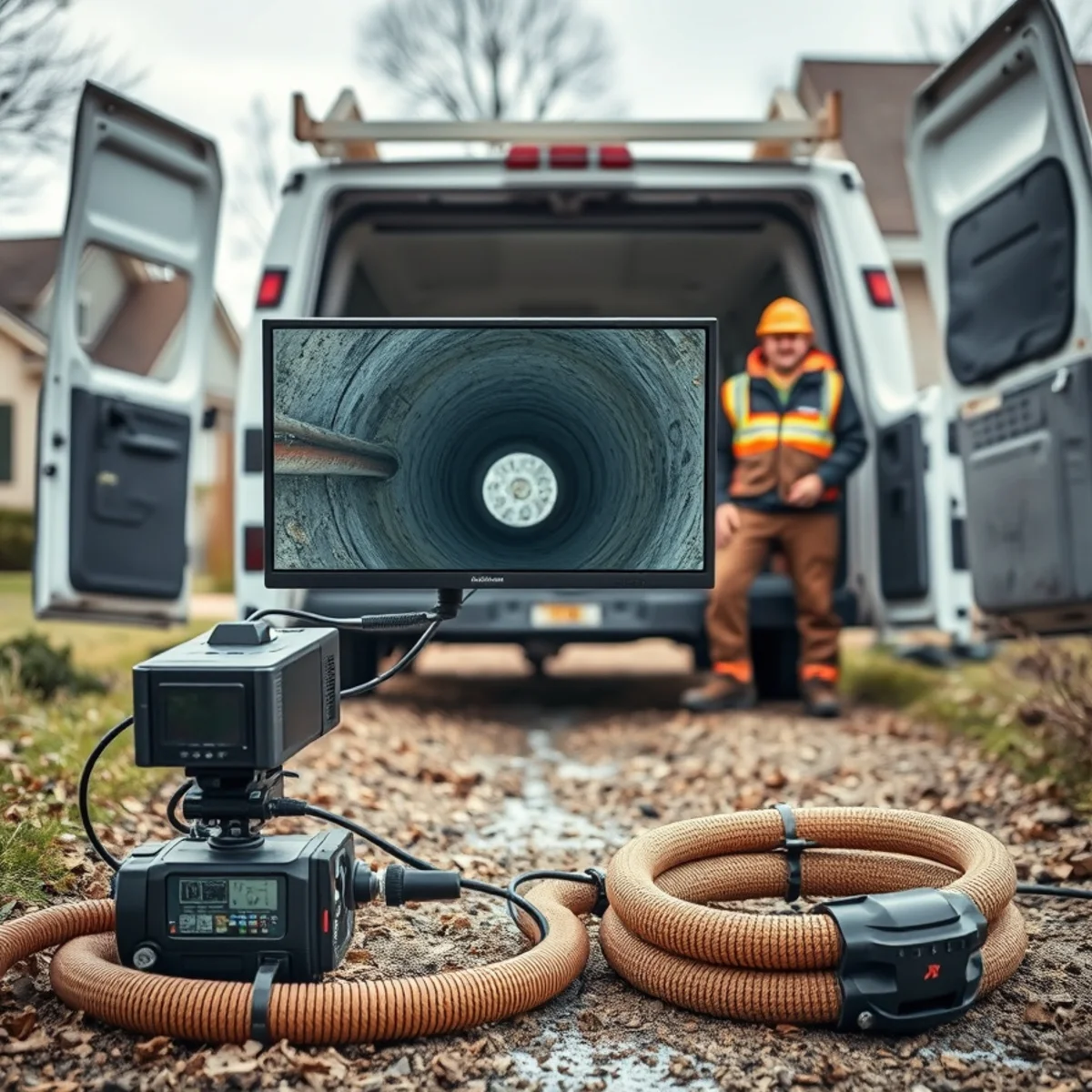
- A camera head with an LED light and built-in distance counter is fed into the line through an existing cleanout
- The self-leveling camera head keeps the picture upright as it travels through bends and vertical drops
- Live video is recorded the entire length of the run, with distance markers noting exactly where each feature appears
- You receive the recorded footage and a report identifying what was found and where
Hydro-Jetting vs. Snaking: Why the Camera Comes First
Hydro-jetting uses high-pressure water to scour the inside of the pipe clean, and it does a much more thorough job on grease and scale buildup than a cable auger ever will. But jetting a pipe that has a belly, a root mass at a joint, or a cracked section can be a waste of money at best and risky at worst — jetting doesn't fix a structural problem, and in a badly deteriorated pipe, the pressure itself can aggravate an existing crack. Running a camera first tells you whether jetting is actually the right tool for what's in your pipe, or whether you'd be paying for a service that won't address the real cause.
Reading the Footage
Experience matters here. Grease buildup typically looks like a dark, tar-like coating narrowing the pipe walls. Root intrusion shows up as a hairlike or fibrous mass concentrated at a joint. A belly is visible as standing water pooling in the camera's view instead of draining away. A break or offset shows displaced pipe edges, often with soil or debris visible where it shouldn't be. Telling these apart is what turns raw footage into an actual diagnosis, and it's also where inexperience shows: a shadow at a joint can look like a crack on a first pass, and a grease flap waving in the current can be mistaken for a small root mass. We cross-check anything ambiguous against the pipe's material and age before it goes in a report, rather than calling a diagnosis off a single frame.
What You Get From the Inspection
At the end of an inspection, you're not just left with a verbal description of what we saw. You get the recorded footage itself, along with a written summary noting what was found, the approximate distance from the access point, and our read on what caused it. That's useful even if you end up hiring someone else to do the repair — the contractor doing the work starts with an accurate picture instead of having to re-diagnose the problem from scratch on their own dime.
Common Mistakes Homeowners Make Before Calling for a Camera
- Relying on chemical drain cleaners repeatedly — they can mask a slow drain temporarily while doing nothing about a belly, a root mass, or a cracked joint, and repeated use can actually damage older cast iron or clay pipe
- Snaking with a small handheld auger and assuming a clear result means the problem is solved, when it may have only punched a hole through a grease plug that will narrow back down within weeks
- Assuming a sewer smell always means a clog, when it's just as often a dried trap or a venting problem that a camera for clogs won't necessarily catch
- Waiting until multiple fixtures are backing up before calling anyone, instead of investigating the first drain that started acting up on its own
- Choosing a contractor based on price alone without asking whether the inspection includes recorded footage you actually get to keep
A Common Scenario: The Ranch in Warren With a Kitchen Line That Won't Stay Clear
Say you own a 1960s ranch in Warren with the original cast iron kitchen branch line still in the ground. The kitchen sink has slowed down three times this year, and each time a handheld snake bought you a few weeks before it backed up again. That pattern — short-lived relief, same drain, increasing frequency — is exactly the situation a camera is built for.
- A camera run through the nearest cleanout shows roughly 15 feet of the branch line coated in a dark, tar-like grease layer that's narrowed the usable diameter by more than half
- No cracks, offsets, or root intrusion show up in that section — the pipe itself is structurally sound, which rules out a repair and points to cleaning
- Because the camera confirmed there's no structural damage to aggravate, hydro-jetting is a safe and appropriate next step to fully clear the grease rather than just punch through it again
- The camera inspection itself typically falls in the local $200-$500 range depending on length and access; jetting is quoted separately based on what the footage showed, but in a case like this it's a small fraction of what a misdiagnosed repair or a premature line replacement would have cost
Local Note: Fraser and Eastpointe
In Fraser and Eastpointe, we frequently run into older ranch and bungalow neighborhoods with cast iron and clay pipe combinations, often with mature trees planted along the lot lines decades ago. That combination — aging pipe joints plus root systems that have had fifty-plus years to spread — is exactly the setup that produces the recurring-clog pattern homeowners call us about.
What Drives the Cost of a Drain Camera Inspection
Pricing on a drain camera inspection isn't one flat number — it scales mainly with how far the camera has to travel and how many access points are involved. Most single-drain inspections through an existing cleanout land in the standard local range, but a longer run or a harder-to-access line can push the price up a tier.
What typically affects the quote
- Pipe run length — shorter branch lines run around $225-$500, while longer main-line runs can fall in the $500-$975 or $975-$1,900 range depending on distance and complexity
- Number of access points — a straightforward cleanout access costs less than needing to pull a toilet or open a roof vent
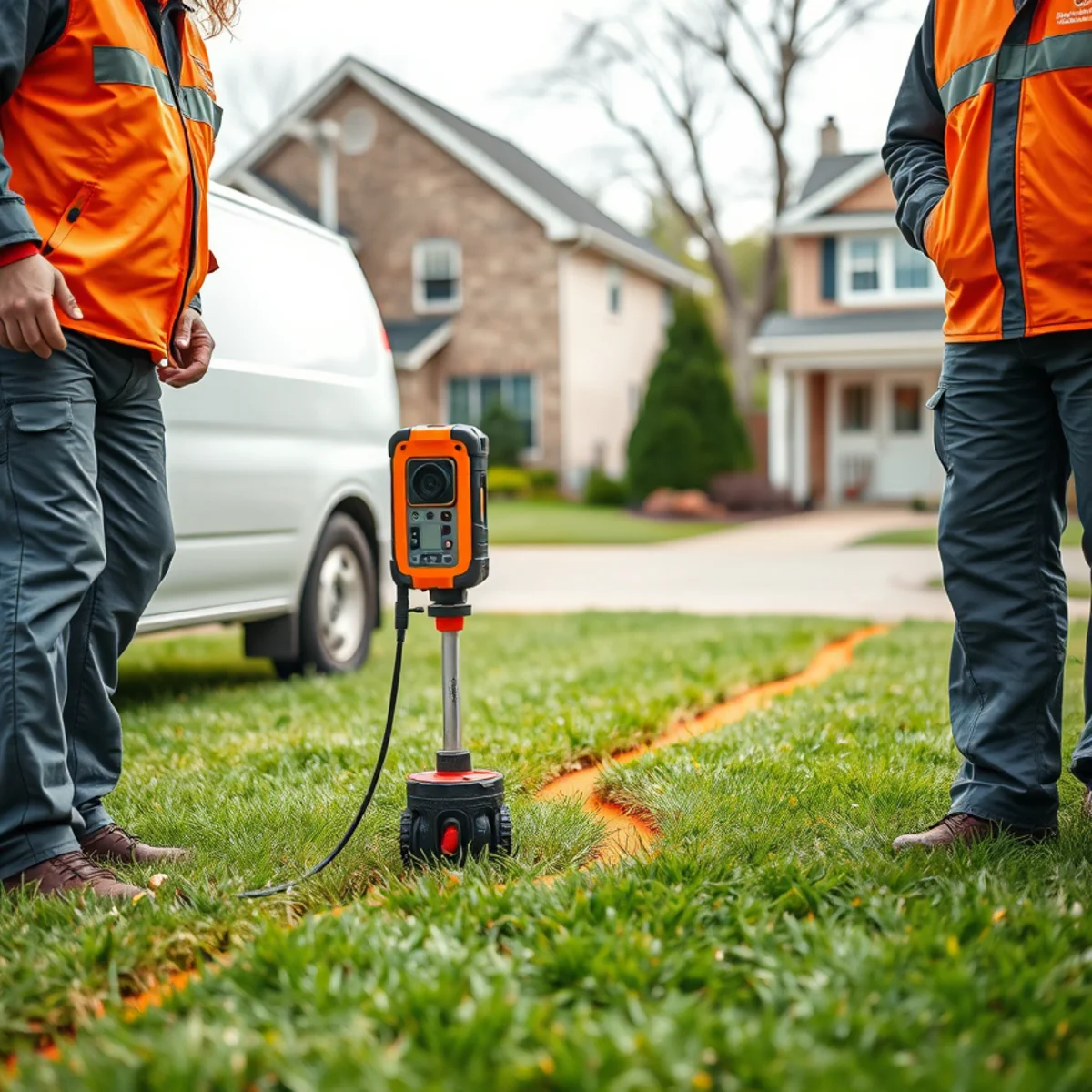
- Whether the exact path and depth of the line also needs to be marked, which is a separate sewer line locating service rather than part of a standard camera run
- Whether the inspection is a standalone diagnostic or bundled with jetting or repair work once the cause is confirmed
When to Call for a Drain Camera Inspection
Signs it's time for a camera, not another snake
- The same drain has clogged more than twice in the past year
- Snaking only buys you a few days or weeks before it's slow again
- Multiple fixtures gurgle when one drain runs
- You're considering hydro-jetting and want to know what you're actually clearing before you do it
A drain camera inspection gives you the answer before you spend more money treating the same symptom. If the issue turns out to be tied to your main line rather than a single fixture drain, our guide on what to do about a main sewer line clog covers that next step.
Choosing the Access Point: Cleanouts, Toilet Pulls, and Roof Vents
Where the camera goes in matters as much as what it finds once it's inside. Most residential inspections use an existing cleanout — a capped fitting installed at or near the point where the interior plumbing ties into the lateral — because it gives the most direct path to the pipe with the least disruption. Not every access point works the same way for every drain, though, and knowing the options ahead of time helps set expectations for how the appointment will actually go.
- Exterior or basement cleanout — the preferred access point when one exists; gives a straight run into the line with no fixtures to remove
- Toilet pull — on branch lines without a cleanout, the nearest toilet is sometimes pulled to feed the camera through the closet flange, then reset when the inspection is done
- Roof vent — occasionally used on a stack that has no accessible cleanout at floor level, though it's a harder angle to work with and usually a last resort
- No existing access point — older homes built before cleanouts were standard sometimes have none at all; in that case, installing one is often worth doing regardless, since it makes every future inspection or service call faster and less invasive
A Second Scenario: The Split-Level in Sterling Heights With a Laundry Line That Keeps Backing Up
Say you own a 1970s split-level in Sterling Heights and the standpipe behind the washing machine backs up every few loads, flooding the laundry area with gray water. It's a different pattern than a kitchen line clogging on grease — this one's tied to a fixture that only runs periodically, which changes what's likely building up inside.
- A camera run through the standpipe cleanout shows a mix of lint, sediment, and soap scum coating the lower few feet of the branch line, thick enough to slow drainage but not fully block it
- About 12 feet in, the camera finds a slight dip in the pipe where sediment has settled and hardened, consistent with a minor belly rather than a random clog
- Because the belly is shallow and the pipe itself shows no cracking, the practical fix is a thorough jetting to clear the buildup rather than excavation to correct the grade
- The inspection confirms the standpipe backup wasn't coming from the main line at all, which meant a simple branch-line jetting resolved something that could have otherwise turned into an unnecessary main-line dig
What to Ask Before You Book a Drain Camera Inspection
- Does the price include full digital video, or just a verbal summary at the end of the appointment?
- How far will the camera run, and does that cover the full branch or just the section nearest the access point?
- What access point will you use, and will anything need to be removed or reset, like a toilet?
- If the camera finds a structural issue instead of a clog, is that assessment included, or does it require a separate visit?
- How soon will I get the written report and footage after the appointment?
Myths vs. Facts About Drain Camera Inspections
- Myth: A camera inspection can clear the clog itself. Fact: the camera only diagnoses what's there — jetting, snaking, or a repair is still a separate step based on what it finds.
- Myth: If the water eventually drains, the pipe must be fine. Fact: a severely narrowed or bellied pipe can still pass water slowly right up until it doesn't, and a camera catches that narrowing long before a full backup does.
- Myth: Every drain problem needs the main line scoped. Fact: plenty of recurring clogs are isolated to a single branch line, which is faster and cheaper to inspect than assuming it's a main-line issue from the start.
- Myth: A camera inspection is only useful once something has already gone wrong. Fact: a baseline inspection on an older home's drain lines, before there's a problem, gives you something to compare against if one shows up later.
Winter Access: When Frozen Ground Complicates a Camera Run
Cold weather changes the calculus on some drain camera calls. An exterior cleanout buried under frozen ground or snow cover in Clinton Township and similar communities can take extra time just to locate and uncover before the camera goes in at all. Frozen ground also means a belly or settled section found on camera can't be excavated and corrected until a thaw, even though the diagnosis itself doesn't have to wait — which is often reason enough to still schedule the inspection in winter so the repair is ready to go the moment the ground softens up.
Next Step: Matching the Fix to What the Camera Found
Not every recurring clog gets fixed the same way once the camera has an answer. If the footage points to a straightforward buildup issue rather than a structural one, our guide on how often a sewer camera inspection makes sense covers how to turn a one-time diagnosis into an ongoing maintenance schedule instead of waiting for the next clog. If instead the footage shows early signs of a bigger problem — a hairline crack, a joint starting to separate — our article on warning signs of sewer line failure walks through what tends to come next and how quickly it's worth acting on it.
Tired of snaking the same drain in Fraser or Eastpointe? Sewer Inspects offers free quotes on drain camera inspections — call (614) 830-0578 and find out what's really causing the clog.
Need a sewer camera inspection?
Same-day appointments across Sterling Heights, Macomb County & Metro Detroit. Free quote, no obligation.