Prevention
8 Warning Signs of Sewer Line Failure You Shouldn't Ignore
From gurgling drains to lush patches in the yard, these warning signs often show up well before a sewer line fails completely. Here's what to watch for.
By Sewer Inspects · Updated February 15, 2026 · 13 min read
The clearest signs of sewer line failure are multiple slow or gurgling drains, backups that keep returning after snaking, a soft spot or unusually green strip in the yard, and a persistent sewer odor indoors or out. A sewer line rarely fails without warning — these signs build up over weeks or months, and catching them early is the difference between a routine repair and a much larger, more disruptive project.
Here's what to watch for, especially if you're in Center Line or Hazel Park, where older infrastructure makes these symptoms more common.
1. Multiple Slow Drains at the Same Time
One slow drain is usually a local clog. Several slow drains across different rooms or floors, happening around the same time, points to a restriction further down the line that's affecting the whole system.
2. Gurgling Sounds from Drains or Toilets
Gurgling happens when air is trapped and forced back up through the plumbing system because normal flow is restricted somewhere downstream. It's often one of the earliest audible signs that something in the main line isn't moving the way it should.
3. Recurring Backups
A backup that's been "fixed" by snaking but keeps coming back is not actually fixed — it's a symptom being repeatedly treated without addressing the cause. Recurring backups are one of the clearest signals that it's time for a collapsed or broken pipe inspection to see what's really going on underground.
4. Sinkholes or Soft Spots in the Yard
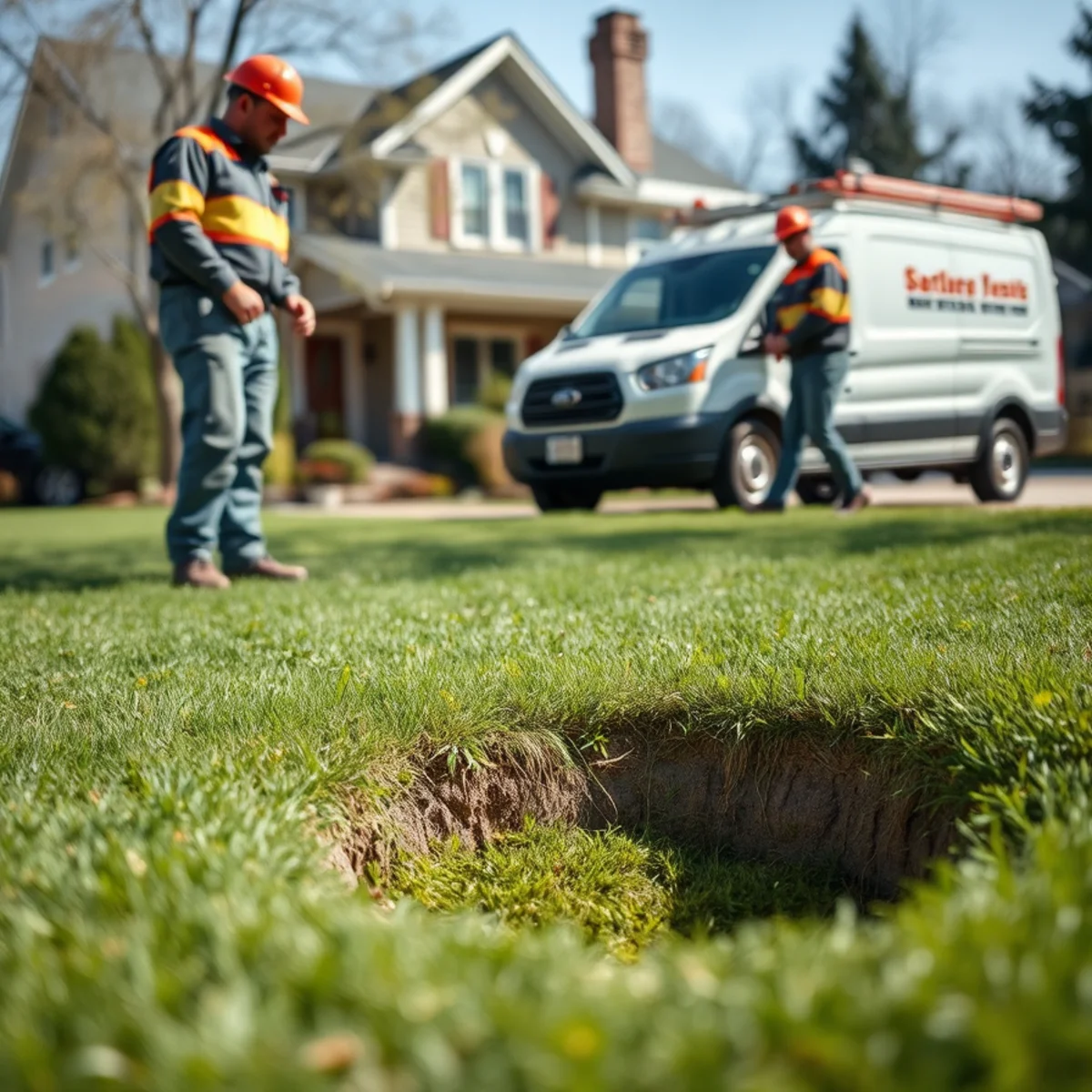
When a sewer pipe cracks or collapses, surrounding soil can erode into the gap, eventually creating a depression or sinkhole at the surface, sometimes tracing the path of the buried line. Even a subtle soft or sunken spot in the yard is worth investigating before it becomes a larger collapse.
5. An Unusually Lush, Green Patch of Lawn
Ironically, a leaking sewer line can act like a fertilizer source for the grass directly above it, creating a noticeably greener or faster-growing strip compared to the rest of the yard. It's an easy sign to dismiss as good luck rather than a leak.
6. Sewer Odors Indoors or Outdoors
A persistent sewage smell, whether inside the house or in a specific spot in the yard, usually means gas or waste is escaping somewhere it shouldn't be — through a cracked pipe, a dried-out trap, or a failed seal. A sewer gas odor inspection traces the smell to its actual source instead of guessing.
7. Foundation Cracks or Basement Moisture Near Plumbing Walls
A leaking lateral near the foundation can saturate the surrounding soil, contributing to settling, cracking, or moisture intrusion in the basement — damage that's easy to misattribute to unrelated causes.
8. Increased Pest Activity
Cracks in a sewer line can become an entry point for rodents and insects drawn to moisture and organic material. An uptick in pest activity near a specific part of the yard or foundation is sometimes the first visible clue.
The 8 warning signs at a glance
- Multiple slow drains at the same time
- Gurgling sounds from drains or toilets
- Recurring backups after snaking
- Sinkholes or soft spots in the yard
- An unusually lush, green patch of lawn
- Sewer odors indoors or outdoors
- Foundation cracks or basement moisture near plumbing walls
- Increased pest activity near the foundation or yard
Symptom-to-cause quick reference
- Gurgling only in the basement — often a partial blockage or bellied section downstream; start with a sewer clog and blockage inspection
- Sewage smell that spikes after rain — usually a cracked joint letting groundwater and gas exchange; a sewer gas odor inspection traces it
- Green stripe plus recurring backups — likely root intrusion at a joint; a tree root intrusion inspection confirms how far it's spread
- Sinkhole near a fence line with no backups yet — probably an early-stage collapse; a collapsed or broken pipe inspection should happen right away
- Multiple slow drains but no smell or sinkhole — commonly early root growth or grease buildup rather than a structural crack, but still worth confirming
A Worked Example: 1950s Colonial in Ferndale
Take a 1950s colonial in Ferndale. The owners noticed a greener stripe of grass running from the house toward the street two summers ago and figured it was just good drainage. Last winter, a toilet started gurgling whenever the washing machine drained. Neither sign alone seemed worth a call.
By the time a basement floor drain backed up during a spring thaw, a camera inspection found a root mass at a joint about 30 feet from the foundation — directly under the greener stripe they'd been admiring for two years. Because the root intrusion was caught at one joint rather than several, the repair stayed a localized spot fix instead of a full-line replacement. The signs had been visible the whole time; nobody had connected them until the backup forced the question.
Freeze-Thaw and Clay Soil Across Macomb County
Center Line and Hazel Park sit within a broader Macomb County pattern: heavy clay soil that expands when saturated and contracts as it dries, combined with a freeze-thaw cycle that runs straight through the pipe zone every winter. That repeated soil movement is exactly what nudges already-aging joints out of alignment, which is why warning signs so often cluster in late winter and early spring as frozen ground thaws and shifts around older laterals.
What Waiting Actually Costs
The pricing gap between early and late intervention is real, not just a scare tactic. A single joint caught early, addressed with a spot repair or short trenchless lining, often falls in the $225–$500 to $500–$975 length-tier range. The same defect left to progress toward a full collapse can push a job past $975–$1,900, especially once excavation and restoring landscaping, a driveway, or a sidewalk enter the picture. Across the wider Detroit area, sewer-related repair work reported in the roughly $254–$1,722 range (about $955 on average) tends to skew toward the higher end when the problem wasn't caught until a full backup forced the issue.
What Most Homeowners Get Wrong About These Signs
The most common mistake isn't missing a sign entirely — it's treating each one as its own unrelated household quirk instead of connecting the dots. We regularly inspect homes where the owner mentions the greener patch of lawn, the occasional gurgle, and a faint basement odor as three separate, unremarkable observations, when together they're a fairly clear picture of a lateral that's already leaking. The other mistake is assuming a sign has to be dramatic to matter — a pipe doesn't need to collapse to be failing. A joint that's opened a quarter inch is already letting roots in and soil settle, well before any fixture actually backs up.
Why Catching These Signs Early Matters
None of these signs, on their own, guarantees a serious problem — a lone gurgle or one greener patch of grass could be coincidence. But taken together, or repeated over time, they build a pattern that's worth taking seriously. The cost difference between addressing a documented crack or partial root intrusion early versus waiting for a full collapse can be significant, both in dollars and in disruption, since an early repair is often a targeted, localized fix while a full collapse can mean excavating a much longer section of yard, driveway, or even sidewalk.
Homeowners in Center Line and Hazel Park who've lived in their homes for decades sometimes tell us a sign had been present for a year or more before they finally called — a faint odor near a specific window well, a drain that gurgled occasionally but never fully backed up. In hindsight, those early signals were the pipe telling them something long before it became an emergency.
How Often to Schedule a Preventive Inspection
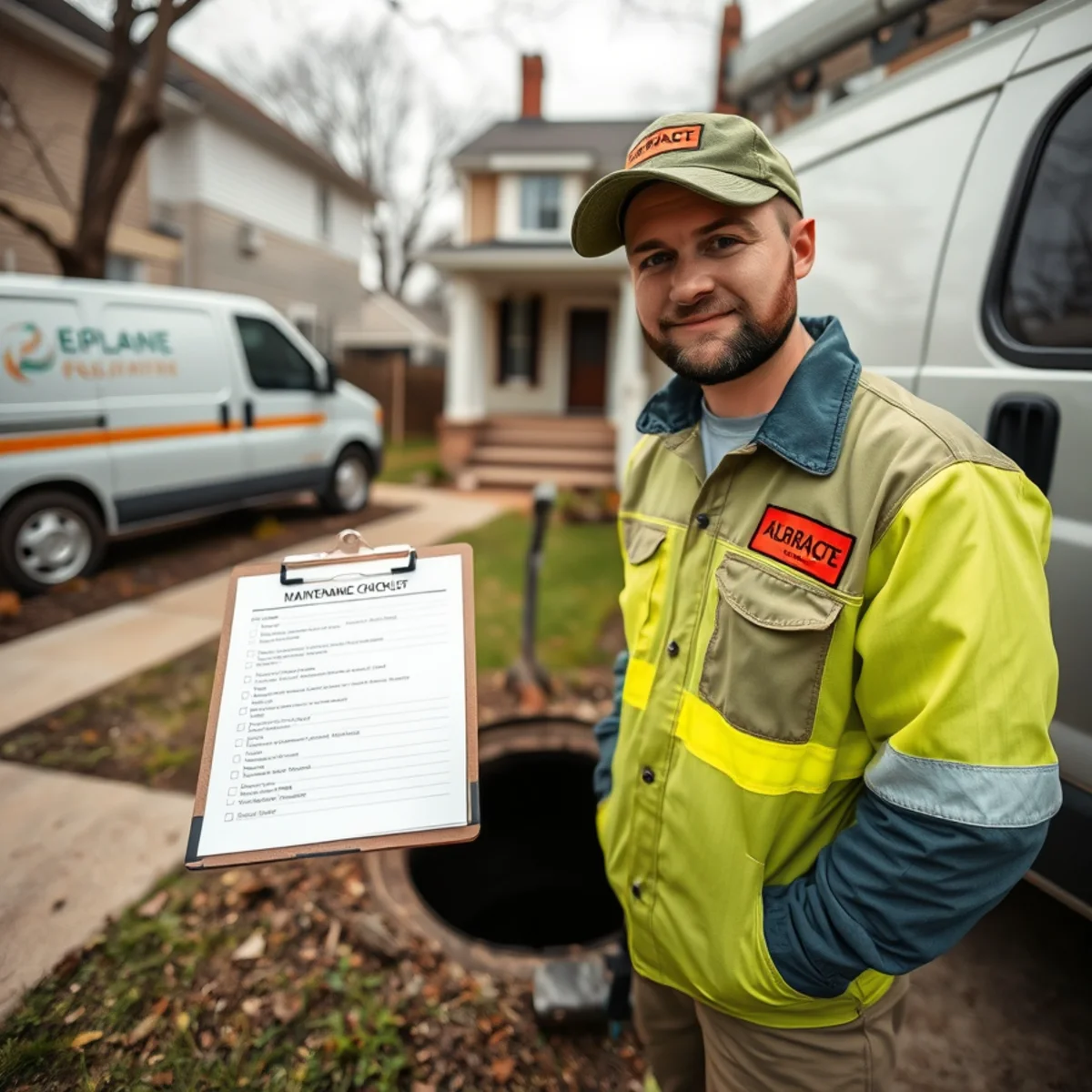
For homes with known older pipe materials or a history of root intrusion, a sewer camera inspection every two to three years is a reasonable baseline, tightening to annually if a previous inspection showed early-stage issues worth monitoring. For newer homes with PVC lateral pipe and no history of problems, inspections tied to specific symptoms — rather than a fixed schedule — are usually sufficient. Our full sewer line maintenance checklist for older homes walks through a more complete preventive schedule if you want to build one out for your property.
What Happens the Day You Call for an Inspection
If you've already spotted one or two of these signs, here's what actually happens once you call rather than wait it out.
- You describe the signs you've noticed — which drains, how often, any yard changes — so the technician knows what to check first
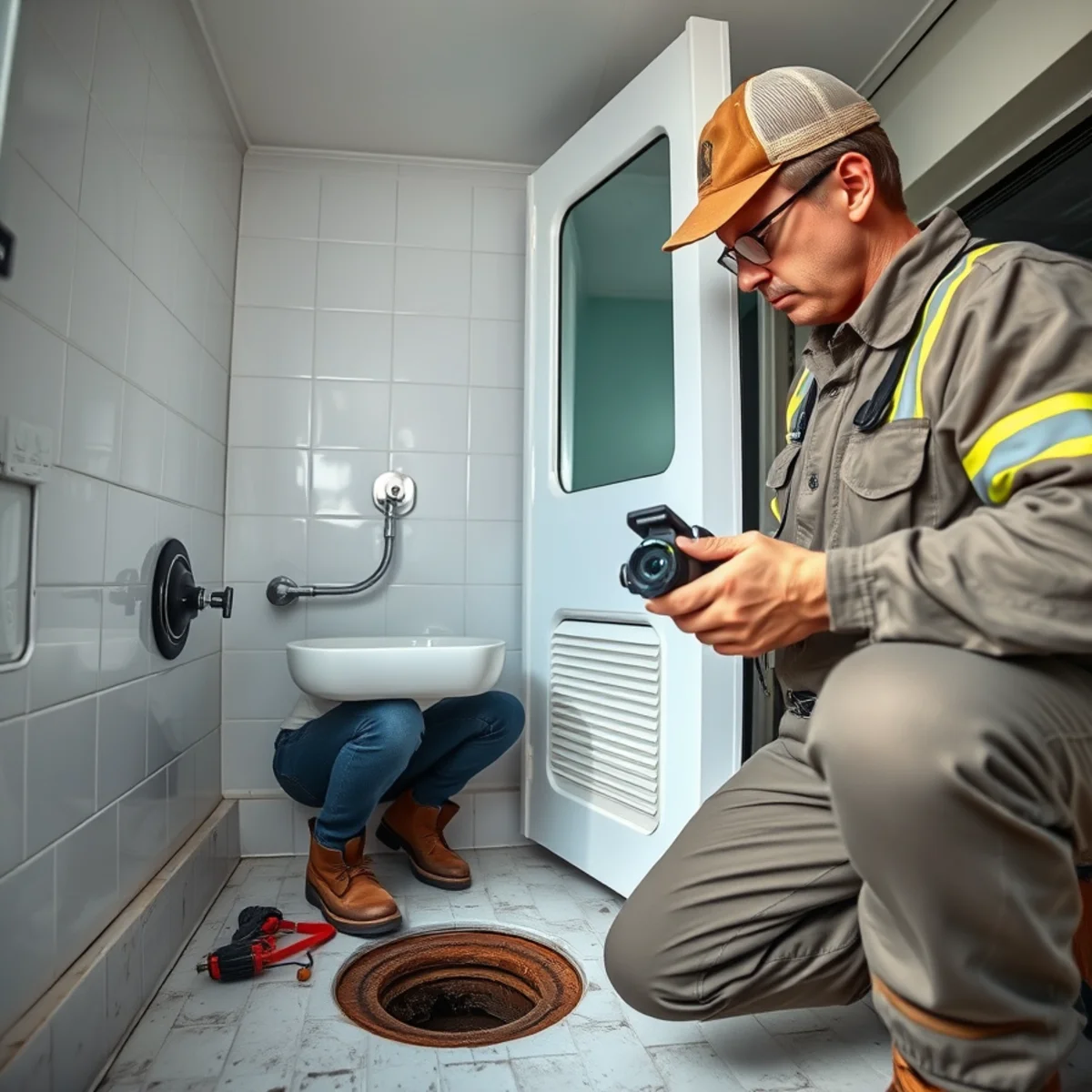
- On-site, the technician confirms the easiest access point, usually an existing cleanout, and runs a camera the full length of the lateral
- Video is recorded continuously, with a locator signal marking the depth and surface position of anything unusual
- You get a plain-language walkthrough of the footage — what's normal, what's early-stage, and what needs attention now versus later
- If nothing urgent shows up, that footage becomes your baseline for comparison at the next scheduled check
A Second Worked Example: 1960s Ranch in Roseville
Not every failing lateral announces itself with a gurgle or a green stripe of grass. Take a 1960s ranch in Roseville, where the owners noticed an uptick in ants near a corner of the basement and a faint, occasional sewage smell they'd been blaming on the water heater. No sinkhole, no lawn changes, no slow drains.
A sewer gas odor inspection traced the smell to a hairline crack about 18 feet from the foundation, right where the pest activity had been concentrated — the moisture and organic material leaking from the crack had been drawing insects to that exact spot for months. Because the defect was a single crack rather than a fully separated joint, it qualified for a shorter trenchless lining repair in the $225–$500 range instead of a longer excavation.
The takeaway: pest activity and an intermittent smell, with nothing else obviously wrong, is still a combination worth checking. Waiting for a more dramatic sign like a backup or sinkhole just means waiting for the same defect to get measurably worse first.
What to Ask Your Inspector Before You Schedule
Questions worth asking up front
- Will I get recorded video, or just a verbal summary of what you saw?
- Can you mark the exact depth and surface location of anything you find?
- If you see an early-stage issue, what's the recommended timeline for addressing it?
- Does the inspection cover the full lateral to the connection point, or just part of the run?
- If nothing urgent shows up, how often should I schedule a follow-up check?
Myths vs. Facts About These Warning Signs
- Myth: A green patch of grass over the sewer line is a good sign. Fact: It usually means nutrient-rich wastewater is leaking into the soil — the greener the patch, the more consistent the leak.
- Myth: If there's no smell, the line isn't leaking. Fact: A crack below the frost line or under a slab can leak for years without producing a noticeable odor indoors.
- Myth: Pest activity near the foundation is a pest problem, not a plumbing problem. Fact: Moisture and organic material from a leaking lateral is a common draw for insects and rodents — treating only the pests can leave the actual source untouched.
- Myth: One-time symptoms don't need a professional look. Fact: A single gurgle or one soft spot in the yard rarely means much alone, but it's worth logging — if a second sign shows up later, having a timeline on hand helps the inspection go faster.
Storm Season and High Water Tables Near Lake St. Clair
Freeze-thaw isn't the only seasonal pattern worth watching. Communities near St. Clair Shores and along the Lake St. Clair shoreline deal with a naturally high water table, and heavy summer storms can push groundwater levels up fast enough to surcharge an already-compromised lateral from the outside in, forcing gas and even wastewater backward through weak joints instead of letting the line drain normally.
Some older sections of Metro Detroit also run combined sewer systems, where stormwater and sanitary waste share the same pipe — during a heavy summer downpour, that shared capacity fills fast, and a lateral with an existing crack or offset joint is far more likely to show a warning sign, or a full backup, during or right after the storm than on a dry day. Our guide on Lake St. Clair's high water table and backup risk goes deeper on this pattern if you're in one of these shoreline communities.
Related Decisions If You're Seeing Multiple Signs
If you're noticing more than one of these signs at once, a few related resources help you decide what's next. Our breakdown of the 2021 Metro Detroit floods and older sewer systems explains why older infrastructure struggles during extreme storm events specifically. If you're unsure how often you actually need a checkup versus reacting to symptoms, how often you need a sewer camera inspection lays out a practical schedule. And if a sign has already turned into an active backup, our guide on what to do about a sewer backup in the basement covers the immediate next steps.
When to Call for an Inspection
If you're noticing even one or two of these signs, especially in an older home in Center Line or Hazel Park where original clay or cast-iron laterals are still common, a camera inspection is the only way to see the actual condition of the pipe before it becomes an emergency. Catching a problem at the "warning sign" stage typically means a smaller, less invasive repair than waiting for a full collapse.
Don't wait for a backup to find out what's happening underground. Call (614) 830-0578 for a free quote on a camera inspection — we'll give you a clear, documented answer either way.
Need a sewer camera inspection?
Same-day appointments across Sterling Heights, Macomb County & Metro Detroit. Free quote, no obligation.