Cost & insurance
Who Pays for Sewer Line Repair: Homeowner vs. City Responsibility
After a backup, the first question is almost always who's responsible for the fix. Here's how lateral ownership generally works, and why documented footage matters more than a guess.
By Sewer Inspects · Updated February 15, 2026 · 13 min read
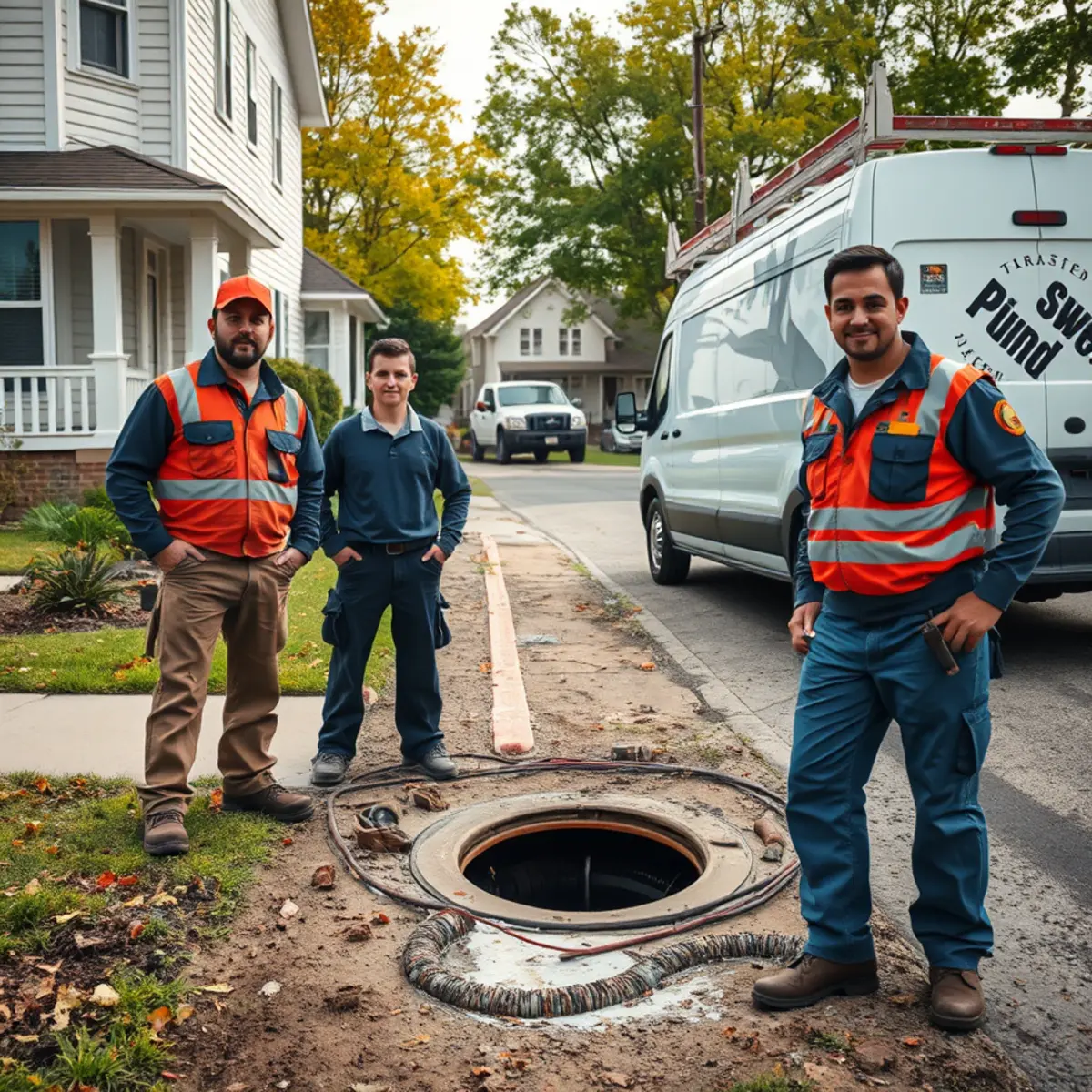
Who pays for sewer line repair usually splits at the property line: the homeowner is typically responsible for the private lateral running from the house to the street, while the city or township owns and maintains the public main. The exact boundary and who's actually at fault still depends on where the failure sits, what caused it, and your specific municipality's ordinance.
We're not attorneys, and this isn't legal advice — but after inspecting laterals across Macomb County for years, we can walk you through how responsibility is generally divided and, more importantly, what evidence actually helps when the question gets contested.
The General Rule: Private Lateral vs. Public Main
In most Michigan communities, the sewer lateral — the pipe running from your house to the municipal main under the street — is considered the homeowner's responsibility. The main line itself, along with the connection point, is typically owned and maintained by the city, township, or county. The property line or the point where the lateral ties into the main is usually the rough dividing line.
Why "It Depends" Is the Honest Answer
Local ordinances vary from one municipality to the next, and even communities within the same county can draw the line differently. Some own responsibility all the way to the property line. Others consider the homeowner responsible only up to the edge of the right-of-way, with the municipality covering the portion under the street. A few communities have cost-sharing provisions for lead-in sections that sit within an easement.
In Clinton Township and similar Macomb County communities, this is exactly the kind of detail that's worth confirming directly with the local water and sewer department before assuming either way — the ordinance language matters more than general assumptions.
What Actually Determines Fault
- Where along the line the failure is physically located — private side versus under the street or public right-of-way
- What caused the failure — a homeowner's tree roots or a collapsed section on the private side, versus a municipal main backing up and surcharging into the private lateral
- The age and condition of both the private lateral and the public main at the point of connection
Responsibility by scenario: quick reference
- Root intrusion (confirmed with a tree root intrusion inspection) found entirely on your side of the property line — typically your responsibility, since the lateral serving only your home is privately owned
- Backup happens simultaneously with several neighbors on the same street — often a sign the municipal main is the actual problem, worth reporting to the water department alongside your own inspection
- Defect found under the street or within the public right-of-way — depends heavily on your municipality's ordinance; some own to the property line, others only to the curb
- Two homes sharing a single lateral connection — responsibility is typically split between both owners for the shared portion, though the exact split depends on any existing easement agreement
- Damage traced to a municipal contractor's prior road or utility work — may shift responsibility to the municipality or its contractor, but this requires documented evidence tying the defect to that specific work
A Worked Example: Shared Lateral Dispute in Utica
Two adjoining homes in Utica, built in the 1960s, share a single lateral connection that splits into separate lines about 15 feet from the street — a common setup in that era of construction. When one owner experiences a backup, it's genuinely unclear without documentation whether the blockage sits on the shared portion (both owners' responsibility) or past the split, on that one owner's private section alone.
A camera inspection combined with locating settles it definitively: the footage shows exactly where the split occurs and where the defect sits relative to it, translated into a measured distance and depth rather than a guess based on old property surveys or secondhand memory of how the lines were run. In this case, the defect sat eight feet past the split, squarely on one owner's private section — sparing the other from splitting a repair bill that wasn't actually their responsibility.
Common Mistakes Homeowners Make in a Responsibility Dispute
- Assuming the municipality will automatically take responsibility just because the backup was severe — a sewer backup inspection documents severity and cause together, and severity alone doesn't determine liability, location and cause do
- Paying for an emergency repair before documenting the pre-repair condition, which removes the best evidence of where and why the failure happened
- Relying on a neighbor's or previous owner's verbal description of where the lateral runs instead of getting a locate — a sewer line locating pass shows the actual path, which can differ from old assumptions
- Escalating straight to a legal complaint before requesting a municipal inspection of the main — many disputes resolve faster once both sides have their own documented data
Why Documentation Matters More Than Opinions
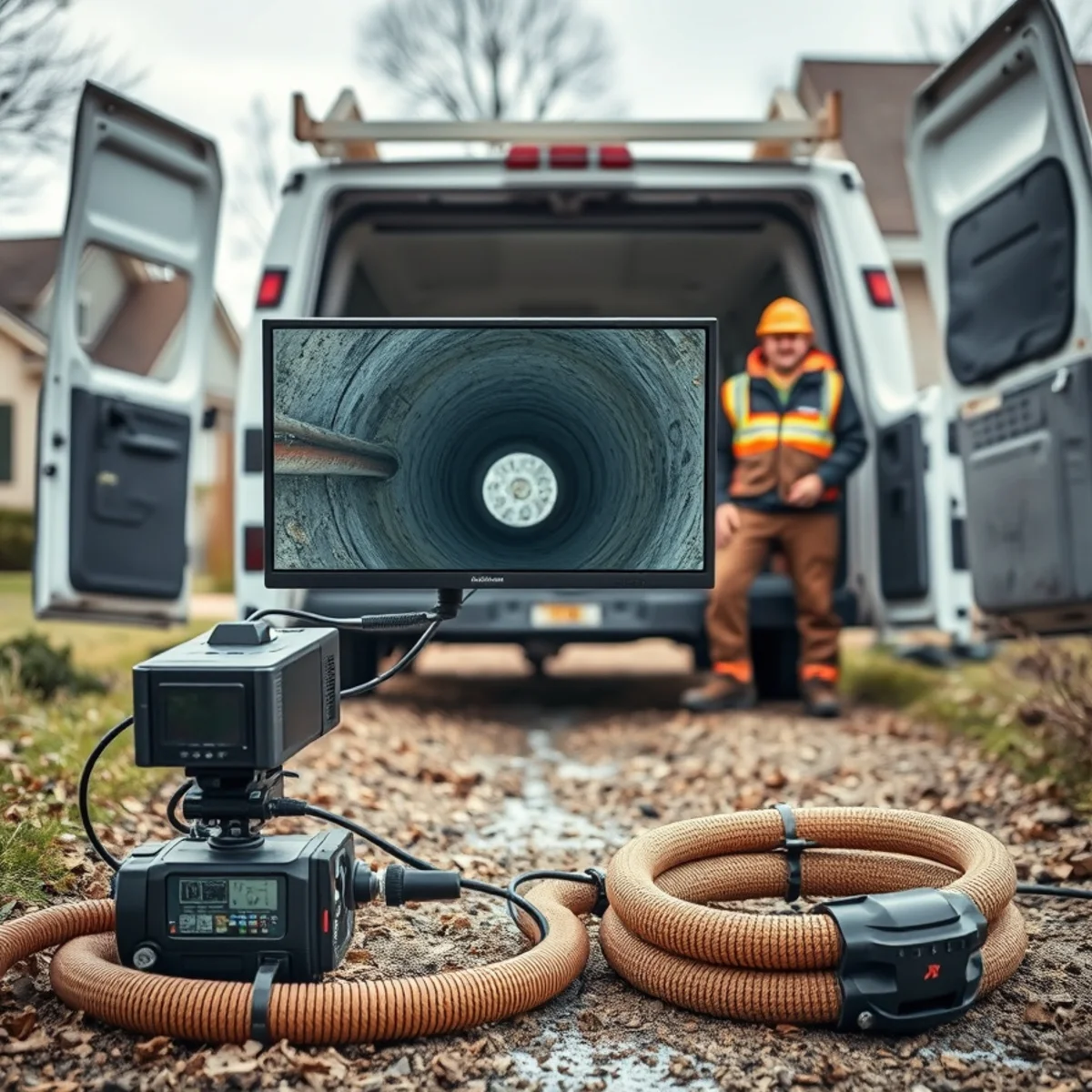
A sewer camera inspection with recorded footage, combined with sewer line locating to pinpoint the exact position and depth of a defect, produces something a municipality, insurance adjuster, or attorney can actually evaluate. It shows precisely where the failure sits relative to the property line, what the defect looks like, and whether it's consistent with root intrusion, age-related joint failure, or an external backup pushing into the line.
That kind of documented, measured evidence carries far more weight than a verbal description of where a plumber thinks the problem might be.
When the Line of Responsibility Isn't So Clear
A few situations complicate the simple private-versus-public split even further. Shared laterals serving two homes from a single connection can leave both owners uncertain which portion is theirs. Easements crossing a neighbor's property to reach the main can raise questions about maintenance access. And in older neighborhoods where the original connection point was never clearly recorded, even the municipality may need a locate and inspection to confirm where their responsibility actually starts.
In every one of these situations, the same principle applies: a recorded, measured inspection is worth more than an assumption based on how things have always been described informally in the neighborhood.
What We've Learned Documenting Disputes
After enough of these inspections, a pattern emerges: the homeowners who get a fair resolution fastest are the ones who called for an inspection before arguing with anyone, not after. Once a municipality or insurer is already involved and positions have hardened, a report can still help, but it's competing against assumptions people have already made out loud. The homeowners who call first, get objective footage on record, and then bring that documentation to the conversation tend to have a much shorter, less contentious path to a resolution — because there's less room for the conversation to become "my plumber says" versus "their inspector says."
Insurance's Role
Standard homeowners insurance policies often exclude sewer and drain line damage unless you've added a specific endorsement or rider for water backup and sewer line coverage. If insurance is part of the equation, our related guide on whether homeowners insurance covers sewer backups in Michigan goes into more detail on what's typically covered and what isn't.
How This Plays Out in Practice
A typical scenario looks like this: a homeowner in Clinton Township experiences a backup during a heavy rain, calls a plumber who clears the line with a snake, and the backup returns within a few weeks even though nothing seems to have changed. Without a camera inspection, it's genuinely unclear whether that's a private-side root intrusion problem that keeps regrowing, or a municipal main that surcharges every time it rains hard enough. Those two explanations point to completely different next steps, and completely different parties responsible for fixing it.
Steps If You Suspect the City's Main Is the Problem
- Document the backup with photos and notes on timing, especially if it followed heavy rain
- Contact the municipality's water and sewer department to report the issue and request they check the main
- Get an independent camera inspection of your own lateral as your own objective record
- Keep all footage, reports, and correspondence on file in case a claim or dispute follows
We document — we don't determine liability
The same documentation matters before you buy a home, not just after a backup — a real estate sewer inspection before closing establishes who's responsible for what condition the line was already in. A camera inspection and locating report show you exactly what condition your line is in and where any defect sits. Determining legal responsibility between you, a neighbor, or a municipality is a matter for the municipality's ordinance or your own legal counsel — we're not able to make that call, but we can give you the evidence to make it with confidence.
How to Request Records From Your Municipality Before You Call an Inspector
Before you even call for a camera inspection, it can help to know what the municipality already has on file.
- Contact the water and sewer department directly and ask whether your address has any prior service calls, main breaks, or maintenance records on file
- Request the as-built or connection record for your property if one exists — some municipalities keep maps or cards from the original installation showing where the lateral ties into the main
- Ask specifically whether the block or street has had any recent main line work, root-cutting, or reported backups from other households
- Get whatever they provide in writing or email rather than a verbal summary over the phone
- Bring that record to your own camera inspection so the technician can cross-reference what the footage shows against what the municipality already knows
A Second Worked Example: Main Surcharge Dispute in Fraser
Shared laterals aren't the only kind of dispute. Take a case in Fraser, where a homeowner experienced a basement backup during a heavy summer storm and initially assumed it was their own aging lateral at fault, since the home was built in the 1960s.
A camera inspection told a different story: their private lateral was intact, with no root intrusion, no offset joints, and no signs of a structural defect. The backup pattern — water rising from the lowest fixture during, and only during, heavy rain, with no issue on dry days — pointed toward the municipal main surcharging under storm volume and pushing back into otherwise healthy private laterals along the block.
Because the homeowner had documented their own line's condition independently, that report became useful evidence when reporting the issue to the water department, rather than a case that hinged entirely on the municipality's own assessment of its own infrastructure. It didn't guarantee an outcome, but it meant the conversation started from an objective baseline instead of a guess in either direction.
What to Ask Your Municipality's Water Department
Questions worth asking
- Has this main had reported backups or surcharge issues from other homes on this street before?
- Is there a scheduled maintenance or lining program for this section of main, and when was it last serviced?
- What's the process for reporting a suspected main-line issue, and what's the typical response time?
- If the main is found to be the cause, how does the municipality typically handle homeowner damage claims?
- Can you provide anything in writing confirming what you find, even preliminarily?
Myths vs. Facts About Sewer Line Responsibility
- Myth: The city is automatically responsible for anything under the street. Fact: Even pipe running under the street can be the private lateral if it hasn't yet reached the municipal main — ownership follows the pipe, not just its location.
- Myth: Homeowners insurance always covers a dispute like this. Fact: Standard policies commonly exclude sewer and drain line issues entirely unless a specific endorsement was added, regardless of who's ultimately responsible for the pipe.
- Myth: A severe backup automatically proves the city's main was at fault. Fact: Severity reflects how much wastewater backed up, not where the actual defect sits — a private-side collapse can cause just as dramatic a backup as a municipal surcharge.
- Myth: You have to pick a side before getting an inspection. Fact: An independent inspection doesn't assign blame — it documents condition, which is exactly what you need before any responsibility conversation starts.
The 2021 Floods and Why Storm-Driven Disputes Are Different
Storm-driven disputes like the Fraser example above became especially common after the 2021 Metro Detroit floods, when a historic rainfall event overwhelmed aging combined and separated sewer systems across the region simultaneously. Communities along the water, including New Baltimore near Anchor Bay, saw widespread main surcharging that pushed into private laterals on blocks that had never had a backup before.
Events at that scale tend to produce a wave of responsibility questions all at once, since a single storm can affect dozens of homes on the same infrastructure at the same time. Our guide on the 2021 Metro Detroit floods and older sewers covers what made that event different from a typical isolated backup, and why documentation mattered even more when an entire street was affected together.
Related Reading Before You File a Claim or Dispute
If you're heading into a responsibility conversation, a couple of related guides are worth reading first. If you're buying a home and want to understand lateral condition and responsibility before you close, our sewer scope inspection guide for home buyers explains what a pre-purchase scope actually covers. And if insurance is part of the picture, does homeowners insurance cover sewer backups in Michigan is worth reading alongside whatever your municipality tells you about the main.
Need documentation before you take a repair dispute to your municipality or insurer in Macomb County or Clinton Township? Sewer Inspects offers free quotes on camera inspection and locating — call (614) 830-0578 to get the evidence on record.
Need a sewer camera inspection?
Same-day appointments across Sterling Heights, Macomb County & Metro Detroit. Free quote, no obligation.