
Detroit, Michigan
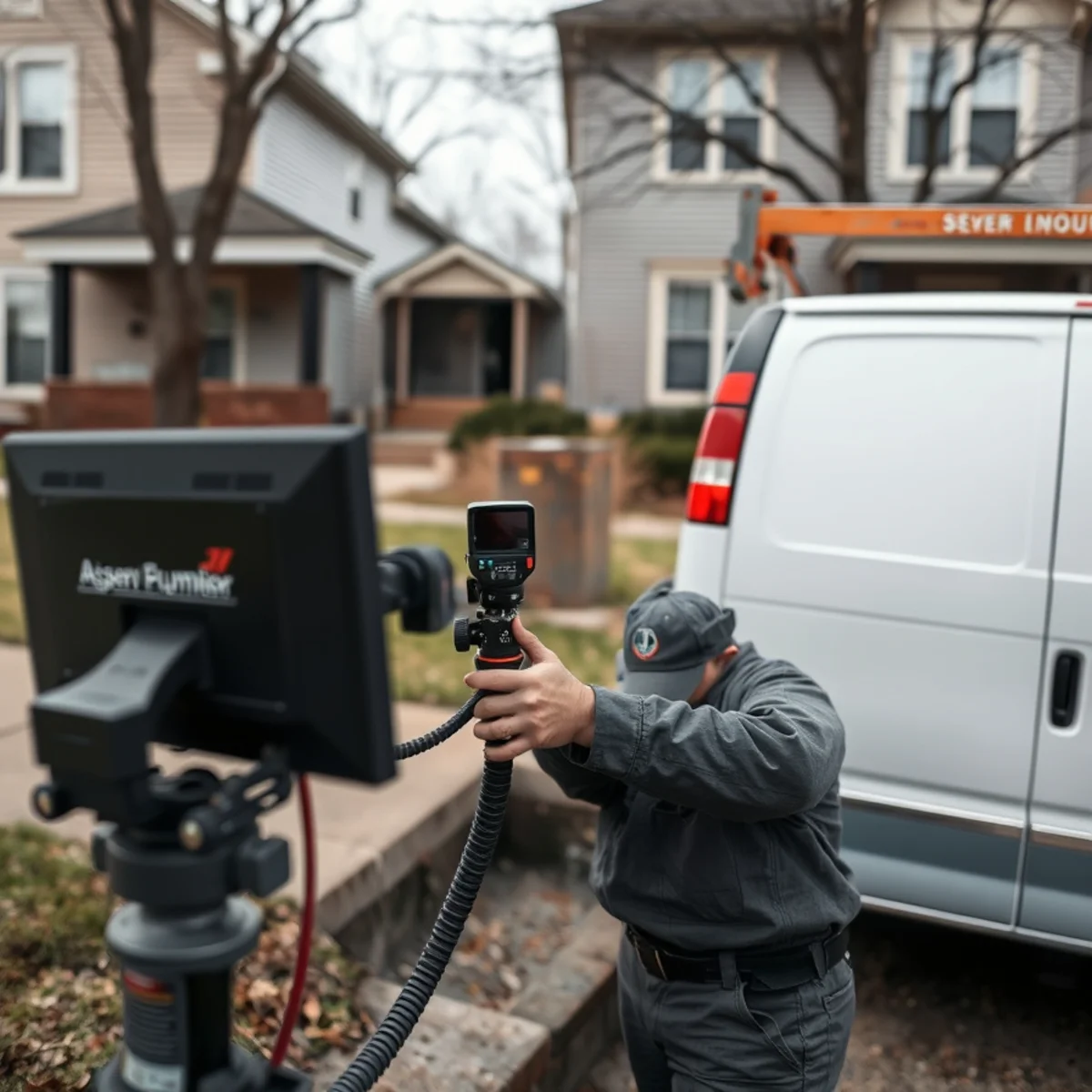
Sewer camera inspection in Detroit, MI
Detroit is typically 35–45 minutes from Sterling Heights depending on the neighborhood, and we schedule appointments across the city.
Detroit has more pre-1950 housing than almost anywhere else in Michigan, and its sewer system reflects that age — large sections of the city still run on a combined system that carries both stormwater and sanitary sewage in the same pipe. From Sterling Heights we're typically 35–45 minutes out depending on the neighborhood, and we run inspections across the city from East English Village and Jefferson Chalmers to Grandmont-Rosedale and Boston-Edison.
Combined sewers change the backup equation. During heavy rain, the shared system can surcharge, pushing wastewater back up through the lowest fixture in a house — often a basement floor drain — even when the homeowner's own lateral is in decent condition. Sorting out what's a citywide surcharge versus a private lateral defect is one of the most common reasons Detroit homeowners call us.
Whatever the neighborhood, our camera work gives you documented video that separates a private repair from a citywide drainage issue, which matters both for your own decision-making and for any conversation with the Detroit Water and Sewerage Department.
Sewer lines & housing in Detroit
The overwhelming majority of Detroit's housing predates 1950, and most of it still runs on the original clay or cast-iron laterals installed when the home was built — some now well past a century old. At that age, joint separation, root intrusion, and outright pipe collapse aren't rare events; across the city as a whole, they're closer to the norm than the exception.
Neighborhoods with mature street trees, from East English Village to Rosedale Park, see heavy root intrusion at clay joints, while denser blocks with older cast iron often show significant internal scale that narrows the pipe's effective diameter year over year. Vacant or demolished lots on some blocks add another wrinkle — abandoned laterals and disturbed soil around them can affect a neighboring line's stability.
Because combined sewers carry more volume during storms than a separated sanitary system would, even a structurally sound Detroit lateral can back up under surcharge conditions — which is exactly why documenting your own line's actual condition matters, so you know what you're dealing with the next time it rains hard.
Local sewer camera inspection you can trust
We've scoped Jefferson Chalmers-area homes where a fully collapsed section of clay pipe, invisible from any surface symptom beyond a slow basement drain, turned out to be the real cause of years of recurring backups the homeowner had blamed on the city's storm surges. In Grandmont-Rosedale, root intrusion in a mature-tree-lined block was severe enough that camera footage showed almost the full diameter of the pipe filled with roots.
We also run pre-purchase inspections for buyers of Detroit's often-renovated older housing stock, where a beautifully updated interior can sit on top of a sewer lateral nobody has looked at in fifty years — and for real estate investors buying multiple properties, a sewer scope is often the cheapest way to avoid an expensive surprise after closing.

Detroit's two sewersheds: Detroit River and Rouge River
Detroit's sewer system isn't one uniform network — it splits roughly along Woodward Avenue into two drainage basins. East-side neighborhoods like Jefferson Chalmers and East English Village ultimately drain toward the Detroit River, while west-side areas such as Warrendale, Brightmoor, and Bagley drain toward the Rouge River. Each basin has its own combined sewer overflow retention capacity, so a storm that overwhelms one side of the city doesn't necessarily hit the other side the same way.
That split matters when you're trying to figure out whether a backup is a neighborhood-wide event or something specific to your block. A camera inspection gives you the one piece of information the sewershed split can't: the actual condition of your own lateral, regardless of which basin it drains into.
- East-side blocks from Jefferson Chalmers to East English Village generally drain toward the Detroit River
- West-side neighborhoods like Warrendale, Brightmoor, and Bagley generally drain toward the Rouge River
- A storm can surcharge one basin without affecting the other side of the city the same way
- Only a camera inspection confirms your own lateral's condition, no matter which sewershed it feeds
Multi-family and commercial scoping across Detroit
With so much of Detroit's housing converted into duplexes, small rental portfolios, or mixed-use buildings along corridors like Livernois and Woodward, we get regular calls for commercial sewer camera inspection from owners managing more than one address at once. A single baseline scope across a small portfolio — Indian Village two-flats, a Southwest Detroit storefront-and-apartment building, a Corktown rental — usually costs less than one emergency call and tells an owner which properties actually need budget this year.
Still cleaning up from the 2021 floods?
Some Detroit basements never fully dried out after the historic June 2021 storms. If yours backs up every time it rains hard, read our breakdown of why Metro Detroit's old sewers keep flooding and get the line documented before the next one.
A closer look: a collapsed lateral near East English Village
A homeowner near East English Village called us after two basement backups in one rainy month, both of which the family had assumed were just the combined sewer surcharging like everyone else on the block. Running the camera from the basement cleanout, we found the actual cause about 22 feet out: a fully collapsed section of clay pipe where a section of the original 1930s line had sheared at a joint, likely from decades of soil settling around a long-since-removed tree stump. The collapse was total enough that only a trickle of flow could pass even before any rain added surcharge on top of it.
Because the footage showed a clear structural collapse rather than a citywide drainage event, the homeowner had a straightforward case to bring to a repair contractor — and equally important, could stop assuming every future heavy rain would cause the same backup once the actual defect was fixed.
What a Detroit sewer inspection typically costs
Across Detroit and the inner Detroit-area suburbs, sewer camera inspection pricing generally falls between about $254 and $1,722, with most jobs landing close to a $955 average once you factor in the range of lateral ages, lengths, and access conditions across the city's housing stock. A straightforward scope on a bungalow with an accessible basement cleanout tends toward the lower end; a longer or more deteriorated lateral, a locate-and-scope combination, or a multi-unit property naturally costs more. We give you a firm number after seeing the property, not a guess over the phone.
- Single-family homes with an accessible basement cleanout: typically toward the lower end of the Detroit-area range
- Older or longer laterals with suspected collapse or heavy root intrusion: mid-range pricing
- Duplexes, multi-unit conversions, and small commercial buildings: priced by the number of laterals and access points
- A pre-purchase scope is priced the same way, by the property's actual lateral — not by the home's sale price
What to expect: scheduling around Detroit's storm season
Detroit's combined sewer system means late spring through summer thunderstorm season is when surcharge-driven backups spike citywide, so if you've been putting off a scope, getting it done before the heaviest rain months gives you a documented baseline while your basement is dry. Many of Detroit's older homes also have tighter basement access than a modern suburb — narrow stairwells, low clearance near a converted coal chute, or a cleanout buried behind decades of storage — so we come prepared for tighter maneuvering than a typical suburban call. If you're weighing whether a repair falls to you or the city, our sewer backup inspection documents exactly what's happening in your own line first.
Inspection services we provide in Detroit
Neighborhoods & areas we serve in Detroit
We provide sewer camera inspection throughout Detroit, including:
Nearby areas we serve
We also provide sewer camera inspection in communities around Detroit:
Why Detroit chooses us
Why Detroit residents call Sewer Inspects
12+ years on Metro Detroit's oldest housing stock
We've spent more than 12 years inspecting laterals across Metro Detroit, including plenty of Detroit's pre-1950 neighborhoods where a home's sewer history is as old as the house itself.
Licensed, insured, and independent
We're licensed and insured, and because we don't sell excavation or repair work, Detroit homeowners, landlords, and buyers get an unbiased camera read instead of a diagnosis shaped around a dig.
We separate a private lateral defect from a combined-sewer surcharge
In neighborhoods like Jefferson Chalmers and Grandmont-Rosedale, our footage tells you plainly whether a backup is your lateral or a citywide combined-sewer surcharge — the difference between a private repair and a matter for the Detroit Water and Sewerage Department.
Same-day scheduling, 24/7 for active backups
We're typically 35–45 minutes from most Detroit neighborhoods and offer same-day and next-day appointments, plus 24/7 response when a basement is actively backing up.
Serving Detroit & Sterling Heights, Macomb County & Metro Detroit
Based in Sterling Heights, we bring recorded HD sewer camera inspection to Detroit homeowners, buyers, sellers, and property managers — with a written report you keep.
Answers
Sewer inspection FAQs — Detroit
Book a sewer camera inspection in Detroit
Same-day sewer camera inspection across Sterling Heights, Macomb County & Metro Detroit. Free quote — call (614) 830-0578 or request a callback.
13+ years experience • Licensed & insured • 24/7 emergency response