Emergency
Sewer Smell in the House? Here's How to Find the Source
A sewer gas smell can mean something as simple as a dry drain trap or as serious as a cracked lateral. Here's how to narrow it down before you call anyone.
By Sewer Inspects · Updated February 15, 2026 · 13 min read
A sewer smell in house almost always traces back to one of three things: a dry P-trap letting gas back up through a drain, a blocked roof vent throwing the plumbing system's air pressure off, or a cracked lateral outside the foundation leaking gas into the soil. The first two are simple fixes; the third needs a camera to confirm and locate.
Before you assume the worst, it's worth working through the likely causes in order, starting with the simplest ones.
Start With the Easy Culprits
Every drain in your house has a P-trap — a curved section of pipe that holds a small amount of water specifically to block sewer gas from coming back up. If that water evaporates, the seal is gone and gas flows freely into the room.
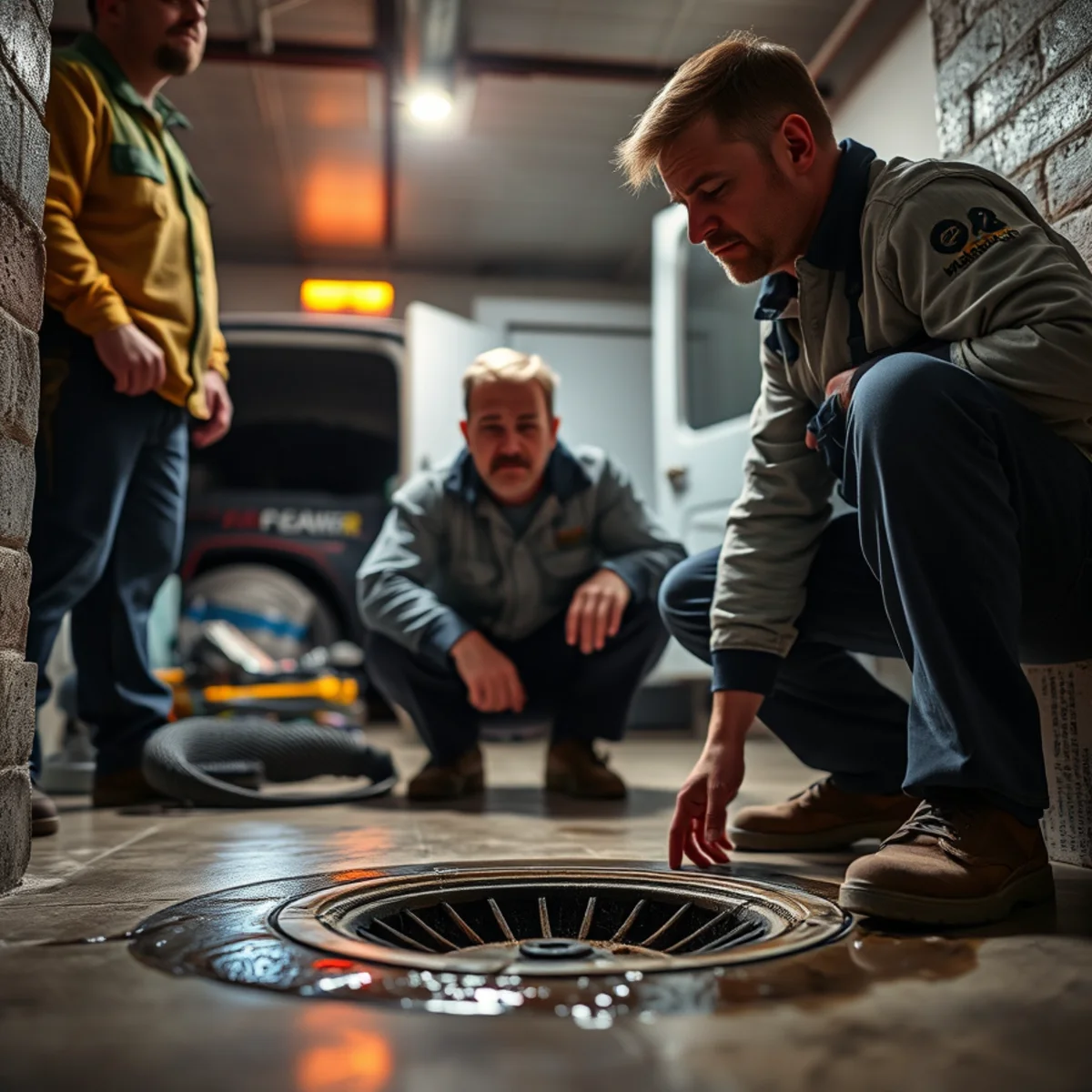
- A dry P-trap on a rarely used drain — a guest bathroom, a laundry sink, or a basement floor drain that hasn't seen water in weeks
- A failed wax ring at the base of a toilet — if the toilet rocks even slightly, the seal can break and let gas escape around the base
- A loose or missing cleanout plug — some basement cleanouts aren't sealed tightly during original installation or after prior plumbing work
Pouring a pitcher of water down every drain that doesn't get regular use, including floor drains, resolves a surprising number of these calls immediately.
Ventilation Problems
Every plumbing system relies on vent stacks running up through the roof to let sewer gas escape outside and to keep air pressure balanced in the pipes. If a vent gets blocked — by a bird's nest, ice, or debris — the system can develop negative pressure that pulls gas back through drain traps instead of letting it vent normally. This tends to show up as an intermittent smell that's worse on windy days or after a hard freeze.
When the Smell Points to the Sewer Line Itself
If you've refilled every trap and checked the toilets and the smell keeps coming back, especially near an exterior wall or in the yard, the source may be the lateral itself:
- A cracked or offset pipe section outside the foundation, letting gas seep through the surrounding soil and into foundation cracks
- A broken or disconnected vent pipe underground near the house
- A partially blocked section trapping gas that backs up toward the house instead of venting properly
How to Narrow It Down Before Calling Anyone
Quick self-check before scheduling an inspection
- Run water in every drain and floor drain in the house, including ones you rarely use
- Check for wobble at the base of every toilet
- Smell-test around toilet bases and basement floor drains specifically
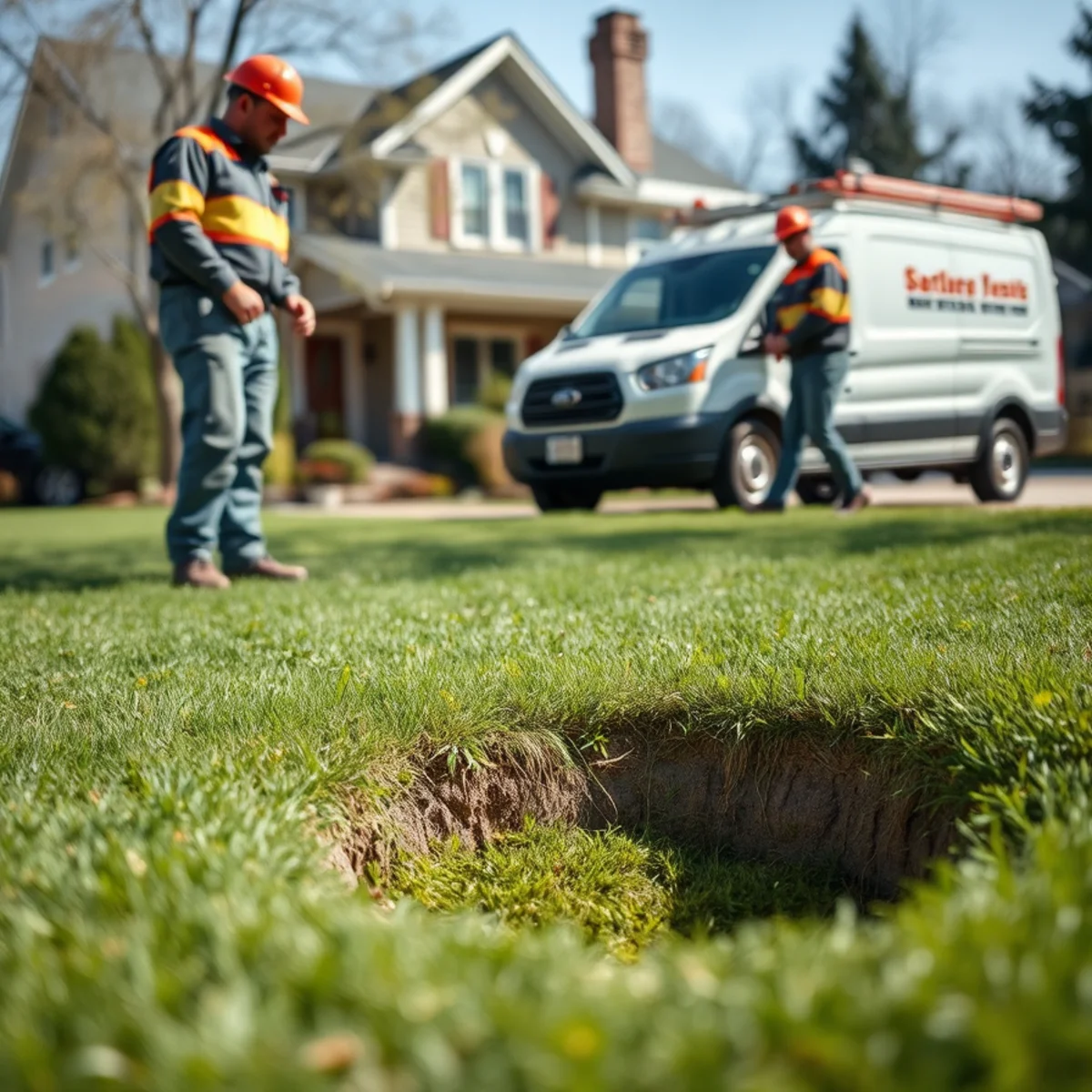
- Walk the yard and check near the foundation for soft, wet, or odorous spots
- Note whether the smell is constant or comes and goes with weather, rain, or wind
When You Need a Camera, Not Guesswork
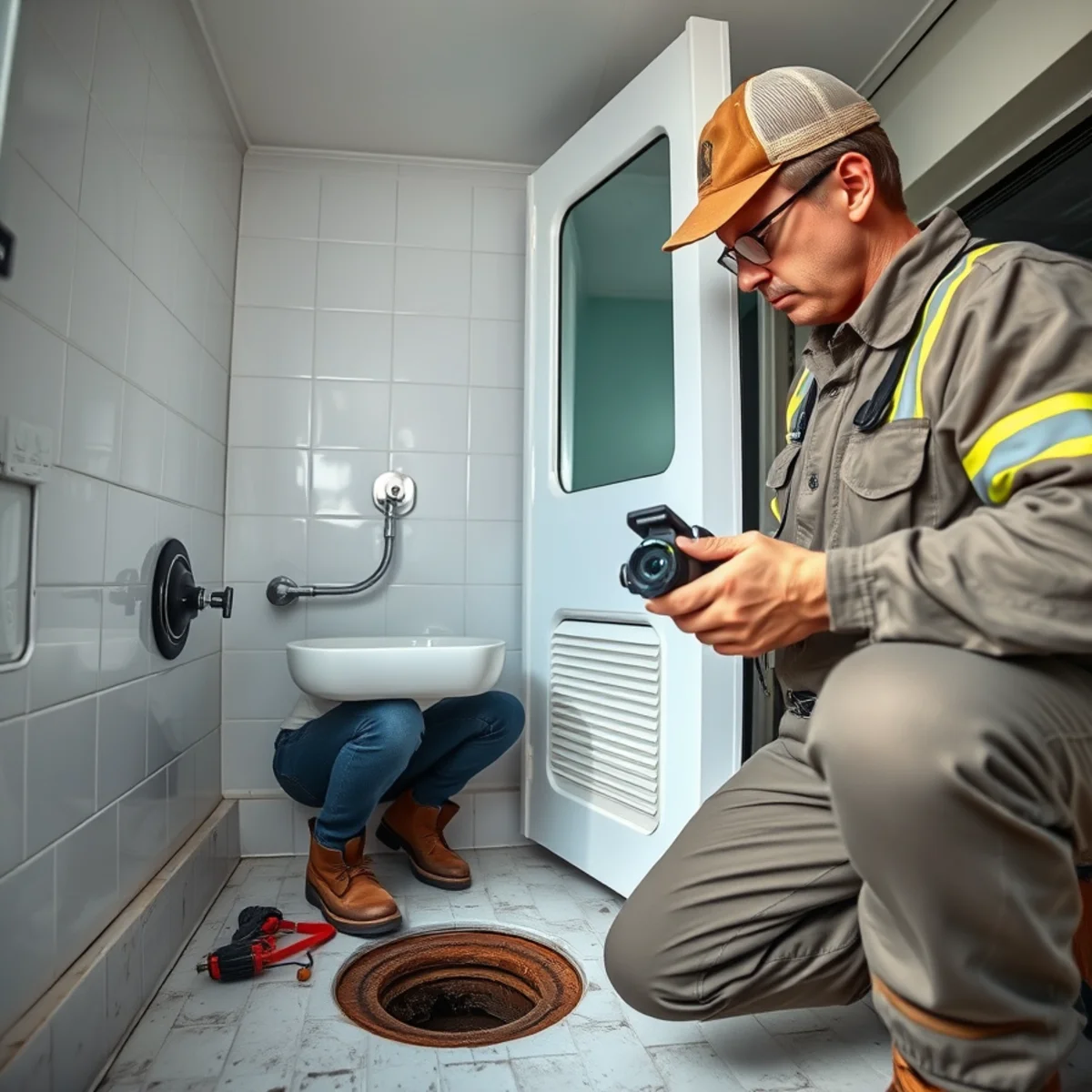
If the easy fixes don't resolve it, or the smell seems tied to the yard or an exterior wall rather than a specific fixture, a sewer gas odor inspection is the next step. A camera run through the line, paired with a surface locator, traces the odor's actual source past the fixtures and into the lateral itself — showing exactly where a crack, break, or disconnected joint is letting gas escape, without digging test holes around the foundation to find it.
What the Inspection Actually Shows
During the inspection, the technician is looking for a few specific things: a visible crack or fracture in the pipe wall, a joint that's separated enough to let gas seep into the surrounding soil, a disconnected or crushed vent line, or a section holding standing water that's trapping gas and forcing it back toward the house instead of venting outside. Each of these has a different fix, so pinpointing which one is actually happening matters more than just confirming "yes, there's an odor issue." If the smell traces to a branch line rather than the main lateral, a drain camera inspection can isolate it to that specific run instead of scoping the whole system.
Because the camera records distance as it travels, any defect gets logged at a specific footage mark from the access point. Combined with a surface locator reading, that translates into an actual spot in the yard — not a general area to start digging around and hope.
Smell-to-source quick reference
- Smell near one specific drain, comes and goes — likely a dry P-trap; pour water down it and see if the odor disappears immediately
- Smell strongest near a toilet base, especially if it wobbles — likely a failed wax ring, not a line issue
- Smell worse on windy days or after a hard freeze — points to a blocked or frozen roof vent stack
- Smell tied to a specific spot in the yard or along an exterior wall — suggests a cracked or offset lateral leaking gas through the soil; a sewer gas odor inspection can confirm it
- Smell paired with slow drains or gurgling — may be an early clog rather than a pure gas leak; a sewer clog and blockage inspection is the next step
- Smell after any backup event, even a minor one — could indicate a partially compromised line; a collapsed or broken pipe inspection rules out structural damage
A Worked Example: Split-Level in Warren
Picture a split-level in Warren where the owners have noticed a faint sewer smell near the laundry room for months — never strong enough to seem urgent, worse after it rains. They've refilled the floor drain trap twice, and the smell always fades for a week or two before returning.
A sewer gas odor inspection traces the issue to a hairline crack in the lateral about 12 feet outside the foundation, right where storm runoff pools after heavy rain. Groundwater pressure pushes gas back up through the crack and toward the house whenever the soil is saturated — explaining exactly why the smell tracked with rainfall instead of household water use. Refilling the trap never touched the actual source; it just happened to coincide with drier stretches when the smell naturally eased.
Common Mistakes People Make Chasing a Sewer Smell
- Spraying air freshener or odor-masking products near the suspected source, which makes it harder to smell-test accurately during troubleshooting
- Assuming a single fix (refilling one trap, tightening one cleanout) resolved things because the smell faded temporarily, rather than confirming it stayed gone
- Ignoring an intermittent smell because it isn't constant — a weather-linked odor is just as real as a constant one, it's only harder to catch in the moment
- Calling a general plumber for a wax ring replacement when the smell is actually coming from outside the foundation, and paying for a fix that was never going to solve it
What Experience Tells Us About False Leads
The number one thing we see homeowners get wrong is stopping at the first plausible explanation instead of confirming it. Someone finds a loose cleanout cap, tightens it, and assumes the case is closed — only to call back three weeks later because the smell never actually left, it just faded temporarily while other variables (weather, water use, HVAC cycling) happened to change at the same time. A genuine fix should make the smell go away and stay away regardless of weather or how often water runs. If it fades and returns on its own schedule, you haven't found the source yet — you've found a coincidence.
Local Factor: Madison Heights and Sterling Heights Homes
In Madison Heights and Sterling Heights, we see a lot of homes from the same construction era running clay or clay-and-cast-iron combination laterals. Many also have finished basements, which trap odors in living space rather than letting them dissipate in an open crawlspace — so a minor gas leak outside the foundation becomes a noticeable, persistent smell indoors well before it becomes a visible backup.
If the odor is paired with slow drains or gurgling, it may be connected to a developing clog rather than a straightforward gas leak — our guide on what to do about a main sewer line clog walks through that scenario separately.
A Room-by-Room Self-Check Before You Call
The checklist earlier tells you what to look for generally; this goes one level deeper if the source still isn't obvious.
- Start in the basement — run the floor drain, the laundry sink, and any rarely used fixture with a full pitcher of water each, waiting a few minutes between each one to isolate which fixture, if any, is the source
- Check every toilet on the property for wobble by gently rocking the bowl with both hands — even a slight movement can mean a failed wax ring
- Open exterior cleanout caps if you have them and smell directly at the cap — a strong odor right at the cap points toward the yard side of the system rather than inside the house
- Walk the yard slowly along the presumed path of the lateral, especially after it rains, checking for soft ground, unusual odor, or a patch of grass that stays wet longer than the rest
- Note the exact conditions each time the smell appears — time of day, weather, whether laundry or a dishwasher was running — since that pattern is exactly what a technician will ask about first
A Second Worked Example: 1920s Bungalow in Ferndale
Not every sewer smell traces back to a crack in the pipe wall. Consider a 1920s bungalow in Ferndale, where the owners noticed a musty, sewage-like smell in the basement that seemed to get worse whenever it was windy outside — never tied to rain, never tied to a specific fixture.
A sewer gas odor inspection found the actual cause well away from the lateral itself: a section of vent pipe running underground toward an old, disconnected stack had come apart at a joint decades ago, likely during an earlier renovation. Wind pressure changes at the roof vent were pushing gas back down through the broken connection and into the basement instead of venting it outside, which explained why the smell tracked with wind rather than water use or weather.
This is a good example of why guessing based on timing alone can send you down the wrong path — a wind-linked smell looks like a vent problem, a rain-linked smell looks like a lateral crack, but only a camera run through the actual pipe confirms which one you're dealing with.
What to Ask an Inspector When Tracing a Sewer Smell
Questions worth asking
- Are we checking fixtures and traps first, or going straight to a lateral inspection?
- If the smell is intermittent, will the inspection still be useful, or should I wait for it to be more consistent?
- Can you check the vent stack connection, not just the underground lateral?
- What's the actual defect, if you find one — a crack, a disconnected joint, or something else?
- Will I get footage and a written explanation I can reference if the smell doesn't fully go away?
Myths vs. Facts About Sewer Smells
- Myth: A strong cleaning-product smell means the sewer issue is handled. Fact: Masking an odor doesn't address its source — the smell typically returns once the product's scent fades.
- Myth: Sewer smell only happens in old homes. Fact: A dry trap or a disconnected vent can happen in a home of any age, especially after a renovation that altered plumbing without a full inspection.
- Myth: If the smell is faint, it's not worth investigating. Fact: A faint, intermittent smell can still indicate a real defect — it just means the leak or gap is small, not that it's harmless to ignore indefinitely.
- Myth: A plumber and a camera inspection company will find the same things. Fact: A general plumber typically checks fixtures and traps; a camera inspection is what's needed once the likely source is outside the foundation or underground.
Heavy Rain, High Water Tables, and Groundwater Intrusion
Heavy rain changes the picture for a lot of the sewer smells we investigate. In Harrison Township and other communities near the Clinton River and Lake St. Clair, a naturally high water table means groundwater sits closer to the surface than it does further inland — and after a heavy storm, that water table can rise enough to surround a lateral that's already cracked or offset.
When that happens, groundwater pressure can force gas, and sometimes water, back up through a compromised joint and toward the house, which is exactly why some homeowners notice a sewer smell specifically after it rains and not on dry days. If that pattern sounds familiar, our guide on Lake St. Clair's high water table and backup risk covers the broader risk this creates for lower-lying properties.
Related Reading If the Smell Keeps Coming Back
If the smell you're chasing keeps returning despite the easy fixes, a couple of related guides may help connect the dots. Our rundown of warning signs of sewer line failure covers other symptoms — gurgling, yard changes, recurring backups — that often show up alongside a persistent odor when a lateral is genuinely compromised. And if you're weighing whether any resulting damage might be covered by insurance, does homeowners insurance cover sewer backups in Michigan explains what's typically included and what isn't.
Can't track down that sewer smell in your Madison Heights or Sterling Heights home? Sewer Inspects provides free quotes on sewer camera inspection — call (614) 830-0578 and we'll trace it to the source.
Need a sewer camera inspection?
Same-day appointments across Sterling Heights, Macomb County & Metro Detroit. Free quote, no obligation.